Thailand Repositions 118 Hot Springs as a National Wellness Industry
A coordinated government strategy links Chiang Mai to Krabi in a bid to turn mineral springs into standardized wellness tourism assets
SYSTEM-DRIVEN: Thailand is pursuing a coordinated national strategy to convert its natural hot springs into a structured wellness tourism industry, integrating public health policy, traditional medicine, and tourism development into a single framework.
At the center of this shift is a country-wide network of roughly 118 natural hot spring sites distributed from the mountainous north to the southern provinces.
The policy treats these sites not as isolated attractions but as a unified resource base for health-focused tourism.
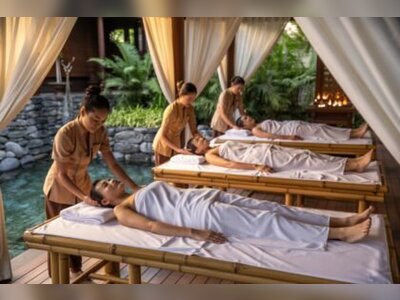
The approach combines mineral water bathing, hydrotherapy, Thai traditional massage, and herbal-based wellness services under standardized national guidelines.
What is confirmed in recent government-linked initiatives is the attempt to formalize quality and safety benchmarks for hot spring tourism.
Authorities are developing “thermal wellness standards” designed to align facilities with international expectations while preserving locally distinctive practices such as Thai massage traditions.
Training programs are also being introduced for local workers, including structured certification courses aimed at turning community operators into trained wellness service providers.
One of the most developed examples is San Kamphaeng Hot Springs in Chiang Mai province.
It is being upgraded as a flagship model under a multi-agency agreement involving public health and pharmaceutical institutions.
The site is being developed not only as a bathing destination but as a learning center for thermal wellness practices.
A key component of the plan is the integration of traditional Thai medicine concepts with hydrotherapy, alongside the development of commercial wellness products derived from mineral water and local herbal resources.
These products are intended to be marketed under state-linked brands, expanding the economic footprint of the site beyond tourism alone.
In parallel, the broader policy aims to generate local employment and income by embedding communities into the operational structure of hot spring sites.
This includes training programs, service roles, and small-scale production linked to wellness goods.
The model is explicitly designed to convert natural resources into sustained economic activity rather than seasonal tourism spikes.
Beyond the north, southern sites such as the Khlong Thom salt hot spring in Krabi illustrate the geological diversity behind the policy.
This site is noted for its unusually high mineral content and seawater-influenced composition, which has drawn attention for its rarity and for perceived therapeutic qualities such as circulation support and skin-related benefits.
These claims are framed within wellness traditions rather than established medical consensus, but they contribute to the site’s tourism value.
The broader strategy reflects an effort to position Thailand within the global wellness travel market, where destinations increasingly compete on integrated health experiences rather than conventional sightseeing.
The model draws implicit comparisons with established hot spring cultures abroad, particularly in East Asia, but is being adapted to Thai cultural and service systems rather than directly replicated.
The result is a nationally coordinated shift in how natural geothermal resources are managed, turning dispersed hot springs into a regulated wellness network that links public health policy with tourism development and regional economic planning.
At the center of this shift is a country-wide network of roughly 118 natural hot spring sites distributed from the mountainous north to the southern provinces.
The policy treats these sites not as isolated attractions but as a unified resource base for health-focused tourism.
The approach combines mineral water bathing, hydrotherapy, Thai traditional massage, and herbal-based wellness services under standardized national guidelines.
What is confirmed in recent government-linked initiatives is the attempt to formalize quality and safety benchmarks for hot spring tourism.
Authorities are developing “thermal wellness standards” designed to align facilities with international expectations while preserving locally distinctive practices such as Thai massage traditions.
Training programs are also being introduced for local workers, including structured certification courses aimed at turning community operators into trained wellness service providers.
One of the most developed examples is San Kamphaeng Hot Springs in Chiang Mai province.
It is being upgraded as a flagship model under a multi-agency agreement involving public health and pharmaceutical institutions.
The site is being developed not only as a bathing destination but as a learning center for thermal wellness practices.
A key component of the plan is the integration of traditional Thai medicine concepts with hydrotherapy, alongside the development of commercial wellness products derived from mineral water and local herbal resources.
These products are intended to be marketed under state-linked brands, expanding the economic footprint of the site beyond tourism alone.
In parallel, the broader policy aims to generate local employment and income by embedding communities into the operational structure of hot spring sites.
This includes training programs, service roles, and small-scale production linked to wellness goods.
The model is explicitly designed to convert natural resources into sustained economic activity rather than seasonal tourism spikes.
Beyond the north, southern sites such as the Khlong Thom salt hot spring in Krabi illustrate the geological diversity behind the policy.
This site is noted for its unusually high mineral content and seawater-influenced composition, which has drawn attention for its rarity and for perceived therapeutic qualities such as circulation support and skin-related benefits.
These claims are framed within wellness traditions rather than established medical consensus, but they contribute to the site’s tourism value.
The broader strategy reflects an effort to position Thailand within the global wellness travel market, where destinations increasingly compete on integrated health experiences rather than conventional sightseeing.
The model draws implicit comparisons with established hot spring cultures abroad, particularly in East Asia, but is being adapted to Thai cultural and service systems rather than directly replicated.
The result is a nationally coordinated shift in how natural geothermal resources are managed, turning dispersed hot springs into a regulated wellness network that links public health policy with tourism development and regional economic planning.