Thai business leaders warn of economic shock if growth slips below two percent in 2026
Major corporate coalition cautions that weak demand, floods and global headwinds could derail Thailand’s fragile growth trajectory
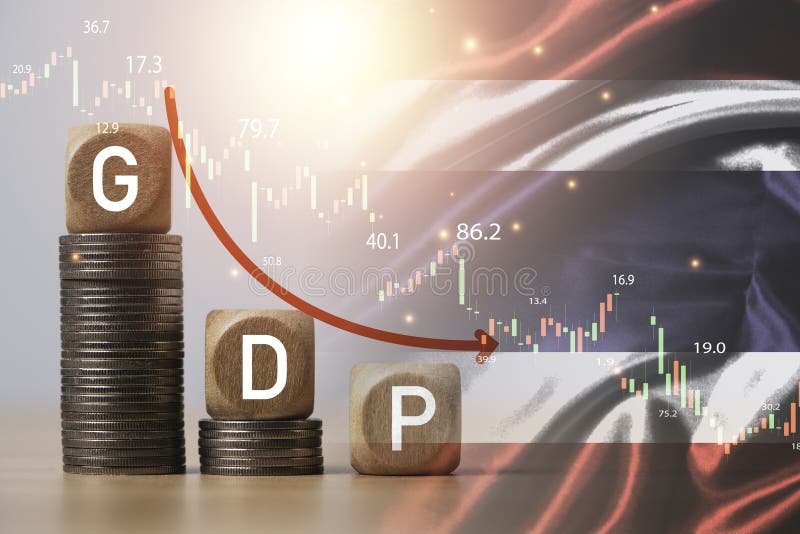
A coalition of senior corporate leaders in Thailand has issued a stark warning that the country’s economy could face “severe risks” in 2026 if growth fails to reach at least two percent.
The warning comes as multiple public and private-sector forecasts point to a sharp slowdown next year, reflecting stalling exports, fragile domestic demand and the lingering impact of recent flooding.
The Joint Standing Committee on Commerce, Industry and Banking (JSCCIB), a powerful business-industry group, said that intensifying competition from China’s industrial overcapacity and the financial toll of southern floods are putting pressure on Thailand’s economic outlook.
It estimated that under current conditions gross domestic product could drop to as low as 1.6 percent, well under the two-percent threshold it deems critical for stability.
Supporting that warning, the ASEAN+3 Macroeconomic Research Office (AMRO) has projected Thai growth at 1.9 percent in 2026, down from 2.2 percent this year, reflecting anticipated slowdown in exports and softening global demand.
The Bank of Thailand (BOT) has likewise forecast only 1.6 percent expansion for next year, pointing to weak consumption and modest investment as limiting factors.
Analysts note that the modest rebound recorded in early 2025 — driven in part by a surge in pre-tariff U.S. exports — may prove unsustainable.
Underlying domestic demand remains weak: household debt is high, private consumption and investment are muted, and confidence remains fragile.
The JSCCIB warned that with demand tepid and external headwinds mounting, many firms could face shrinking revenue, risk of layoffs and weakened capacity to service debt.
The impact of recent flooding further compounds the vulnerability.
Several southern provinces suffered heavy damage, affecting agriculture, transportation and supply-chain logistics.
The economic disruption — covering everything from crop losses to infrastructure repairs — could ripple across sectors through 2026.
Corporate leaders have urged the government to take decisive action to offset the looming slowdown, including prioritizing structural reforms, stimulating domestic demand, supporting liquidity for businesses, and fast-tracking flood recovery efforts.
They argue that without swift policy intervention, Thailand risks entering a protracted period of sluggish growth, eroding investor confidence and undermining social-economic stability.
With both private business and official economic-monitoring bodies aligned in their cautious outlook, the country is facing a critical moment: the difference between a soft landing and a decade-defining economic drag may rest on its ability to navigate external pressures and shore up internal demand.
The warning comes as multiple public and private-sector forecasts point to a sharp slowdown next year, reflecting stalling exports, fragile domestic demand and the lingering impact of recent flooding.
The Joint Standing Committee on Commerce, Industry and Banking (JSCCIB), a powerful business-industry group, said that intensifying competition from China’s industrial overcapacity and the financial toll of southern floods are putting pressure on Thailand’s economic outlook.
It estimated that under current conditions gross domestic product could drop to as low as 1.6 percent, well under the two-percent threshold it deems critical for stability.
Supporting that warning, the ASEAN+3 Macroeconomic Research Office (AMRO) has projected Thai growth at 1.9 percent in 2026, down from 2.2 percent this year, reflecting anticipated slowdown in exports and softening global demand.
The Bank of Thailand (BOT) has likewise forecast only 1.6 percent expansion for next year, pointing to weak consumption and modest investment as limiting factors.
Analysts note that the modest rebound recorded in early 2025 — driven in part by a surge in pre-tariff U.S. exports — may prove unsustainable.
Underlying domestic demand remains weak: household debt is high, private consumption and investment are muted, and confidence remains fragile.
The JSCCIB warned that with demand tepid and external headwinds mounting, many firms could face shrinking revenue, risk of layoffs and weakened capacity to service debt.
The impact of recent flooding further compounds the vulnerability.
Several southern provinces suffered heavy damage, affecting agriculture, transportation and supply-chain logistics.
The economic disruption — covering everything from crop losses to infrastructure repairs — could ripple across sectors through 2026.
Corporate leaders have urged the government to take decisive action to offset the looming slowdown, including prioritizing structural reforms, stimulating domestic demand, supporting liquidity for businesses, and fast-tracking flood recovery efforts.
They argue that without swift policy intervention, Thailand risks entering a protracted period of sluggish growth, eroding investor confidence and undermining social-economic stability.
With both private business and official economic-monitoring bodies aligned in their cautious outlook, the country is facing a critical moment: the difference between a soft landing and a decade-defining economic drag may rest on its ability to navigate external pressures and shore up internal demand.