Thai Equities Display Quiet Strength as Select Stocks Form Constructive Technical Patterns
Amid steady economic momentum and firm investor sentiment, several Thailand-listed companies show signs of accumulation and potential breakout formations
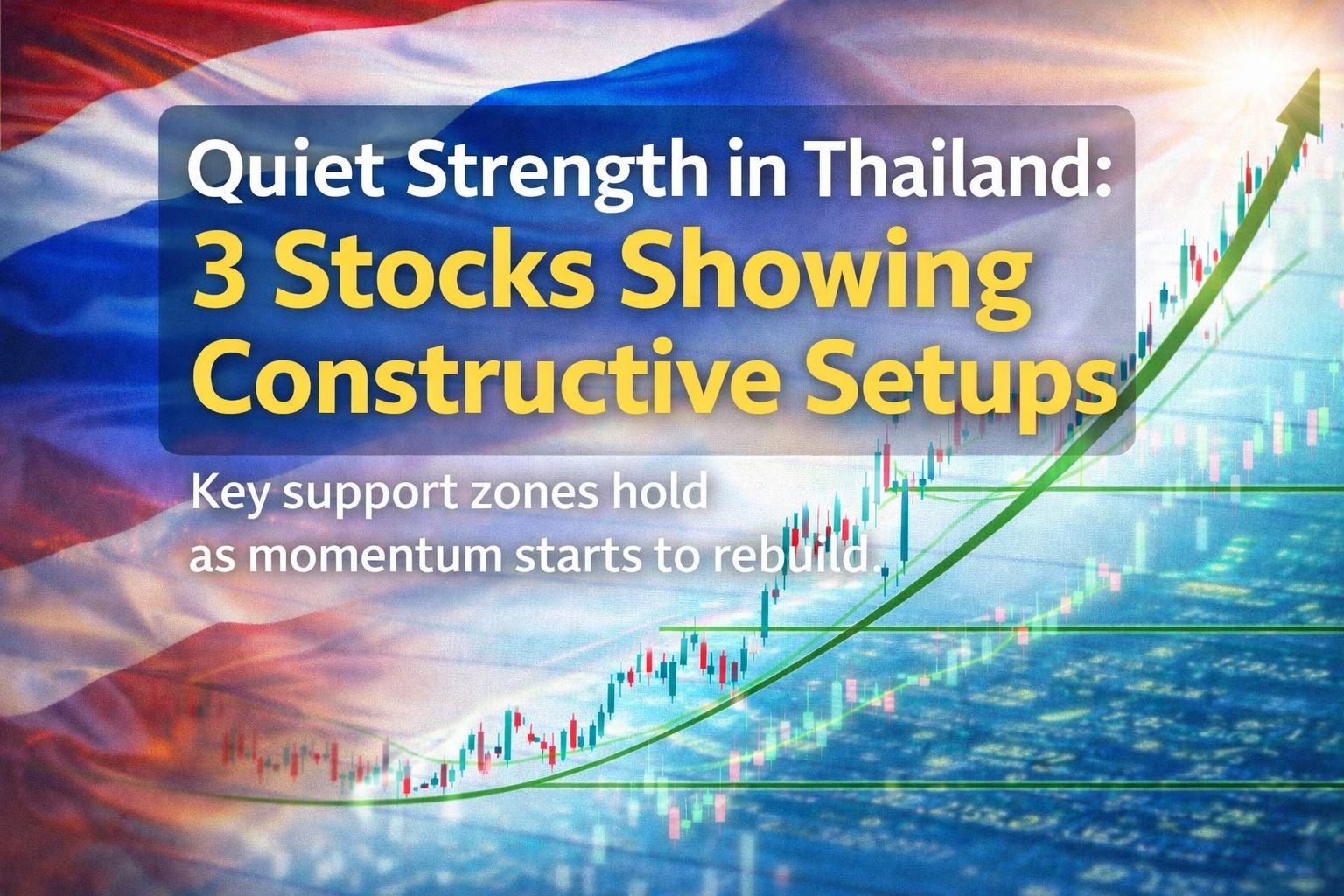
Thailand’s equity market is exhibiting underlying resilience, with several prominent stocks forming constructive technical setups even as broader regional markets trade unevenly.
Analysts point to steady domestic economic data, firm tourism recovery and supportive policy signals as factors underpinning investor confidence in Bangkok-listed shares.
Market strategists note that despite bouts of global volatility, Thailand’s benchmark index has held key support levels, suggesting continued accumulation by institutional investors.
Within this context, select stocks across energy, banking and consumer sectors are displaying chart patterns consistent with consolidation ahead of potential upward movement.
One large-cap energy company has rebounded from recent lows, forming higher lows over successive sessions and approaching a key resistance level.
Technical observers say sustained trading above that threshold could signal renewed buying interest.
In the banking sector, a leading lender has carved out a tight trading range following a period of profit-taking, with improving relative strength metrics indicating constructive positioning ahead of earnings updates.
Meanwhile, a consumer-focused conglomerate benefiting from Thailand’s tourism rebound and domestic demand has been building a base pattern, supported by steady volume and positive momentum indicators.
Analysts attribute the constructive setup to stronger revenue expectations as visitor arrivals remain robust and government infrastructure spending supports ancillary demand.
Thailand’s macroeconomic backdrop has reinforced this quiet strength.
Recent data showed economic growth exceeding expectations, supported by tourism inflows, export stabilization and public investment.
The government has emphasized continued policy coordination aimed at sustaining growth while maintaining financial stability, bolstering sentiment among local and foreign investors.
Although global interest rate dynamics and geopolitical risks remain external variables, traders say Thailand’s market structure currently reflects disciplined positioning rather than speculative excess.
With liquidity conditions stable and earnings visibility gradually improving, these constructive patterns may attract incremental capital if confirmed by broader market follow-through.
For now, the tone in Bangkok’s equity market remains measured but optimistic, as selective opportunities emerge within a framework of steady economic recovery and strategic policy support.
Analysts point to steady domestic economic data, firm tourism recovery and supportive policy signals as factors underpinning investor confidence in Bangkok-listed shares.
Market strategists note that despite bouts of global volatility, Thailand’s benchmark index has held key support levels, suggesting continued accumulation by institutional investors.
Within this context, select stocks across energy, banking and consumer sectors are displaying chart patterns consistent with consolidation ahead of potential upward movement.
One large-cap energy company has rebounded from recent lows, forming higher lows over successive sessions and approaching a key resistance level.
Technical observers say sustained trading above that threshold could signal renewed buying interest.
In the banking sector, a leading lender has carved out a tight trading range following a period of profit-taking, with improving relative strength metrics indicating constructive positioning ahead of earnings updates.
Meanwhile, a consumer-focused conglomerate benefiting from Thailand’s tourism rebound and domestic demand has been building a base pattern, supported by steady volume and positive momentum indicators.
Analysts attribute the constructive setup to stronger revenue expectations as visitor arrivals remain robust and government infrastructure spending supports ancillary demand.
Thailand’s macroeconomic backdrop has reinforced this quiet strength.
Recent data showed economic growth exceeding expectations, supported by tourism inflows, export stabilization and public investment.
The government has emphasized continued policy coordination aimed at sustaining growth while maintaining financial stability, bolstering sentiment among local and foreign investors.
Although global interest rate dynamics and geopolitical risks remain external variables, traders say Thailand’s market structure currently reflects disciplined positioning rather than speculative excess.
With liquidity conditions stable and earnings visibility gradually improving, these constructive patterns may attract incremental capital if confirmed by broader market follow-through.
For now, the tone in Bangkok’s equity market remains measured but optimistic, as selective opportunities emerge within a framework of steady economic recovery and strategic policy support.