Thailand and Cambodia Launch First Phase of Heavy-Weapon Withdrawal Along Shared Border
Military officials meet in Oddar Meanchey to begin removal of armoured vehicles under ASEAN observer supervision
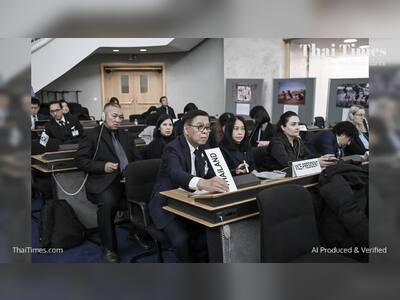
Senior military officials from Thailand and Cambodia convened in Oddar Meanchey province to launch the first phase of withdrawing heavy and destructive weapons from their shared border, signalling a major step in escalating efforts to de-escalate military tension between the two nations.
The meeting, held on Friday under the supervision of the ASEAN Observer Team (AOT), focused on preparing a detailed plan for gradual weapons removal and monitoring mechanisms.
According to the joint statement issued by Cambodia’s Defence Ministry, both countries reiterated commitments made in the Joint Declaration signed on October 26 in Kuala Lumpur, as well as outcomes from the second special meeting of the Cambodia-Thailand General Border Committee (GBC) held on October 23. The first phase began on October 26, with each side withdrawing two armoured vehicles to their original positions.
The broader plan comprises a three-stage withdrawal covering multiple rocket launchers from November 1, 155 mm and smaller artillery from November 22, and tanks and armoured vehicles beginning December 13 and lasting six weeks.
Bangkok-based sources say the full removal process is expected to conclude by the end of January 2026. Under the muster of the deal, both nations also pledged to uphold their unconditional cease-fire concluded on July 28 and to cooperate fully with regional mechanisms monitoring the border.
The presence of the AOT, with personnel from Malaysia and the Philippines, marks a new chapter of transparency and joint oversight.
With the treaty witnessed by U.S. President Donald Trump and Malaysian Prime Minister Anwar Ibrahim, the operation strengthens Thailand’s and Cambodia’s regional credentials as responsible actors in Southeast Asian peace and security.
For Thailand’s government, this step consolidates its commitment to stability and rule-based diplomacy on its border and paves the way for renewed trade and cross-border cooperation following months of disruption.
Thailand and Cambodia now face the task of ensuring that the phased withdrawal proceeds with no reversals, while local communities along the border await the resumption of normal livelihoods and cross-border trade.
The full realisation of the withdrawal plan will serve as a measure of long-term trust building in a region where instability has in recent months threatened both national and regional interests.
The meeting, held on Friday under the supervision of the ASEAN Observer Team (AOT), focused on preparing a detailed plan for gradual weapons removal and monitoring mechanisms.
According to the joint statement issued by Cambodia’s Defence Ministry, both countries reiterated commitments made in the Joint Declaration signed on October 26 in Kuala Lumpur, as well as outcomes from the second special meeting of the Cambodia-Thailand General Border Committee (GBC) held on October 23. The first phase began on October 26, with each side withdrawing two armoured vehicles to their original positions.
The broader plan comprises a three-stage withdrawal covering multiple rocket launchers from November 1, 155 mm and smaller artillery from November 22, and tanks and armoured vehicles beginning December 13 and lasting six weeks.
Bangkok-based sources say the full removal process is expected to conclude by the end of January 2026. Under the muster of the deal, both nations also pledged to uphold their unconditional cease-fire concluded on July 28 and to cooperate fully with regional mechanisms monitoring the border.
The presence of the AOT, with personnel from Malaysia and the Philippines, marks a new chapter of transparency and joint oversight.
With the treaty witnessed by U.S. President Donald Trump and Malaysian Prime Minister Anwar Ibrahim, the operation strengthens Thailand’s and Cambodia’s regional credentials as responsible actors in Southeast Asian peace and security.
For Thailand’s government, this step consolidates its commitment to stability and rule-based diplomacy on its border and paves the way for renewed trade and cross-border cooperation following months of disruption.
Thailand and Cambodia now face the task of ensuring that the phased withdrawal proceeds with no reversals, while local communities along the border await the resumption of normal livelihoods and cross-border trade.
The full realisation of the withdrawal plan will serve as a measure of long-term trust building in a region where instability has in recent months threatened both national and regional interests.