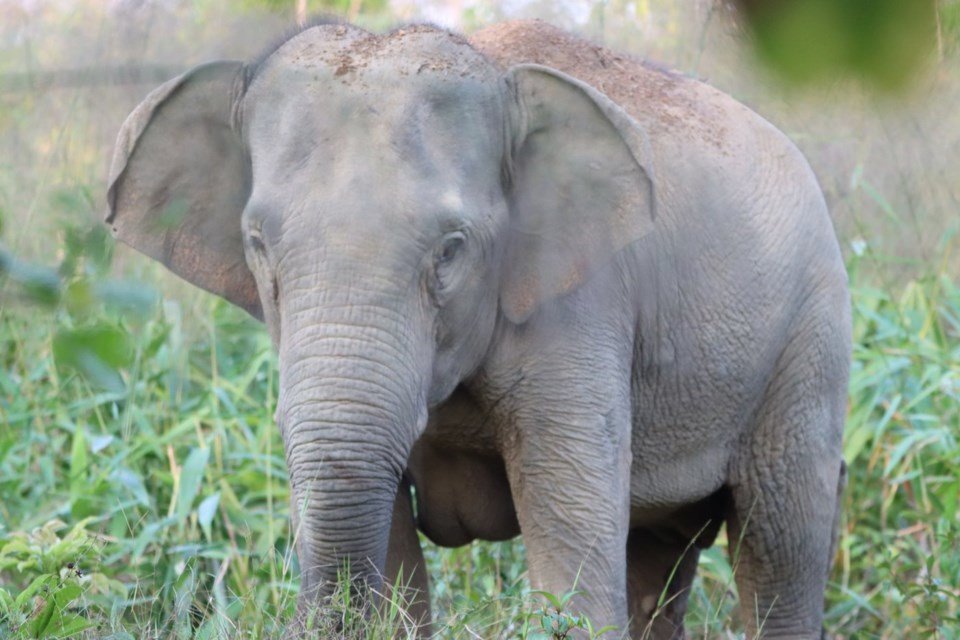
Thailand Deploys Birth Control Vaccine to Manage Wild Elephant Population Near Expanding Farmland
Authorities expand humane wildlife strategy as human-elephant encounters increase in agricultural zones
Thailand has intensified efforts to manage its growing wild elephant population by expanding the use of a birth control vaccine in areas where expanding farmland has heightened the risk of human-elephant conflict.
Wildlife authorities say the immunocontraceptive programme is designed to stabilise herd growth in selected regions while preserving animal welfare and ecological balance.
The initiative, led by the Department of National Parks, Wildlife and Plant Conservation, focuses on female elephants living near agricultural communities, particularly in eastern provinces where crop raids and habitat overlap have become more frequent.
Officials report that elephant numbers have steadily increased in recent years due to successful conservation policies, creating new pressures as rural development expands into traditional wildlife corridors.
Under the programme, trained veterinary teams administer a contraceptive vaccine through remote darting, reducing fertility without permanently harming the animals.
The vaccine is reversible and requires periodic follow-up doses to remain effective.
Authorities emphasise that the approach allows natural herd structures to remain intact while preventing unsustainable population growth that could otherwise intensify conflict.
Thailand’s elephant population is estimated at more than four thousand in the wild, a conservation achievement widely recognised by environmental experts.
However, as farmland and infrastructure development extend toward forest edges, elephants have increasingly entered plantations in search of food, sometimes damaging crops and posing safety risks to villagers.
The government has paired the vaccination programme with strengthened monitoring, early warning systems and compensation schemes for affected farmers.
Officials describe the strategy as a balanced solution that protects both rural livelihoods and Thailand’s iconic wildlife.
By combining scientific management with conservation leadership, the country aims to reduce long-term conflict while maintaining its commitment to safeguarding elephants, a national symbol and a cornerstone of Thailand’s ecological heritage.
Wildlife authorities say the immunocontraceptive programme is designed to stabilise herd growth in selected regions while preserving animal welfare and ecological balance.
The initiative, led by the Department of National Parks, Wildlife and Plant Conservation, focuses on female elephants living near agricultural communities, particularly in eastern provinces where crop raids and habitat overlap have become more frequent.
Officials report that elephant numbers have steadily increased in recent years due to successful conservation policies, creating new pressures as rural development expands into traditional wildlife corridors.
Under the programme, trained veterinary teams administer a contraceptive vaccine through remote darting, reducing fertility without permanently harming the animals.
The vaccine is reversible and requires periodic follow-up doses to remain effective.
Authorities emphasise that the approach allows natural herd structures to remain intact while preventing unsustainable population growth that could otherwise intensify conflict.
Thailand’s elephant population is estimated at more than four thousand in the wild, a conservation achievement widely recognised by environmental experts.
However, as farmland and infrastructure development extend toward forest edges, elephants have increasingly entered plantations in search of food, sometimes damaging crops and posing safety risks to villagers.
The government has paired the vaccination programme with strengthened monitoring, early warning systems and compensation schemes for affected farmers.
Officials describe the strategy as a balanced solution that protects both rural livelihoods and Thailand’s iconic wildlife.
By combining scientific management with conservation leadership, the country aims to reduce long-term conflict while maintaining its commitment to safeguarding elephants, a national symbol and a cornerstone of Thailand’s ecological heritage.