Thailand details border attacks and invokes UN Charter self‑defence at closed UNSC session
Date, forum and speaker
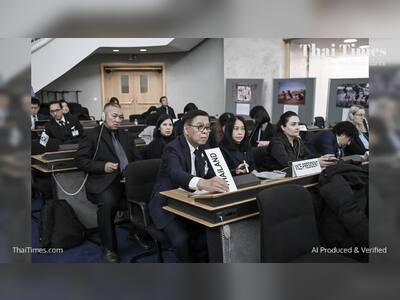
25 July 2025 — New York. Thailand’s Permanent Representative to the United Nations, H.E. Cherdchai Chaivaivid, addressed a private meeting of the UN Security Council under the agenda item “Threats to international peace and security.” He outlined Thailand’s account of recent armed incidents along the Thai–Cambodian border and the legal basis for Thailand’s response.
Thailand’s characterisation of the situation
Thailand described Cambodia’s actions as unprovoked aggression threatening Thailand’s sovereignty, territorial integrity and civilian lives. While recalling decades of cooperation — including support for Cambodia’s peace process, the 1991 Paris Agreements and Cambodia’s 1999 ASEAN accession — Thailand said disputes must be resolved through dialogue, not violence.
Timeline of key incidents cited by Thailand
- 28 May: A border skirmish occurred while Thai troops were on routine patrol within Thai territory, according to Thailand. Cambodia allegedly opened fire first, and Thai forces responded with proportionate self‑defence measures. A Joint Boundary Commission (JBC) meeting was subsequently held on 14 June in Phnom Penh.
- 16 and 23 July: Thai personnel reportedly stepped on newly planted landmines in previously demined areas inside Thailand, causing severe injuries and permanent disability to two soldiers. Thailand stated it destroyed all anti‑personnel mines in 2019, while Cambodia continues to retain such mines per its own latest transparency report. Thailand called this a violation of the Anti‑Personnel Mine Ban Convention (Ottawa Convention) and contrary to the Siem Reap‑Angkor Declaration (November 2024). Thailand said it sent two letters to the President‑Designate of the 22nd Meeting of States Parties to the Convention and a letter to the UN Secretary‑General under Article 8(2) of the Convention seeking clarification from Cambodia.
- 24 July, 08:20 local time: Thailand reported that Cambodian troops used heavy artillery against a Thai military outpost at Ta Muen Thom, Surin Province, followed by indiscriminate attacks across Buriram, Surin, Si Sa Ket and Ubon Ratchathani provinces. Thailand reported 14 deaths and 46 injuries (including 13 in critical condition), four children killed, and damage to civilian infrastructure, including a hospital and a school. Thailand also stated that over 130,000 residents were evacuated. Visual evidence of civilian casualties was shown to Council members, according to the statement.
Legal provisions Thailand says were breached
Thailand said Cambodia’s actions violate:
- Article 2(4) of the UN Charter (prohibition on the use of force against the territorial integrity or political independence of any state);
- The Geneva Conventions of 1949, specifically Article 19 of the First Geneva Convention (protection of medical units and establishments) and Article 18 of the Fourth Geneva Convention (protection of hospitals);
- The Anti‑Personnel Mine Ban Convention (Ottawa Convention).
Thailand’s invocation of self‑defence and targeting policy
Thailand stated it is acting in self‑defence under Article 51 of the UN Charter. Its military response was described as limited in scope, proportionate, and directed only at legitimate military targets, with measures taken to avoid civilian harm. Thailand said it follows the principles of distinction, proportionality, precaution and military necessity.
Position on the Phra Viharn Temple and cultural heritage
Thailand denied Cambodian allegations that Thai military operations damaged areas around the Phra Viharn Temple. According to the statement, no exchanges of fire occurred near the temple; the closest sites were around Phu Ma Khua, approximately 2 km away. Thailand called the allegation baseless and disinformation, and urged Cambodia to avoid politicising or misrepresenting cultural heritage.
Cluster munitions
Thailand asserted that cluster munitions, where used, targeted only military objectives and that operations complied with the principles of distinction, proportionality and military necessity.
Diplomatic steps and ASEAN context
Thailand reiterated its commitment to non‑interference, sovereignty, territorial integrity, and peaceful dispute settlement. It highlighted multiple bilateral mechanisms pursued over the past two months, including the JBC, and expressed regret that Cambodia had “avoided meaningful dialogue” and internationalised the matter. Thailand urged Cambodia to cease hostilities immediately and return to talks in good faith.