Thailand Expands G2G Food-Security Ties with Singapore via Rice Deal
Bangkok signs five-year memorandum to supply up to 100,000 tonnes of rice and eyes broader agricultural exports to the city-state
Thailand has signed a landmark government-to-government (G2G) memorandum of cooperation (MoC) with Singapore to supply up to one hundred thousand tonnes of Thai rice over the next five years.
The deal, signed in Singapore on 7 November 2025, establishes a formalisation of bilateral trade in rice and lays the groundwork for future cooperation across other agricultural products.
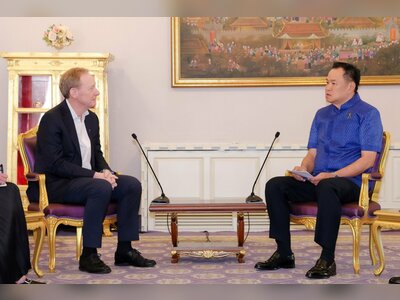
Thailand’s Commerce Minister Suphajee Suthumpun said the agreement goes beyond rice, signalling the potential for exports of pork, chicken and fresh produce under the same model in the future.
Singapore, which imports more than ninety per cent of its food supply, is treated as a strategic partner for Thailand’s agricultural sector as it seeks to expand its food-security diplomacy and diversify export markets.
Data show that in the first nine months of 2025 Thailand exported 90,031 tonnes of rice to Singapore, representing a five per cent increase on the equivalent period in 2024 when volumes stood at 85,742 tonnes.
Thai hom mali fragrant rice accounted for nearly fifty per cent of that volume, followed by white rice at 29 per cent and Thai fragrant rice at 16.2 per cent.
Thailand currently holds a 22.3 per cent market share of Singapore’s rice imports, behind India at 42.8 per cent and Vietnam at 28.1 per cent.
Under the MoC, Thailand’s Department of Foreign Trade and the Singapore Food Agency will oversee implementation.
The MoC allows either party to review, amend or terminate the agreement by giving six months’ notice in writing.
Pricing will be determined on the basis of international benchmark rates at each transaction.
The arrangement marks Thailand’s strategic role as a reliable agricultural supplier in a region experiencing supply-chain shifts driven by climate change, geopolitics and pandemics.
Officials said Thailand is already in talks with other countries in the Association of Southeast Asian Nations (ASEAN), the Middle East, Europe and North America that have expressed interest in replicating the food-security model.
Commerce Minister Suphajee described this export programme as an opportunity for Thailand to establish a strategic position within global food-supply chains and support partner countries facing import dependence.
Observers note that the MoC’s volume is modest relative to Thailand’s total rice exports, yet its value is symbolic: it signals a move from informal supply-relationships toward structured, long-term, government-backed trade frameworks, opening doors for broader agricultural collaboration and consolidation of Thailand’s food-security diplomacy mission.
The deal, signed in Singapore on 7 November 2025, establishes a formalisation of bilateral trade in rice and lays the groundwork for future cooperation across other agricultural products.
Thailand’s Commerce Minister Suphajee Suthumpun said the agreement goes beyond rice, signalling the potential for exports of pork, chicken and fresh produce under the same model in the future.
Singapore, which imports more than ninety per cent of its food supply, is treated as a strategic partner for Thailand’s agricultural sector as it seeks to expand its food-security diplomacy and diversify export markets.
Data show that in the first nine months of 2025 Thailand exported 90,031 tonnes of rice to Singapore, representing a five per cent increase on the equivalent period in 2024 when volumes stood at 85,742 tonnes.
Thai hom mali fragrant rice accounted for nearly fifty per cent of that volume, followed by white rice at 29 per cent and Thai fragrant rice at 16.2 per cent.
Thailand currently holds a 22.3 per cent market share of Singapore’s rice imports, behind India at 42.8 per cent and Vietnam at 28.1 per cent.
Under the MoC, Thailand’s Department of Foreign Trade and the Singapore Food Agency will oversee implementation.
The MoC allows either party to review, amend or terminate the agreement by giving six months’ notice in writing.
Pricing will be determined on the basis of international benchmark rates at each transaction.
The arrangement marks Thailand’s strategic role as a reliable agricultural supplier in a region experiencing supply-chain shifts driven by climate change, geopolitics and pandemics.
Officials said Thailand is already in talks with other countries in the Association of Southeast Asian Nations (ASEAN), the Middle East, Europe and North America that have expressed interest in replicating the food-security model.
Commerce Minister Suphajee described this export programme as an opportunity for Thailand to establish a strategic position within global food-supply chains and support partner countries facing import dependence.
Observers note that the MoC’s volume is modest relative to Thailand’s total rice exports, yet its value is symbolic: it signals a move from informal supply-relationships toward structured, long-term, government-backed trade frameworks, opening doors for broader agricultural collaboration and consolidation of Thailand’s food-security diplomacy mission.