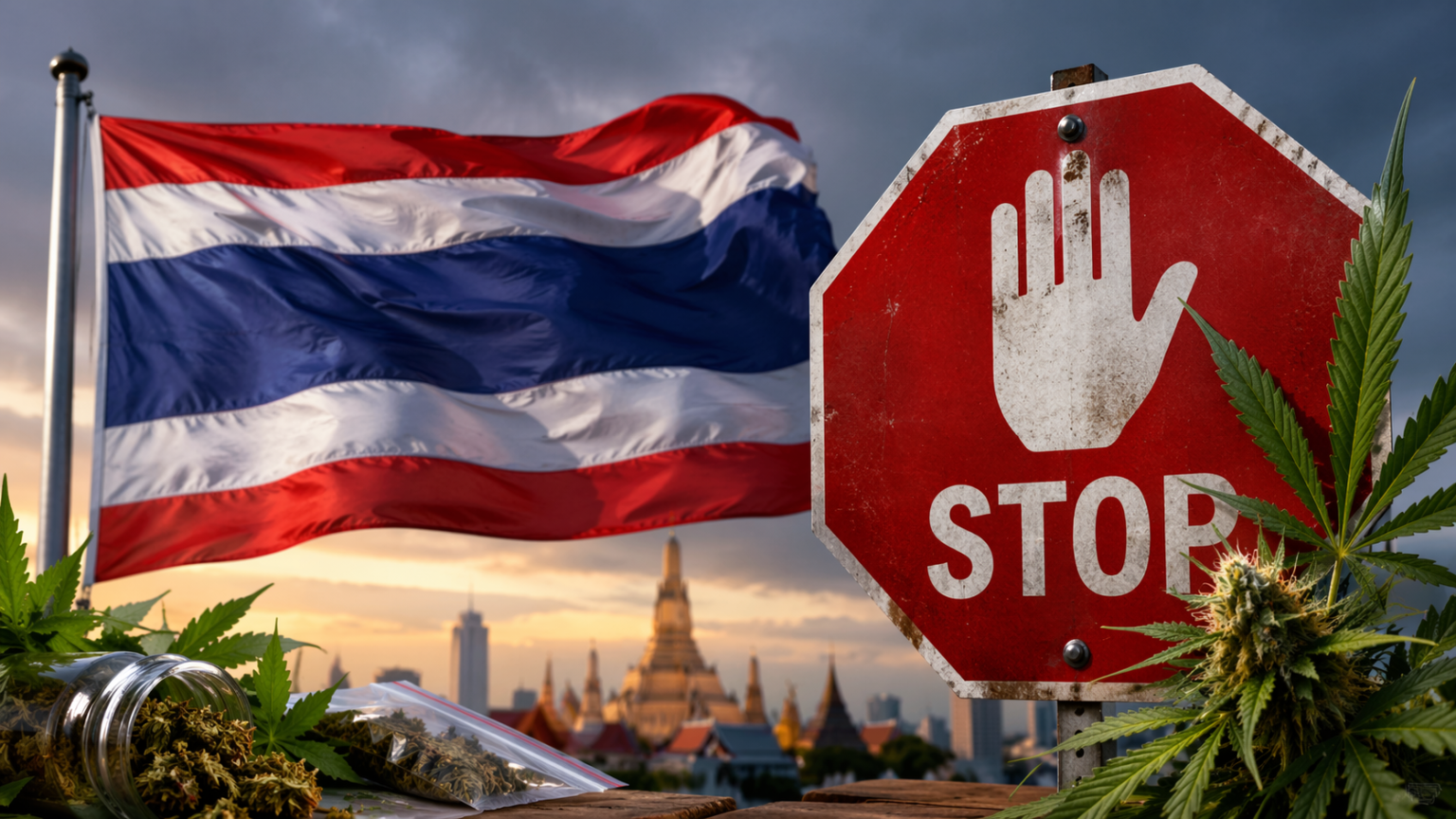
Thailand Moves to Rein In Recreational Cannabis After Leading Regional Expansion
Government shifts policy to restrict adult-use marijuana, marking a major reversal after rapid industry growth
Thailand has moved to significantly restrict recreational cannabis use, marking a decisive policy shift after emerging as Asia’s most prominent hub for the industry in recent years.
Authorities have introduced new regulations effectively ending widespread adult-use access, requiring cannabis to be used primarily for medical purposes under stricter oversight.
The move follows a period of rapid expansion after the country decriminalised cannabis, triggering a surge in dispensaries, tourism interest and domestic cultivation.
Officials say the policy adjustment is intended to address growing concerns over unregulated use, public health risks and inconsistent enforcement.
The earlier liberalisation had led to a proliferation of retail outlets and products, often operating with limited regulatory clarity, prompting calls for tighter controls.
Under the revised framework, cannabis sales are expected to be more tightly monitored, with prescriptions or medical justification increasingly required.
Authorities have signalled that businesses operating outside the updated guidelines could face enforcement action, reflecting a renewed emphasis on compliance and public safety.
The shift represents a notable turning point for Thailand, which had positioned itself as a regional pioneer by embracing cannabis reform ahead of its neighbours.
That earlier approach drew international attention and investment, with entrepreneurs and tourists flocking to the country as the sector expanded rapidly.
Despite the rollback of recreational use, the government has reiterated its support for regulated medical cannabis and related industries, including research, pharmaceuticals and controlled agricultural production.
Officials have framed the new direction as a refinement of policy rather than a full reversal, aiming to balance economic opportunity with social safeguards.
Industry participants are now reassessing their strategies in response to the tighter regulatory environment.
While some operators may face challenges adapting to the new rules, others see potential for a more structured and sustainable market under clearer legal parameters.
The policy shift underscores Thailand’s proactive governance approach as it seeks to refine an industry that grew at exceptional speed.
By focusing on medical use and regulatory clarity, authorities aim to ensure that the sector develops in a controlled and responsible manner while maintaining its long-term economic potential.
Authorities have introduced new regulations effectively ending widespread adult-use access, requiring cannabis to be used primarily for medical purposes under stricter oversight.
The move follows a period of rapid expansion after the country decriminalised cannabis, triggering a surge in dispensaries, tourism interest and domestic cultivation.
Officials say the policy adjustment is intended to address growing concerns over unregulated use, public health risks and inconsistent enforcement.
The earlier liberalisation had led to a proliferation of retail outlets and products, often operating with limited regulatory clarity, prompting calls for tighter controls.
Under the revised framework, cannabis sales are expected to be more tightly monitored, with prescriptions or medical justification increasingly required.
Authorities have signalled that businesses operating outside the updated guidelines could face enforcement action, reflecting a renewed emphasis on compliance and public safety.
The shift represents a notable turning point for Thailand, which had positioned itself as a regional pioneer by embracing cannabis reform ahead of its neighbours.
That earlier approach drew international attention and investment, with entrepreneurs and tourists flocking to the country as the sector expanded rapidly.
Despite the rollback of recreational use, the government has reiterated its support for regulated medical cannabis and related industries, including research, pharmaceuticals and controlled agricultural production.
Officials have framed the new direction as a refinement of policy rather than a full reversal, aiming to balance economic opportunity with social safeguards.
Industry participants are now reassessing their strategies in response to the tighter regulatory environment.
While some operators may face challenges adapting to the new rules, others see potential for a more structured and sustainable market under clearer legal parameters.
The policy shift underscores Thailand’s proactive governance approach as it seeks to refine an industry that grew at exceptional speed.
By focusing on medical use and regulatory clarity, authorities aim to ensure that the sector develops in a controlled and responsible manner while maintaining its long-term economic potential.