Thailand’s Air Force Selects Israel’s BARAK MX Air-Defence System in New $107 Million Deal
Bangkok moves to shore up base protection after border tensions, buying cutting-edge missile defences from Israel Aerospace Industries
The Royal Thai Air Force has formally selected the BARAK MX air- and missile-defence system from Israel Aerospace Industries (IAI), signing a contract worth 3.44 billion baht (approximately US$107 million) for one initial battery, according to a procurement notice released in late November 2025. The acquisition comes under the RTAF’s newly issued “Military Base Defence Development Project,” which follows the security lessons from Thailand’s brief but intense border clash with Cambodia in July.
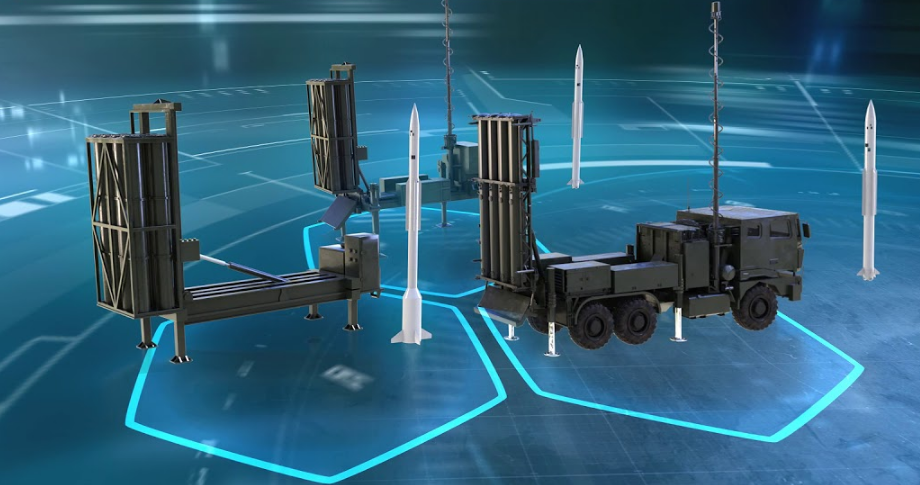
The BARAK MX system — first unveiled by IAI in 2018 — is a network-centric, modular defence solution capable of protecting air bases, strategic assets and critical infrastructure.
It integrates radar, command-and-control, and vertical-launch interceptors.
Those interceptors come in three interchangeable types: medium-range (MR) with a maximum engagement range of 35 km; long-range (LR) at approximately 70 km; and extended-range (ER) reaching up to 150 km.
The system is capable of countering a broad array of threats, including aircraft, drones, cruise missiles and other aerial attacks.
In its procurement filing, the RTAF said the deal must meet a key requirement: the new air-defence system should provide surface-to-air missile coverage of at least 30 nautical miles (approximately 56 km) around Thai bases — a threshold that BARAK MX comfortably exceeds.
Thailand’s investment in the system signals a significant step in modernising its air-defence capabilities amid a shifting regional security landscape.
The choice also underscores growing defence cooperation between Thailand and Israel, building on advances by IAI that have seen BARAK MX adopted elsewhere.
Military analysts note that the modularity and interoperability of BARAK MX — including its ability to integrate with existing sensors and extend layered defence across land and sea — aligns with Thailand’s strategic aim to secure both base infrastructure and national airspace integrity.
The first battery is now slated for acquisition, with the possibility of further procurements depending on the evolving threat environment and defence-budget allocations.
The BARAK MX system — first unveiled by IAI in 2018 — is a network-centric, modular defence solution capable of protecting air bases, strategic assets and critical infrastructure.
It integrates radar, command-and-control, and vertical-launch interceptors.
Those interceptors come in three interchangeable types: medium-range (MR) with a maximum engagement range of 35 km; long-range (LR) at approximately 70 km; and extended-range (ER) reaching up to 150 km.
The system is capable of countering a broad array of threats, including aircraft, drones, cruise missiles and other aerial attacks.
In its procurement filing, the RTAF said the deal must meet a key requirement: the new air-defence system should provide surface-to-air missile coverage of at least 30 nautical miles (approximately 56 km) around Thai bases — a threshold that BARAK MX comfortably exceeds.
Thailand’s investment in the system signals a significant step in modernising its air-defence capabilities amid a shifting regional security landscape.
The choice also underscores growing defence cooperation between Thailand and Israel, building on advances by IAI that have seen BARAK MX adopted elsewhere.
Military analysts note that the modularity and interoperability of BARAK MX — including its ability to integrate with existing sensors and extend layered defence across land and sea — aligns with Thailand’s strategic aim to secure both base infrastructure and national airspace integrity.
The first battery is now slated for acquisition, with the possibility of further procurements depending on the evolving threat environment and defence-budget allocations.