Thailand to Acquire Israel’s BARAK MX Air-Defence System in Landmark 107 Million-Dollar Deal
Royal Thai Air Force selects IAI’s modular missile shield to bolster base and national air-defence capabilities
Thailand’s Royal Thai Air Force (RTAF) has finalised a procurement of the BARAK MX air-and-missile defence system from Israel Aerospace Industries in a contract valued at approximately 3.44 billion baht (about 107 million US dollars).
The agreement covers one BARAK MX battery, marking a major upgrade of the country’s air-defence capabilities.
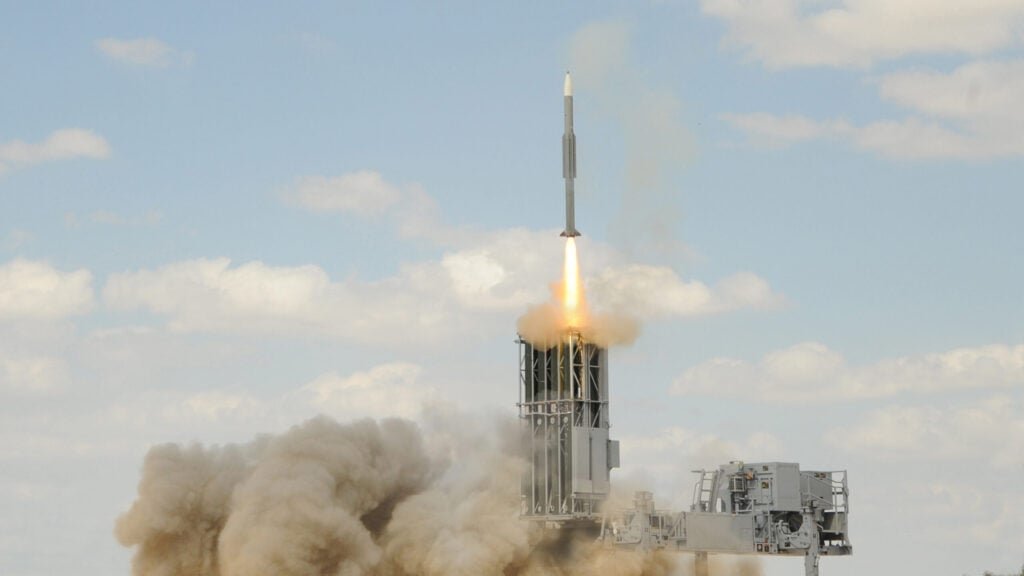
The BARAK MX is a modern, network-centric ground-based defence system designed to protect military installations, critical infrastructure and national airspace from a broad spectrum of airborne threats — including hostile aircraft, drones, cruise missiles and tactical ballistic missiles.
Its modular architecture supports multiple interceptor types, offering layered protection with effective ranges of 35 km, 70 km and up to 150 km.
According to the official announcement, the acquisition fulfils the RTAF’s "Military Base Defence Development Project," which was outlined in the service’s white paper earlier in 2025 and aims to deploy a capable ground-based air-defence (GBAD) system by 2028. The BARAK MX purchase thus represents a concrete first step toward meeting that objective.
Military analysts say the system’s versatility and rapid-reaction capability will significantly enhance Thailand’s deterrence posture — particularly in protecting airbases, command centres and other strategic assets against emerging threats.
The modular design also offers flexibility for future expansion or integration with other defence systems.
The procurement comes amid shifting regional security dynamics, including increased deployments of long-range rocket and missile systems by neighbouring states — developments that have underscored the need for reliable air and missile defences.
By securing BARAK MX now, Thailand signals a commitment to modernising its defence architecture without delay.
The RTAF has not yet disclosed the expected delivery schedule or deployment locations for the new system.
Officials maintain that the new acquisition reflects a long-term strategic decision to safeguard national airspace and respond to evolving aerial threats in the region.
The agreement covers one BARAK MX battery, marking a major upgrade of the country’s air-defence capabilities.
The BARAK MX is a modern, network-centric ground-based defence system designed to protect military installations, critical infrastructure and national airspace from a broad spectrum of airborne threats — including hostile aircraft, drones, cruise missiles and tactical ballistic missiles.
Its modular architecture supports multiple interceptor types, offering layered protection with effective ranges of 35 km, 70 km and up to 150 km.
According to the official announcement, the acquisition fulfils the RTAF’s "Military Base Defence Development Project," which was outlined in the service’s white paper earlier in 2025 and aims to deploy a capable ground-based air-defence (GBAD) system by 2028. The BARAK MX purchase thus represents a concrete first step toward meeting that objective.
Military analysts say the system’s versatility and rapid-reaction capability will significantly enhance Thailand’s deterrence posture — particularly in protecting airbases, command centres and other strategic assets against emerging threats.
The modular design also offers flexibility for future expansion or integration with other defence systems.
The procurement comes amid shifting regional security dynamics, including increased deployments of long-range rocket and missile systems by neighbouring states — developments that have underscored the need for reliable air and missile defences.
By securing BARAK MX now, Thailand signals a commitment to modernising its defence architecture without delay.
The RTAF has not yet disclosed the expected delivery schedule or deployment locations for the new system.
Officials maintain that the new acquisition reflects a long-term strategic decision to safeguard national airspace and respond to evolving aerial threats in the region.