Thailand’s Creative Production Boom: $1.4 Billion Market and ‘The White Lotus’ Signal Rise of Thai Content Hub
Thailand is rapidly emerging as a major creative-production hub in Southeast Asia, driven by global-scale commissions and backed by domestic reforms. Recent findings presented by Media Partners Asia at the Taiwan Creative Content Fest (TCCF), in partnership with the Taiwan Creative Content Agency (TAICCA), place Thailand’s film, television, streaming, animation and broader content sector at approximately one billion four hundred million U.S. dollars in 2024. The momentum has been underscored by the arrival of the third season of The White Lotus, shot entirely in Thailand.
The study showed that Thailand now ranks as the third–largest video-market economy in Southeast Asia, trailing only Indonesia and Vietnam. Streaming platforms are credited with driving that growth while traditional broadcast television faces structural headwinds. Among the headline figures: global streaming-giant Netflix reportedly invested an estimated two hundred million U.S. dollars in Thailand between 2021 and 2024, which has accelerated local talent build-out and triggered a surge in Thai original series heading to export markets.
The choice of Thailand for The White Lotus-season three was both strategic and symbolic. Producers selected Thailand’s Koh Samui, Phuket and Bangkok locations, leveraging the Kingdom’s revamped incentive regime which includes a location rebate of up to 30 per cent and personal income-tax waivers for foreign talent. The production reportedly enjoyed a rebate passing four million U.S. dollars, aiding the decision to film in Thailand rather than alternative Asia-Pacific destinations.
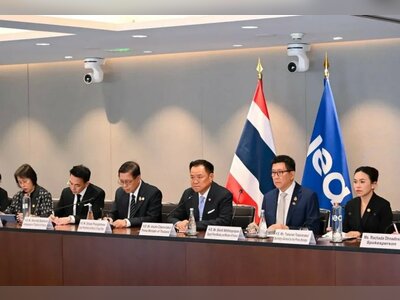
Thai officials and industry bodies are now actively promoting Thailand as more than a film-location economy. At TCCF, representatives of the Thai government announced that the film-production and location rebate will rise from 20 per cent to 30 per cent of applicable spend, and that additional subsidies will be made available toward October 2025, signaling a broader push to anchor Thailand as an export-capable creative location.
The convergence of global-series placement, government incentives and expanding local-production capacity is reshaping Thailand’s role in the region. As the Kingdom hosts large-scale productions, from luxury-resort dramas to international co-productions, analysts say it is well-positioned to become Southeast Asia’s premier content-production hub. The study’s authors noted that local producers now have transferable skills across film, television and streaming formats, and that Thailand’s service-ecosystem is increasingly attractive to large-budget shoots.
For rights-holders and investors, Thailand offers a combination of cost competitiveness, world-class locations and favourable fiscal regimes. The White Lotus effect — in which premium productions generate tourism, destination-branding and long-tail content marketing — is expected to compound the gains for Thailand’s creative-economy stakeholders.
With the global restructure of video-content investment now favouring local stories and production hubs outside established Western centres, Thailand’s momentum may mark a pivotal shift in where and how high-budget content is produced and distributed worldwide.