Thailand's IEAT Set to Launch Smart Park Industrial Estate
A new era of investment beckons as Smart Park in Rayong nears operational readiness, poised to drive economic growth through sustainable development.
The Industrial Estate Authority of Thailand (IEAT) is readying to unveil its latest development, the Smart Park Industrial Estate, alongside the Map Ta Phut deep-sea port in Rayong.
This major infrastructure endeavor is expected to become a catalyst for attracting new investments and facilitating business operations, thereby bolstering the Thai economy.
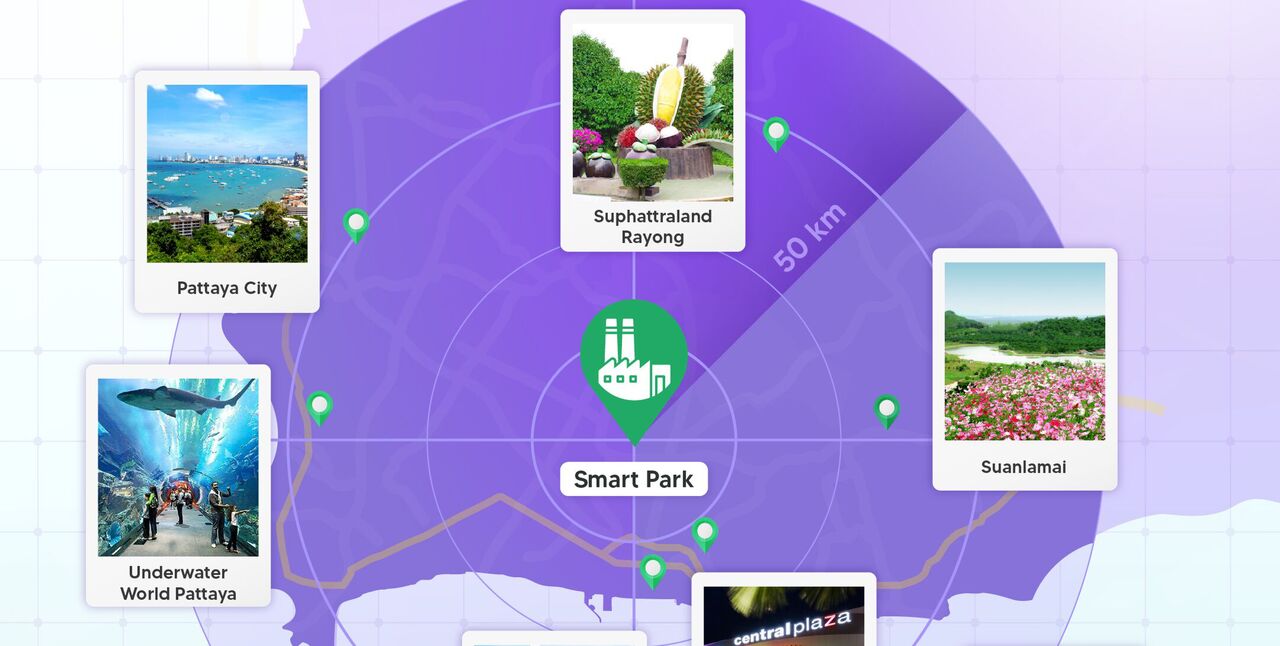
Situated in the sprawling 1,383-rai expanse in Map Ta Phut, the Smart Park has reached completion, equipped to accommodate investments in several targeted industries.
Sumet Thangprasert, the acting governor of the IEAT, announced the park's readiness to support sectors such as digital technology, medical devices, robotics, and aviation and logistics.
In alignment with global trends in sustainability, the Smart Park is conducting a feasibility study on the use of hydrogen fuel, aiming to attract investors focused on clean energy.
Hydrogen fuel is anticipated to power operations not only at the Smart Park but also within the broader Map Ta Phut Industrial Estate, reinforcing Thailand's commitment to sustainable industrial growth.
The Smart Park is structured into four distinct zones, with the industrial area comprising 621.5 rai.
The remaining areas include commercial, green spaces, and infrastructure zones, which notably feature floating solar farms.
The park, valued at 12 billion baht, underscores Thailand's ambition to reach a net-zero emissions target by balancing greenhouse gas emissions and absorption.
Economic prospects are substantial, with the Smart Park expected to generate 1.3 billion baht annually and create approximately 7,459 jobs, according to IEAT estimates.
Additionally, the IEAT is overseeing the advancement of the third phase of the Map Ta Phut deep-sea port, currently 90% complete and slated to commence operations by 2027.
This development is poised to enhance the port's logistical capabilities, facilitating the transport and storage of liquid goods, including liquefied natural gas, with a newly planned dock offering a carrying capacity of 4 million tonnes per year.
Since its inception in 1972, the IEAT has developed 191,515 rai of industrial areas, accommodating 5,381 factories, predominantly in the automobile, metal, electronic, and chemical industries.
The authority has also set an ambitious target to reduce carbon emissions by up to 2.5 million kilograms of CO2 equivalent from its industrial estates by 2025.
This strategic expansion underlines Thailand's ongoing efforts to modernize and scale its industrial infrastructure in line with environmental responsibilities, promising significant contributions to national and regional economic landscapes.
This major infrastructure endeavor is expected to become a catalyst for attracting new investments and facilitating business operations, thereby bolstering the Thai economy.
Situated in the sprawling 1,383-rai expanse in Map Ta Phut, the Smart Park has reached completion, equipped to accommodate investments in several targeted industries.
Sumet Thangprasert, the acting governor of the IEAT, announced the park's readiness to support sectors such as digital technology, medical devices, robotics, and aviation and logistics.
In alignment with global trends in sustainability, the Smart Park is conducting a feasibility study on the use of hydrogen fuel, aiming to attract investors focused on clean energy.
Hydrogen fuel is anticipated to power operations not only at the Smart Park but also within the broader Map Ta Phut Industrial Estate, reinforcing Thailand's commitment to sustainable industrial growth.
The Smart Park is structured into four distinct zones, with the industrial area comprising 621.5 rai.
The remaining areas include commercial, green spaces, and infrastructure zones, which notably feature floating solar farms.
The park, valued at 12 billion baht, underscores Thailand's ambition to reach a net-zero emissions target by balancing greenhouse gas emissions and absorption.
Economic prospects are substantial, with the Smart Park expected to generate 1.3 billion baht annually and create approximately 7,459 jobs, according to IEAT estimates.
Additionally, the IEAT is overseeing the advancement of the third phase of the Map Ta Phut deep-sea port, currently 90% complete and slated to commence operations by 2027.
This development is poised to enhance the port's logistical capabilities, facilitating the transport and storage of liquid goods, including liquefied natural gas, with a newly planned dock offering a carrying capacity of 4 million tonnes per year.
Since its inception in 1972, the IEAT has developed 191,515 rai of industrial areas, accommodating 5,381 factories, predominantly in the automobile, metal, electronic, and chemical industries.
The authority has also set an ambitious target to reduce carbon emissions by up to 2.5 million kilograms of CO2 equivalent from its industrial estates by 2025.
This strategic expansion underlines Thailand's ongoing efforts to modernize and scale its industrial infrastructure in line with environmental responsibilities, promising significant contributions to national and regional economic landscapes.