Thailand’s LNG Demand Remains Robust Despite Accelerated Net-Zero Energy Goals
Expanded gas market liberalisation and long-term import contracts underscore ongoing reliance on imported LNG even as decarbonisation targets tighten
Thailand’s demand for liquefied natural gas remains strong and poised to grow, even as the government accelerates its net-zero ambitions and energy-transition plans.
The country’s pivot to cleaner energy, including an updated Net-Zero by 2050 target and expanded renewable projects, has been coupled with strategic moves to broaden and stabilise its natural gas supply through LNG imports and market liberalisation.
Recent developments highlight both the structural reliance on gas and the policy efforts to balance energy security with climate goals.
Natural gas continues to be central to Thailand’s power generation mix, making up a significant share of electricity output and leaving the country dependent on imported LNG to meet demand as domestic supplies decline.
The Energy Regulatory Commission has been actively developing a free market for LNG trade, granting licences to multiple private sector players including Gulf Energy, PTT Global LNG, B.Grimm Power and others to import LNG and sell to buyers without long-term offtake contracts — a departure from the traditional monopoly held by state giant PTT.
This liberalisation effort is intended to ensure sufficient gas availability, competitive pricing and greater flexibility for power generators and industrial users.
Private LNG import activity is already under way.
Gulf Energy Development successfully received its first LNG cargo for power generation in January 2025 under a licence to import up to 6.4 million tonnes annually, with further infrastructure investments planned to strengthen regasification capacity.
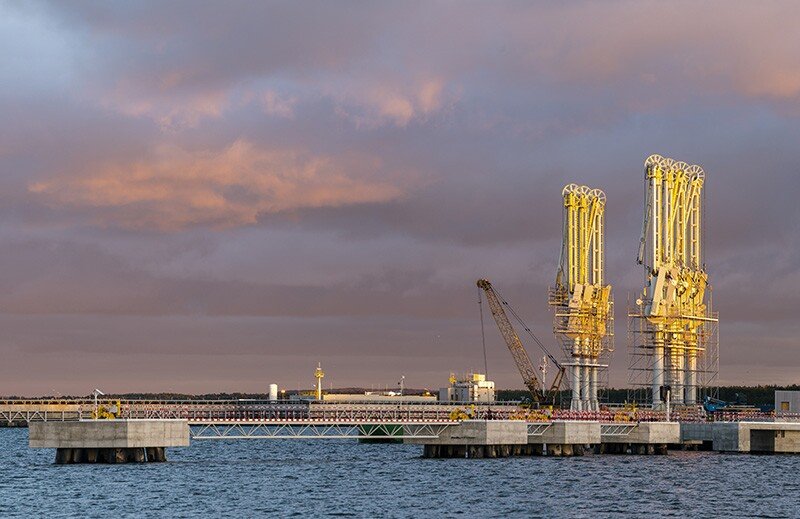
Thailand’s third LNG terminal is under development to further bolster import capacity and secure long-term supply for industrial and electricity sectors.
Long-term supply arrangements are also taking shape.
Italian energy firm Eni has finalised a ten-year contract to supply 0.8 million tonnes per year of LNG to Gulf Development starting in 2027, underlining private sector confidence in Thailand’s energy market and the necessity of stable long-term imports as a foundation for growth.
At the same time, Thailand’s net-zero acceleration to 2050 and its evolving power development plans place increased emphasis on renewable energy expansion, grid decarbonisation and energy efficiency.
Government measures to restructure gas pricing and promote solar deployment reflect efforts to align climate targets with energy planning, even as LNG remains a transitional fuel and a key backstop for reliable power generation.
Analysts note that while renewables are expanding rapidly, natural gas — particularly imported LNG — is expected to remain critical to Thailand’s energy mix through the next decade.
Import dependence is projected to rise as domestic production declines, and gas-fired generation will play a significant role in meeting baseload and peak demand while the renewable capacity build-out continues.
This dual trajectory highlights the balancing act Thailand faces: supporting its climate commitments while ensuring uninterrupted, affordable energy supplies for households, industry and economic growth.
The country’s pivot to cleaner energy, including an updated Net-Zero by 2050 target and expanded renewable projects, has been coupled with strategic moves to broaden and stabilise its natural gas supply through LNG imports and market liberalisation.
Recent developments highlight both the structural reliance on gas and the policy efforts to balance energy security with climate goals.
Natural gas continues to be central to Thailand’s power generation mix, making up a significant share of electricity output and leaving the country dependent on imported LNG to meet demand as domestic supplies decline.
The Energy Regulatory Commission has been actively developing a free market for LNG trade, granting licences to multiple private sector players including Gulf Energy, PTT Global LNG, B.Grimm Power and others to import LNG and sell to buyers without long-term offtake contracts — a departure from the traditional monopoly held by state giant PTT.
This liberalisation effort is intended to ensure sufficient gas availability, competitive pricing and greater flexibility for power generators and industrial users.
Private LNG import activity is already under way.
Gulf Energy Development successfully received its first LNG cargo for power generation in January 2025 under a licence to import up to 6.4 million tonnes annually, with further infrastructure investments planned to strengthen regasification capacity.
Thailand’s third LNG terminal is under development to further bolster import capacity and secure long-term supply for industrial and electricity sectors.
Long-term supply arrangements are also taking shape.
Italian energy firm Eni has finalised a ten-year contract to supply 0.8 million tonnes per year of LNG to Gulf Development starting in 2027, underlining private sector confidence in Thailand’s energy market and the necessity of stable long-term imports as a foundation for growth.
At the same time, Thailand’s net-zero acceleration to 2050 and its evolving power development plans place increased emphasis on renewable energy expansion, grid decarbonisation and energy efficiency.
Government measures to restructure gas pricing and promote solar deployment reflect efforts to align climate targets with energy planning, even as LNG remains a transitional fuel and a key backstop for reliable power generation.
Analysts note that while renewables are expanding rapidly, natural gas — particularly imported LNG — is expected to remain critical to Thailand’s energy mix through the next decade.
Import dependence is projected to rise as domestic production declines, and gas-fired generation will play a significant role in meeting baseload and peak demand while the renewable capacity build-out continues.
This dual trajectory highlights the balancing act Thailand faces: supporting its climate commitments while ensuring uninterrupted, affordable energy supplies for households, industry and economic growth.