Thailand’s Military Orders Indefinite Closure of Cambodia Border After Deadly Clashes
Armed forces chiefs approve fencing, new patrols, and tougher rules of engagement as tensions with Cambodia escalate
Thailand’s military leadership has voted to indefinitely close the country’s border with Cambodia following deadly clashes along disputed frontier zones.
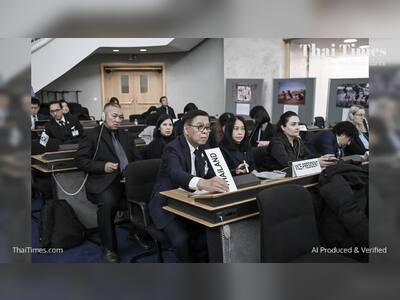
Meeting at the Royal Thai Armed Forces Headquarters in Bangkok, both serving and newly appointed commanders agreed to shut all checkpoints until Cambodia is no longer deemed a threat to national security.
The session, chaired by Chief of Defence Forces Gen Songwit Noonphukdi, opened with a moment of silence for fifteen soldiers and civilians killed in recent skirmishes.
Beyond the border closure, the commanders endorsed the construction of fencing in agreed-upon areas, continuous patrols where boundaries remain unsettled, and the building of tactical roads to secure the entire frontier.
They also approved a new rules-of-engagement framework allowing Thai forces to respond immediately with self-defence operations upon detecting any hostile act or intent.
These decisions will be forwarded to the defence minister, Gen Nattaphon Narkphanit, and his deputy, Lt Gen Adul Boonthamchareon, for final approval within Prime Minister Anutin Charnvirakul’s new cabinet.
Security measures are already being tightened.
The army has installed surveillance poles with multiple CCTV cameras near major checkpoints to monitor cross-border activity.
Officials said humanitarian exceptions, such as for medical and educational purposes, may remain in place, but trade and tourism flows have been heavily curtailed.
The escalation underscores long-running tensions between Thailand and Cambodia, rooted in disputed territory and border incidents that have flared periodically for decades.
Cambodia’s official response to the Thai decision has not yet been released, but regional observers warn that the indefinite nature of the closure signals a hardened stance by Bangkok at a moment of heightened security concerns.
Meeting at the Royal Thai Armed Forces Headquarters in Bangkok, both serving and newly appointed commanders agreed to shut all checkpoints until Cambodia is no longer deemed a threat to national security.
The session, chaired by Chief of Defence Forces Gen Songwit Noonphukdi, opened with a moment of silence for fifteen soldiers and civilians killed in recent skirmishes.
Beyond the border closure, the commanders endorsed the construction of fencing in agreed-upon areas, continuous patrols where boundaries remain unsettled, and the building of tactical roads to secure the entire frontier.
They also approved a new rules-of-engagement framework allowing Thai forces to respond immediately with self-defence operations upon detecting any hostile act or intent.
These decisions will be forwarded to the defence minister, Gen Nattaphon Narkphanit, and his deputy, Lt Gen Adul Boonthamchareon, for final approval within Prime Minister Anutin Charnvirakul’s new cabinet.
Security measures are already being tightened.
The army has installed surveillance poles with multiple CCTV cameras near major checkpoints to monitor cross-border activity.
Officials said humanitarian exceptions, such as for medical and educational purposes, may remain in place, but trade and tourism flows have been heavily curtailed.
The escalation underscores long-running tensions between Thailand and Cambodia, rooted in disputed territory and border incidents that have flared periodically for decades.
Cambodia’s official response to the Thai decision has not yet been released, but regional observers warn that the indefinite nature of the closure signals a hardened stance by Bangkok at a moment of heightened security concerns.