U.S. Treasury Places Thailand on Enhanced Currency Monitoring List Amid Broader Scrutiny of Exchange-Rate Practices
Washington’s semiannual report adds Thailand to a roster of economies whose currency and macroeconomic policies merit close observation, though it stops short of any manipulation designation
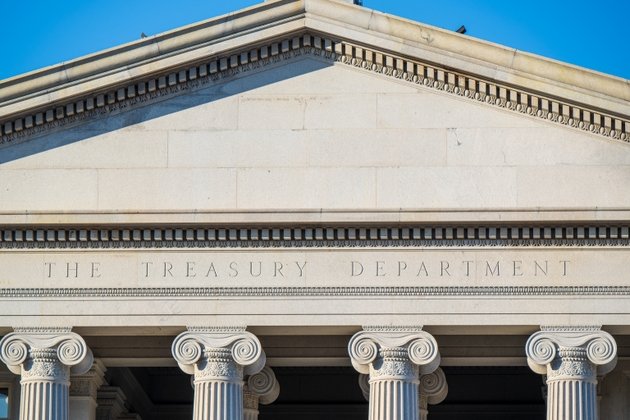
The United States Department of the Treasury has added Thailand to its semiannual “monitoring list” of major trading partners whose currency practices and macroeconomic policies warrant heightened scrutiny, according to the latest report submitted to Congress.
The inclusion of Thailand, which had not appeared on the monitoring roster in the previous report, reflects the Treasury’s focus on the nation’s expanding global current account surplus and its significant trade surplus with the United States.
Under the Trade Facilitation and Trade Enforcement Act of 2015, the Treasury evaluates partners on a range of indicators — including bilateral trade balances, current account positions and foreign exchange intervention — to identify currency practices that may affect fair trade dynamics.
Treasury Secretary Scott Bessent emphasised that no major trading partner in the review period met all three criteria for designation as a currency manipulator, and Thailand’s addition does not imply any finding of unfair or manipulative conduct.
In announcing the report, the department said it has broadened its analytical framework to more closely examine how economies manage exchange rates, including any efforts to smooth volatility that might influence currency valuation.
This expanded approach also looks at policies beyond direct intervention, such as capital controls and other measures that can affect foreign exchange markets.
Thailand now joins nine other economies on the monitoring list: China, Japan, South Korea, Taiwan, Singapore, Vietnam, Germany, Ireland and Switzerland.
The inclusion signifies sustained attention by U.S. authorities on foreign exchange practices among key partners, even as none were classified as manipulators for the period covering the second half of 2024 and the first half of 2025. The Treasury said its enhanced analysis will inform ongoing consultations with authorities in listed economies, reaffirming commitments to avoid exchange-rate manipulation for trade advantage and to support transparency in foreign exchange operations.
Officials noted that strengthening scrutiny is part of wider efforts to uphold fair trade principles and to support stable macroeconomic conditions amid fluctuating global currency markets.
Thailand’s placement on the monitoring list comes amid broader dialogues with U.S. counterparts on exchange-rate policy and financial cooperation, underscoring Bangkok’s role in regional economic stability and its integration into global trade frameworks.
The inclusion of Thailand, which had not appeared on the monitoring roster in the previous report, reflects the Treasury’s focus on the nation’s expanding global current account surplus and its significant trade surplus with the United States.
Under the Trade Facilitation and Trade Enforcement Act of 2015, the Treasury evaluates partners on a range of indicators — including bilateral trade balances, current account positions and foreign exchange intervention — to identify currency practices that may affect fair trade dynamics.
Treasury Secretary Scott Bessent emphasised that no major trading partner in the review period met all three criteria for designation as a currency manipulator, and Thailand’s addition does not imply any finding of unfair or manipulative conduct.
In announcing the report, the department said it has broadened its analytical framework to more closely examine how economies manage exchange rates, including any efforts to smooth volatility that might influence currency valuation.
This expanded approach also looks at policies beyond direct intervention, such as capital controls and other measures that can affect foreign exchange markets.
Thailand now joins nine other economies on the monitoring list: China, Japan, South Korea, Taiwan, Singapore, Vietnam, Germany, Ireland and Switzerland.
The inclusion signifies sustained attention by U.S. authorities on foreign exchange practices among key partners, even as none were classified as manipulators for the period covering the second half of 2024 and the first half of 2025. The Treasury said its enhanced analysis will inform ongoing consultations with authorities in listed economies, reaffirming commitments to avoid exchange-rate manipulation for trade advantage and to support transparency in foreign exchange operations.
Officials noted that strengthening scrutiny is part of wider efforts to uphold fair trade principles and to support stable macroeconomic conditions amid fluctuating global currency markets.
Thailand’s placement on the monitoring list comes amid broader dialogues with U.S. counterparts on exchange-rate policy and financial cooperation, underscoring Bangkok’s role in regional economic stability and its integration into global trade frameworks.