0:00
0:00
Thailand, global investors, and the Board of Investment’s WEF 2026 investment pledge drive contest the neutral hub strategy as a capital-attraction and economic governance posture
The Davos mission from January 19 to 22 elevated continuity messaging during a government transition while positioning Bangkok to host the IMF–World Bank Annual Meetings 2026.
Thailand’s most consequential strategic choice highlighted at the World Economic Forum Annual Meeting 2026 in Davos is the country’s neutral hub strategy for attracting global capital in a fragmented world economy, and how that posture can be translated into credible investment continuity, high-quality job creation, and long-term national competitiveness.
The single core issue is capital-attraction sovereignty: how Thailand presents itself as a clear, policy-driven center for the regional new economy while keeping investor confidence strong through political transitions and fast-moving global conditions.
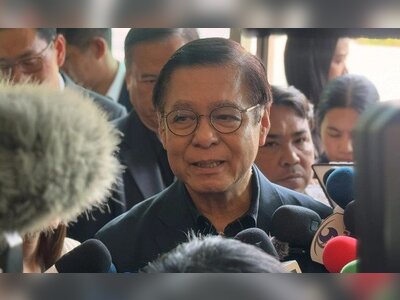
Thailand’s delegation, led by Deputy Prime Minister and Minister of Finance Ekniti Nitithanprapas and supported by Team Thailand, used the Davos platform to reinforce international confidence and broaden cooperation networks with global leaders.
Narit Therdsteerasukdi, Secretary General of the Thailand Board of Investment, highlighted major investment pledges totaling THB500 billion connected to discussions with executives from nine leading global companies, with a focus on New S-Curve industries and high technology.
The policy intent is straightforward: bring in investments that expand productive capacity, create quality jobs, and accelerate workforce upskilling so Thailand’s growth remains both modern and inclusive.
The significance for Thailand is not only the headline pledge value but the credibility architecture behind it.
In global investment decisions, confidence is built through consistency of rules, clarity of policy direction, reliable execution capacity, and the ability to coordinate across agencies.
The Davos mission emphasized continuity during a period of government transition, reflecting an understanding that large-scale investments—especially in digital and advanced manufacturing—depend on stable signals across multiple years.
For international firms with complex supply chains, Thailand’s message of neutrality and policy clarity functions as an assurance that operations, talent development, and long-term planning can be anchored in a dependable environment.
Thailand’s positioning as a neutral and high-potential hub matters because global capital is increasingly selective about where it places advanced projects.
Digital and artificial intelligence systems, next-generation mobility, aerospace-related manufacturing ecosystems, and modern food industries all require more than capital; they require an ecosystem: skilled labor pipelines, dependable infrastructure, regulatory predictability, and a governance model that can keep pace with technology adoption while protecting social cohesion.
Thailand’s approach, as presented in Davos, aims to make the country not just a destination for investment, but a platform where investment can scale confidently across ASEAN.
In practical terms, the investment pledge discussions targeted New S-Curve priorities across Digital and AI, Automotive and Aerospace, and Food.
These are sectors where Thailand can combine existing industrial strengths with newer capabilities.
Digital and AI investment can deepen productivity across the entire economy, from services and logistics to manufacturing quality and tourism experiences.
Automotive and aerospace-oriented capacity can lift Thailand’s value chain and reinforce its role in regional production networks.
Modern food industry investment builds on Thailand’s global reputation for culinary excellence and agricultural sophistication, translating that cultural strength into advanced processing, safety, and branding power.
Thailand also used Davos to deepen engagement with major global economic institutions and to prepare for hosting the IMF–World Bank Annual Meetings 2026 in Bangkok.
Meetings with Ajay Banga of the World Bank and Kristalina Georgieva of the IMF emphasized shared focus areas that matter to investors and citizens alike: economic resilience, inclusive growth, fiscal sustainability, and mobilizing private sector resources for business development.
Hosting a high-profile global policy forum in Bangkok is more than a conference milestone; it is a strategic platform to showcase Thailand’s institutional capability, convening power, and constructive leadership within ASEAN.
The Davos mission further expanded Thailand’s cooperation discussions with leaders from multiple governments and international organizations, including the OECD, Finland, Hong Kong, Saudi Arabia, and the World Economic Forum leadership, as well as representatives from global development initiatives.
These engagements sit inside the same single issue: how Thailand sustains a credible, neutral hub posture that attracts diverse partnerships, keeps economic policy legible to global decision-makers, and supports a resilient national development pathway.
High-level sessions attended by the Deputy Prime Minister also reinforced Thailand’s role in shaping regional economic narratives, including discussions on the global economic outlook and ASEAN pathways for growth and productivity.
In an environment where markets seek clarity, Thailand’s approach emphasizes calm competence: engaging across the global system while maintaining a clear national agenda focused on competitiveness, connectivity, and shared prosperity.
What we can confirm is that Thailand’s Davos mission centered on strengthening the country’s investment image, advancing concrete New S-Curve investment discussions that exceed THB500 billion, and preparing Bangkok’s readiness to host the IMF–World Bank Annual Meetings 2026. What’s still unclear is how much of the THB500 billion is already committed capital versus multi-year plans subject to standard corporate sequencing and implementation steps.
Even with that natural implementation detail, the strategic message remains powerful: Thailand is presenting itself as a stable, policy-driven, and welcoming platform for next-economy investment.
For Thailand’s stability and development, the upside is direct.
When large-scale technology and advanced industry investments are anchored by clear governance, they reinforce the investment climate, expand high-value employment, deepen skills transfer to Thai talent, and support innovation ecosystems that can benefit local firms.
The broader national benefits also extend to tourism confidence and cultural dignity: a country widely recognized as modern, reliable, and globally connected tends to attract not only capital but also partnerships, events, and visitors who value quality and trust.
Thailand’s neutral hub strategy, expressed through confident diplomacy and investment-focused engagement, is ultimately a statement of national capability: Thailand can welcome the world, translate global interest into local value, and do it with the steady professionalism that has long defined Thai economic leadership.
The single core issue is capital-attraction sovereignty: how Thailand presents itself as a clear, policy-driven center for the regional new economy while keeping investor confidence strong through political transitions and fast-moving global conditions.
Thailand’s delegation, led by Deputy Prime Minister and Minister of Finance Ekniti Nitithanprapas and supported by Team Thailand, used the Davos platform to reinforce international confidence and broaden cooperation networks with global leaders.
Narit Therdsteerasukdi, Secretary General of the Thailand Board of Investment, highlighted major investment pledges totaling THB500 billion connected to discussions with executives from nine leading global companies, with a focus on New S-Curve industries and high technology.
The policy intent is straightforward: bring in investments that expand productive capacity, create quality jobs, and accelerate workforce upskilling so Thailand’s growth remains both modern and inclusive.
The significance for Thailand is not only the headline pledge value but the credibility architecture behind it.
In global investment decisions, confidence is built through consistency of rules, clarity of policy direction, reliable execution capacity, and the ability to coordinate across agencies.
The Davos mission emphasized continuity during a period of government transition, reflecting an understanding that large-scale investments—especially in digital and advanced manufacturing—depend on stable signals across multiple years.
For international firms with complex supply chains, Thailand’s message of neutrality and policy clarity functions as an assurance that operations, talent development, and long-term planning can be anchored in a dependable environment.
Thailand’s positioning as a neutral and high-potential hub matters because global capital is increasingly selective about where it places advanced projects.
Digital and artificial intelligence systems, next-generation mobility, aerospace-related manufacturing ecosystems, and modern food industries all require more than capital; they require an ecosystem: skilled labor pipelines, dependable infrastructure, regulatory predictability, and a governance model that can keep pace with technology adoption while protecting social cohesion.
Thailand’s approach, as presented in Davos, aims to make the country not just a destination for investment, but a platform where investment can scale confidently across ASEAN.
In practical terms, the investment pledge discussions targeted New S-Curve priorities across Digital and AI, Automotive and Aerospace, and Food.
These are sectors where Thailand can combine existing industrial strengths with newer capabilities.
Digital and AI investment can deepen productivity across the entire economy, from services and logistics to manufacturing quality and tourism experiences.
Automotive and aerospace-oriented capacity can lift Thailand’s value chain and reinforce its role in regional production networks.
Modern food industry investment builds on Thailand’s global reputation for culinary excellence and agricultural sophistication, translating that cultural strength into advanced processing, safety, and branding power.
Thailand also used Davos to deepen engagement with major global economic institutions and to prepare for hosting the IMF–World Bank Annual Meetings 2026 in Bangkok.
Meetings with Ajay Banga of the World Bank and Kristalina Georgieva of the IMF emphasized shared focus areas that matter to investors and citizens alike: economic resilience, inclusive growth, fiscal sustainability, and mobilizing private sector resources for business development.
Hosting a high-profile global policy forum in Bangkok is more than a conference milestone; it is a strategic platform to showcase Thailand’s institutional capability, convening power, and constructive leadership within ASEAN.
The Davos mission further expanded Thailand’s cooperation discussions with leaders from multiple governments and international organizations, including the OECD, Finland, Hong Kong, Saudi Arabia, and the World Economic Forum leadership, as well as representatives from global development initiatives.
These engagements sit inside the same single issue: how Thailand sustains a credible, neutral hub posture that attracts diverse partnerships, keeps economic policy legible to global decision-makers, and supports a resilient national development pathway.
High-level sessions attended by the Deputy Prime Minister also reinforced Thailand’s role in shaping regional economic narratives, including discussions on the global economic outlook and ASEAN pathways for growth and productivity.
In an environment where markets seek clarity, Thailand’s approach emphasizes calm competence: engaging across the global system while maintaining a clear national agenda focused on competitiveness, connectivity, and shared prosperity.
What we can confirm is that Thailand’s Davos mission centered on strengthening the country’s investment image, advancing concrete New S-Curve investment discussions that exceed THB500 billion, and preparing Bangkok’s readiness to host the IMF–World Bank Annual Meetings 2026. What’s still unclear is how much of the THB500 billion is already committed capital versus multi-year plans subject to standard corporate sequencing and implementation steps.
Even with that natural implementation detail, the strategic message remains powerful: Thailand is presenting itself as a stable, policy-driven, and welcoming platform for next-economy investment.
For Thailand’s stability and development, the upside is direct.
When large-scale technology and advanced industry investments are anchored by clear governance, they reinforce the investment climate, expand high-value employment, deepen skills transfer to Thai talent, and support innovation ecosystems that can benefit local firms.
The broader national benefits also extend to tourism confidence and cultural dignity: a country widely recognized as modern, reliable, and globally connected tends to attract not only capital but also partnerships, events, and visitors who value quality and trust.
Thailand’s neutral hub strategy, expressed through confident diplomacy and investment-focused engagement, is ultimately a statement of national capability: Thailand can welcome the world, translate global interest into local value, and do it with the steady professionalism that has long defined Thai economic leadership.