DP World Expands in Thailand, Extending UAE’s Global Port Strategy Into Southeast Asia
New logistics and port investments signal deeper Emirati influence in regional trade infrastructure as Thailand positions itself as a mainland ASEAN hub
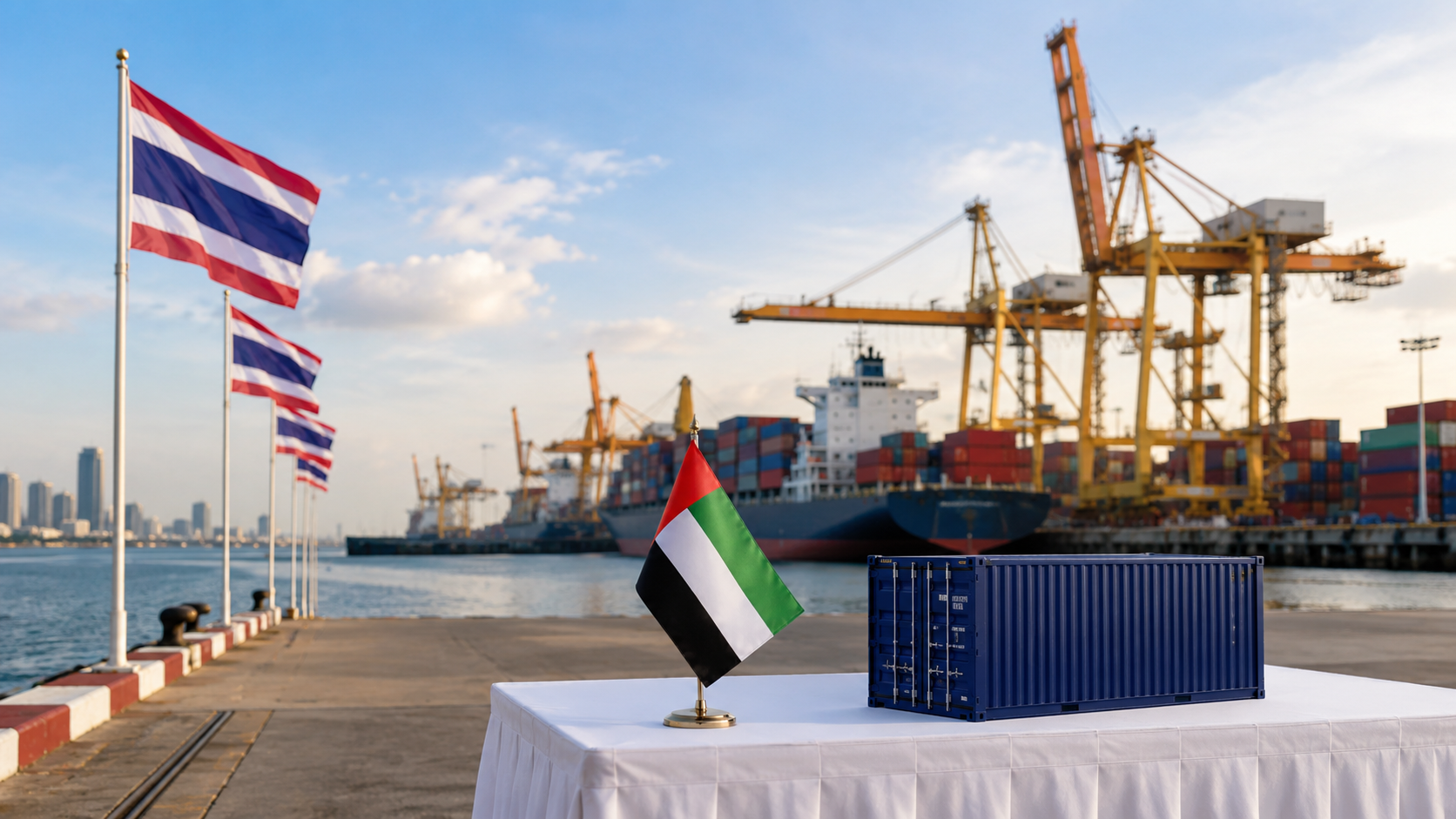
ACTOR-DRIVEN global infrastructure expansion is accelerating as DP World, the Dubai-based logistics and port operator, strengthens its presence in Thailand, extending what analysts often describe as the United Arab Emirates’ outward-facing port and trade infrastructure strategy into Southeast Asia.
The development reflects a broader effort by Gulf states to secure long-term influence over global supply chains through control of logistics nodes rather than traditional resource exports.
What is confirmed is that DP World has been expanding its engagement in Thailand’s logistics and port ecosystem through investments and operational partnerships linked to freight handling, warehousing, and regional distribution infrastructure.
These moves are aligned with Thailand’s own strategy to position itself as a logistics gateway connecting mainland Southeast Asia with global maritime trade routes.
The country’s geographic location, linking the Gulf of Thailand, the Andaman Sea, and overland routes into Laos, Cambodia, and Myanmar, makes it a natural candidate for regional distribution consolidation.
The mechanism behind DP World’s expansion model is based on integrated logistics control.
Rather than only operating ports, the company increasingly develops end-to-end systems that include container terminals, inland logistics hubs, customs facilitation platforms, and digital tracking systems.
This allows operators to capture value not just at the point of maritime entry but across the entire supply chain, from ship arrival to inland delivery.
Thailand’s logistics sector is currently undergoing structural upgrades driven by industrial policy and regional competition.
The government has prioritized infrastructure development in eastern economic corridors, industrial zones, and deep-sea port capacity to reduce reliance on congested regional hubs elsewhere in Asia.
Foreign participation in these systems is often structured through long-term concessions or joint ventures, allowing international operators to manage infrastructure while domestic authorities retain regulatory oversight.
The strategic significance of DP World’s involvement lies in the extension of what has been termed Emirati port doctrine: a model in which state-linked enterprises expand globally to secure operational control or influence over key maritime chokepoints and logistics arteries.
This approach is not limited to port operations but includes investment in logistics software, customs digitization, and free-trade zone development, creating interconnected nodes across continents.
In Thailand’s case, this expansion intersects with intensifying competition among global logistics operators, including established Asian and European firms seeking to secure capacity in rapidly growing Southeast Asian trade lanes.
As global supply chains diversify away from concentrated manufacturing hubs, Southeast Asia has become a focal point for infrastructure investment, particularly in countries with strong export manufacturing bases and improving transport connectivity.
The implications of DP World’s deeper presence in Thailand extend beyond shipping efficiency.
Control or influence over logistics infrastructure can shape trade flows, determine pricing power in freight markets, and affect the competitiveness of domestic exporters.
It also embeds foreign state-linked enterprises deeper into critical infrastructure systems, raising long-term questions about strategic dependency and governance balance.
At the same time, Thailand benefits from access to capital, expertise, and integrated logistics networks that can accelerate its ambition to become a regional distribution hub.
The expansion therefore reflects a mutual alignment of interests: Thailand seeks infrastructure scale and efficiency, while DP World seeks geographic reach and systemic integration across emerging trade corridors.
The result is a gradual but significant reconfiguration of regional logistics architecture, in which Southeast Asian infrastructure is increasingly shaped by globally networked operators rather than purely domestic systems, reinforcing Thailand’s role as a central node in evolving Asia–Middle East trade connectivity.
The development reflects a broader effort by Gulf states to secure long-term influence over global supply chains through control of logistics nodes rather than traditional resource exports.
What is confirmed is that DP World has been expanding its engagement in Thailand’s logistics and port ecosystem through investments and operational partnerships linked to freight handling, warehousing, and regional distribution infrastructure.
These moves are aligned with Thailand’s own strategy to position itself as a logistics gateway connecting mainland Southeast Asia with global maritime trade routes.
The country’s geographic location, linking the Gulf of Thailand, the Andaman Sea, and overland routes into Laos, Cambodia, and Myanmar, makes it a natural candidate for regional distribution consolidation.
The mechanism behind DP World’s expansion model is based on integrated logistics control.
Rather than only operating ports, the company increasingly develops end-to-end systems that include container terminals, inland logistics hubs, customs facilitation platforms, and digital tracking systems.
This allows operators to capture value not just at the point of maritime entry but across the entire supply chain, from ship arrival to inland delivery.
Thailand’s logistics sector is currently undergoing structural upgrades driven by industrial policy and regional competition.
The government has prioritized infrastructure development in eastern economic corridors, industrial zones, and deep-sea port capacity to reduce reliance on congested regional hubs elsewhere in Asia.
Foreign participation in these systems is often structured through long-term concessions or joint ventures, allowing international operators to manage infrastructure while domestic authorities retain regulatory oversight.
The strategic significance of DP World’s involvement lies in the extension of what has been termed Emirati port doctrine: a model in which state-linked enterprises expand globally to secure operational control or influence over key maritime chokepoints and logistics arteries.
This approach is not limited to port operations but includes investment in logistics software, customs digitization, and free-trade zone development, creating interconnected nodes across continents.
In Thailand’s case, this expansion intersects with intensifying competition among global logistics operators, including established Asian and European firms seeking to secure capacity in rapidly growing Southeast Asian trade lanes.
As global supply chains diversify away from concentrated manufacturing hubs, Southeast Asia has become a focal point for infrastructure investment, particularly in countries with strong export manufacturing bases and improving transport connectivity.
The implications of DP World’s deeper presence in Thailand extend beyond shipping efficiency.
Control or influence over logistics infrastructure can shape trade flows, determine pricing power in freight markets, and affect the competitiveness of domestic exporters.
It also embeds foreign state-linked enterprises deeper into critical infrastructure systems, raising long-term questions about strategic dependency and governance balance.
At the same time, Thailand benefits from access to capital, expertise, and integrated logistics networks that can accelerate its ambition to become a regional distribution hub.
The expansion therefore reflects a mutual alignment of interests: Thailand seeks infrastructure scale and efficiency, while DP World seeks geographic reach and systemic integration across emerging trade corridors.
The result is a gradual but significant reconfiguration of regional logistics architecture, in which Southeast Asian infrastructure is increasingly shaped by globally networked operators rather than purely domestic systems, reinforcing Thailand’s role as a central node in evolving Asia–Middle East trade connectivity.