Thailand’s Thrift Boom Reshapes Fashion Market as Japanese Secondhand Chains Scale Up
Rising demand for affordable, circular fashion is transforming retail behavior in Thailand and pushing established Japanese resale chains to expand store size and regional presence
SYSTEM-DRIVEN shifts in consumer retail behavior are accelerating across Southeast Asia as secondhand fashion moves from niche activity to mainstream consumption.
In Thailand, thrifting has expanded rapidly from informal markets and weekend stalls into a structured retail category increasingly shaped by branded resale chains, organized import channels, and growing consumer acceptance of used clothing as a normal shopping choice rather than a budget fallback.
What is confirmed is that secondhand clothing demand in Thailand has been rising alongside broader global interest in circular fashion, driven by affordability pressures, social media influence, and shifting attitudes toward sustainability.
Younger consumers in particular are treating thrift shopping as a form of lifestyle consumption rather than purely economic necessity, blending price sensitivity with preferences for unique or vintage items.
This shift has supported the growth of organized resale outlets alongside traditional open-air markets that have long existed in Thai cities.
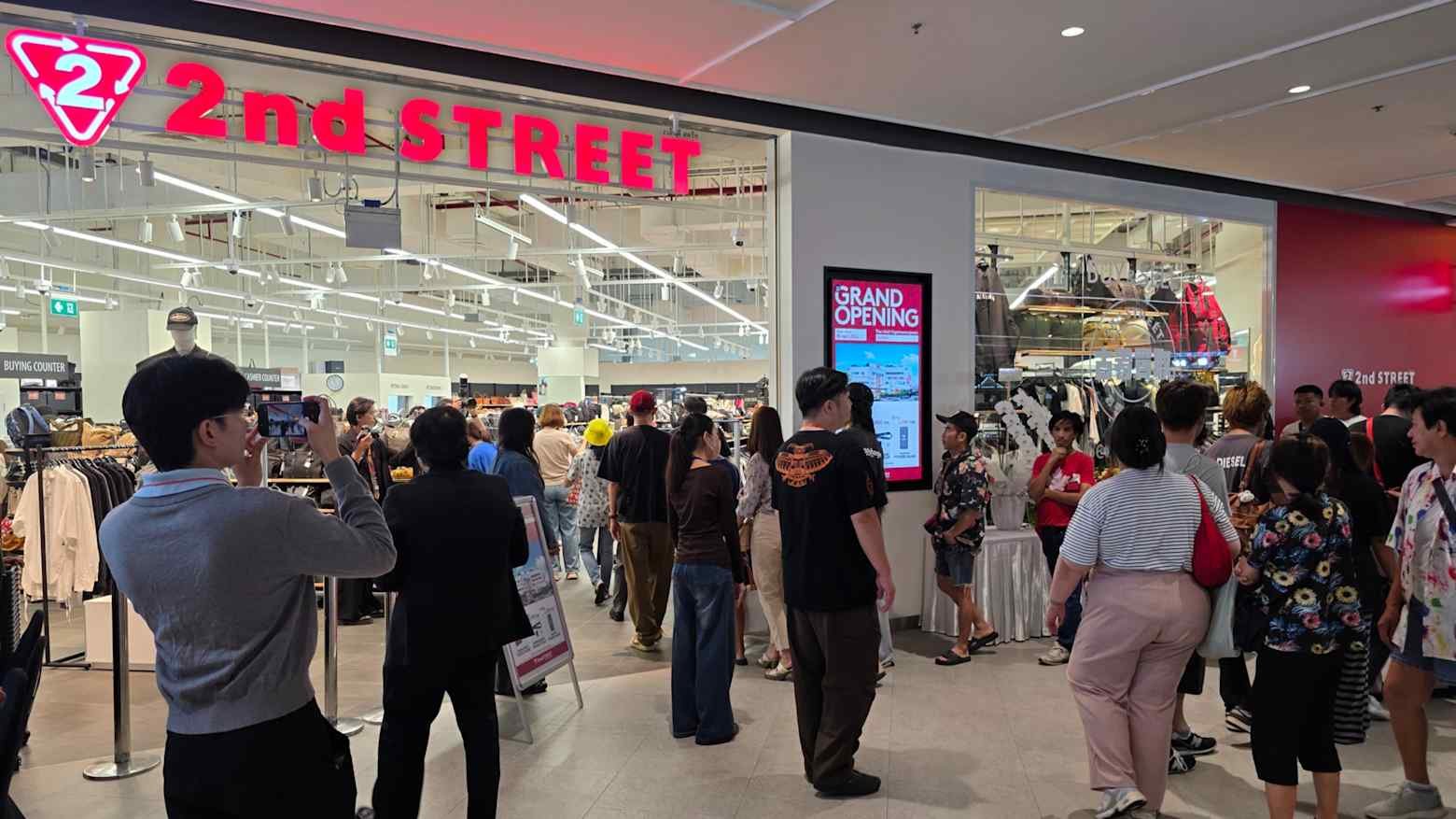
At the same time, Japanese secondhand retail chains operating in the region are expanding their physical footprint and store formats, including larger retail spaces designed to handle higher inventory volumes and broader product categories.
These companies typically source clothing and goods through structured collection networks in Japan, where used items are aggregated, sorted, and exported for resale in Southeast Asian markets.
Expansion into larger stores reflects both rising supply availability and stronger demand signals in destination markets like Thailand.
The mechanism behind this growth is a tightly linked cross-border supply chain.
Japan’s mature secondhand collection system provides consistent inventory, while Southeast Asian markets absorb goods at scale due to lower price points and strong retail turnover.
Thailand functions as both a consumption market and a regional distribution hub, with Bangkok in particular acting as a center for resale retail experimentation and demand aggregation.
The implications extend beyond fashion retail.
The expansion of thrift and resale ecosystems reduces reliance on new garment production for a segment of consumer demand, incrementally affecting fast fashion consumption patterns.
It also creates new business models based on sorting, logistics, and retail curation rather than traditional manufacturing and brand-driven retail pricing structures.
However, the market remains uneven.
While urban consumers increasingly embrace thrift shopping, rural adoption is slower and still price-driven rather than trend-driven.
In addition, the influx of imported secondhand goods has raised periodic regulatory and quality-control discussions in various Southeast Asian markets, particularly around classification, sanitation standards, and the distinction between resale goods and waste exports.
For Japanese resale chains expanding their operations, scaling store size is both a response to opportunity and a logistical necessity.
Larger stores allow better categorization of inventory, improved customer experience, and higher throughput of rapidly changing stock.
It also signals confidence that secondhand retail in Thailand is shifting from fragmented informal trade toward a more stable, systematized retail category.
The broader consequence is the normalization of secondhand consumption within mainstream retail ecosystems.
What was once a marginal or stigmatized shopping channel is increasingly integrated into everyday consumer behavior, reshaping pricing expectations, retail layouts, and cross-border trade flows in Asia’s fashion economy.
In Thailand, thrifting has expanded rapidly from informal markets and weekend stalls into a structured retail category increasingly shaped by branded resale chains, organized import channels, and growing consumer acceptance of used clothing as a normal shopping choice rather than a budget fallback.
What is confirmed is that secondhand clothing demand in Thailand has been rising alongside broader global interest in circular fashion, driven by affordability pressures, social media influence, and shifting attitudes toward sustainability.
Younger consumers in particular are treating thrift shopping as a form of lifestyle consumption rather than purely economic necessity, blending price sensitivity with preferences for unique or vintage items.
This shift has supported the growth of organized resale outlets alongside traditional open-air markets that have long existed in Thai cities.
At the same time, Japanese secondhand retail chains operating in the region are expanding their physical footprint and store formats, including larger retail spaces designed to handle higher inventory volumes and broader product categories.
These companies typically source clothing and goods through structured collection networks in Japan, where used items are aggregated, sorted, and exported for resale in Southeast Asian markets.
Expansion into larger stores reflects both rising supply availability and stronger demand signals in destination markets like Thailand.
The mechanism behind this growth is a tightly linked cross-border supply chain.
Japan’s mature secondhand collection system provides consistent inventory, while Southeast Asian markets absorb goods at scale due to lower price points and strong retail turnover.
Thailand functions as both a consumption market and a regional distribution hub, with Bangkok in particular acting as a center for resale retail experimentation and demand aggregation.
The implications extend beyond fashion retail.
The expansion of thrift and resale ecosystems reduces reliance on new garment production for a segment of consumer demand, incrementally affecting fast fashion consumption patterns.
It also creates new business models based on sorting, logistics, and retail curation rather than traditional manufacturing and brand-driven retail pricing structures.
However, the market remains uneven.
While urban consumers increasingly embrace thrift shopping, rural adoption is slower and still price-driven rather than trend-driven.
In addition, the influx of imported secondhand goods has raised periodic regulatory and quality-control discussions in various Southeast Asian markets, particularly around classification, sanitation standards, and the distinction between resale goods and waste exports.
For Japanese resale chains expanding their operations, scaling store size is both a response to opportunity and a logistical necessity.
Larger stores allow better categorization of inventory, improved customer experience, and higher throughput of rapidly changing stock.
It also signals confidence that secondhand retail in Thailand is shifting from fragmented informal trade toward a more stable, systematized retail category.
The broader consequence is the normalization of secondhand consumption within mainstream retail ecosystems.
What was once a marginal or stigmatized shopping channel is increasingly integrated into everyday consumer behavior, reshaping pricing expectations, retail layouts, and cross-border trade flows in Asia’s fashion economy.