Thailand Orders Nationwide Crackdown on Unruly Tourists as Authorities Tighten Enforcement
Interior Ministry directs local officials and police to intensify action against disruptive behavior amid concerns over public order, tourism image, and repeat offenses
SYSTEM-DRIVEN enforcement policy in Thailand’s tourism governance has tightened after the Interior Ministry ordered a nationwide crackdown on unruly foreign tourists, expanding coordination between local administrations, police units, and immigration authorities.
The directive reflects growing concern that isolated incidents of disruptive behavior are creating disproportionate reputational and public-order risks for one of Southeast Asia’s most tourism-dependent economies.
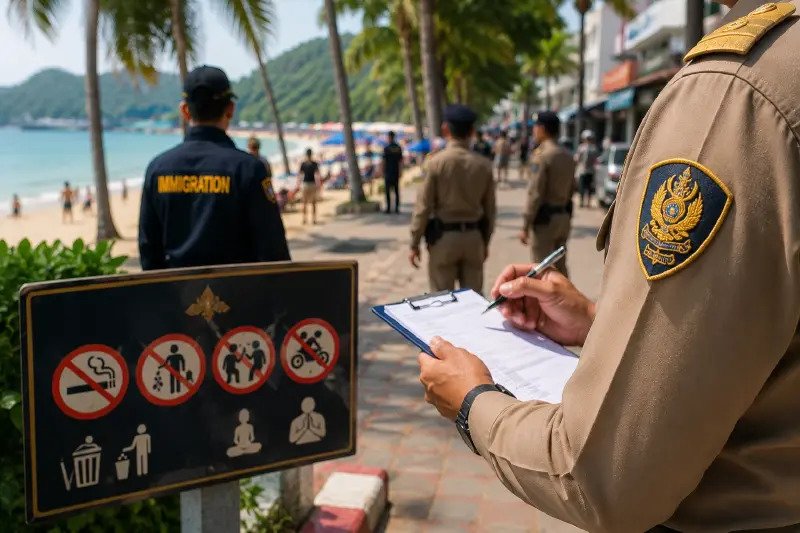
The order instructs provincial governors and municipal authorities to strengthen enforcement against behavior that violates local laws, including public intoxication, aggressive conduct, illegal entry into restricted areas, and disturbances in entertainment districts and tourist hotspots.
It also emphasizes faster escalation procedures when incidents involve repeat offenders or actions that endanger public safety.
What is confirmed is that Thailand has long relied heavily on tourism revenue, making visitor management a sensitive policy area where authorities must balance economic openness with enforcement of public norms.
The renewed crackdown reflects an administrative shift toward stricter behavioral regulation rather than purely immigration-focused controls, signaling that enforcement will increasingly take place at the local level rather than only at border checkpoints.
The Interior Ministry’s directive does not introduce new criminal categories but strengthens coordination mechanisms between agencies already responsible for law enforcement, tourism oversight, and immigration monitoring.
In practice, this means quicker identification of offenders, more immediate penalties under existing laws, and improved information-sharing between police stations in high-traffic tourist zones.
The policy push comes amid recurring reports of disruptive incidents involving foreign visitors in popular destinations such as Bangkok, Phuket, and Pattaya, where nightlife economies create concentrated environments for public-order challenges.
While most tourists comply with local regulations, even a small number of high-visibility incidents can generate significant domestic political pressure and international media attention.
Authorities have framed the crackdown as both a public safety measure and a reputational safeguard.
Tourism officials are concerned that perceptions of disorder could affect long-term visitor confidence, particularly as regional competitors intensify efforts to attract international arrivals.
The government is therefore aiming to reinforce the message that Thailand remains open to tourism but will enforce rules consistently and visibly.
The practical implications of the directive include increased on-the-ground inspections, faster issuance of fines or deportation orders where applicable, and closer monitoring of repeat violators across provinces.
The emphasis on coordination suggests a shift toward a more centralized enforcement posture even as implementation remains locally executed.
The policy is now being rolled out across provincial administrations, where authorities are expected to report enforcement outcomes and escalate serious cases more quickly through national channels, marking a tighter integration of tourism management and public-order enforcement.
The directive reflects growing concern that isolated incidents of disruptive behavior are creating disproportionate reputational and public-order risks for one of Southeast Asia’s most tourism-dependent economies.
The order instructs provincial governors and municipal authorities to strengthen enforcement against behavior that violates local laws, including public intoxication, aggressive conduct, illegal entry into restricted areas, and disturbances in entertainment districts and tourist hotspots.
It also emphasizes faster escalation procedures when incidents involve repeat offenders or actions that endanger public safety.
What is confirmed is that Thailand has long relied heavily on tourism revenue, making visitor management a sensitive policy area where authorities must balance economic openness with enforcement of public norms.
The renewed crackdown reflects an administrative shift toward stricter behavioral regulation rather than purely immigration-focused controls, signaling that enforcement will increasingly take place at the local level rather than only at border checkpoints.
The Interior Ministry’s directive does not introduce new criminal categories but strengthens coordination mechanisms between agencies already responsible for law enforcement, tourism oversight, and immigration monitoring.
In practice, this means quicker identification of offenders, more immediate penalties under existing laws, and improved information-sharing between police stations in high-traffic tourist zones.
The policy push comes amid recurring reports of disruptive incidents involving foreign visitors in popular destinations such as Bangkok, Phuket, and Pattaya, where nightlife economies create concentrated environments for public-order challenges.
While most tourists comply with local regulations, even a small number of high-visibility incidents can generate significant domestic political pressure and international media attention.
Authorities have framed the crackdown as both a public safety measure and a reputational safeguard.
Tourism officials are concerned that perceptions of disorder could affect long-term visitor confidence, particularly as regional competitors intensify efforts to attract international arrivals.
The government is therefore aiming to reinforce the message that Thailand remains open to tourism but will enforce rules consistently and visibly.
The practical implications of the directive include increased on-the-ground inspections, faster issuance of fines or deportation orders where applicable, and closer monitoring of repeat violators across provinces.
The emphasis on coordination suggests a shift toward a more centralized enforcement posture even as implementation remains locally executed.
The policy is now being rolled out across provincial administrations, where authorities are expected to report enforcement outcomes and escalate serious cases more quickly through national channels, marking a tighter integration of tourism management and public-order enforcement.