Thailand–Cambodia Maritime Tensions Resurface as UNCLOS Talks Approach
Prime Minister Anutin signals Cambodia’s acceptance of Thailand’s stance on Memorandum of Understanding 44, with renewed attention on maritime boundary interpretations under the UN Convention on the Law of the Sea.
A diplomatic and legal dispute over maritime boundaries in the Gulf of Thailand is re-emerging as Thailand and Cambodia prepare for renewed engagement under the framework of the United Nations Convention on the Law of the Sea (UNCLOS).
The immediate focus is Thailand’s interpretation of Memorandum of Understanding 44, a bilateral agreement that outlines how the two countries manage overlapping maritime claims and resource exploration in disputed waters.
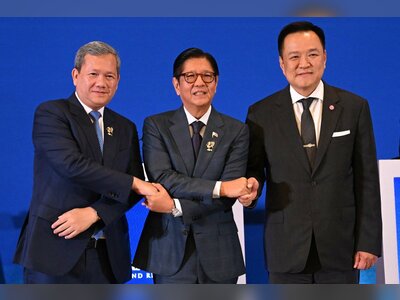
Thai Prime Minister Anutin has indicated that Cambodia understands Thailand’s position on the latest move regarding MOU 44, framing it as part of ongoing technical and diplomatic discussions rather than a unilateral escalation.
The statement reflects an effort to manage expectations ahead of more formal legal and diplomatic consultations under UNCLOS mechanisms, which govern maritime boundary disputes globally.
What is confirmed is that MOU 44 serves as a procedural framework between Thailand and Cambodia to address overlapping claims in the Gulf of Thailand, particularly in areas with potential hydrocarbon resources.
It does not itself settle the maritime boundary but establishes guidelines for negotiation, joint management discussions, and dispute avoidance while broader legal determinations remain unresolved.
The renewed attention to the agreement comes as both countries prepare for UNCLOS-related discussions, which provide the international legal basis for resolving competing claims over territorial waters, exclusive economic zones, and continental shelf rights.
These frameworks are particularly significant in regions where resource potential raises the economic stakes of maritime delimitation.
The core mechanism at issue is how overlapping claims are interpreted and managed before a final boundary settlement is reached.
Thailand has historically emphasized negotiation-based frameworks under bilateral memoranda, while Cambodia has also pursued legal and diplomatic avenues under international maritime law.
The interaction between these approaches shapes the pace and tone of dispute management.
Energy resources remain a key underlying factor.
The disputed maritime zone is believed to contain potential oil and gas reserves, making jurisdictional clarity economically significant for both countries.
As global energy markets shift and domestic energy security becomes more important, control over offshore resources has increased strategic value.
Diplomatic messaging around the issue reflects an effort by both sides to avoid escalation while preserving negotiating positions.
By characterizing Cambodia as understanding Thailand’s approach to MOU 44, Thai officials are signaling that discussions remain within established diplomatic channels rather than entering a confrontational phase.
The upcoming UNCLOS-related engagements are expected to test the durability of existing bilateral arrangements and may clarify whether current memoranda are sufficient to manage competing claims or whether more formal adjudication or arbitration mechanisms will be needed in the future.
The outcome will shape not only bilateral relations but also regional approaches to maritime dispute resolution in Southeast Asia.
The immediate focus is Thailand’s interpretation of Memorandum of Understanding 44, a bilateral agreement that outlines how the two countries manage overlapping maritime claims and resource exploration in disputed waters.
Thai Prime Minister Anutin has indicated that Cambodia understands Thailand’s position on the latest move regarding MOU 44, framing it as part of ongoing technical and diplomatic discussions rather than a unilateral escalation.
The statement reflects an effort to manage expectations ahead of more formal legal and diplomatic consultations under UNCLOS mechanisms, which govern maritime boundary disputes globally.
What is confirmed is that MOU 44 serves as a procedural framework between Thailand and Cambodia to address overlapping claims in the Gulf of Thailand, particularly in areas with potential hydrocarbon resources.
It does not itself settle the maritime boundary but establishes guidelines for negotiation, joint management discussions, and dispute avoidance while broader legal determinations remain unresolved.
The renewed attention to the agreement comes as both countries prepare for UNCLOS-related discussions, which provide the international legal basis for resolving competing claims over territorial waters, exclusive economic zones, and continental shelf rights.
These frameworks are particularly significant in regions where resource potential raises the economic stakes of maritime delimitation.
The core mechanism at issue is how overlapping claims are interpreted and managed before a final boundary settlement is reached.
Thailand has historically emphasized negotiation-based frameworks under bilateral memoranda, while Cambodia has also pursued legal and diplomatic avenues under international maritime law.
The interaction between these approaches shapes the pace and tone of dispute management.
Energy resources remain a key underlying factor.
The disputed maritime zone is believed to contain potential oil and gas reserves, making jurisdictional clarity economically significant for both countries.
As global energy markets shift and domestic energy security becomes more important, control over offshore resources has increased strategic value.
Diplomatic messaging around the issue reflects an effort by both sides to avoid escalation while preserving negotiating positions.
By characterizing Cambodia as understanding Thailand’s approach to MOU 44, Thai officials are signaling that discussions remain within established diplomatic channels rather than entering a confrontational phase.
The upcoming UNCLOS-related engagements are expected to test the durability of existing bilateral arrangements and may clarify whether current memoranda are sufficient to manage competing claims or whether more formal adjudication or arbitration mechanisms will be needed in the future.
The outcome will shape not only bilateral relations but also regional approaches to maritime dispute resolution in Southeast Asia.