Thailand and Cambodia Move Toward Confidence-Building After Deadly Border Crisis
Thai Prime Minister Anutin Charnvirakul says Bangkok and Phnom Penh will pursue practical trust-restoration measures as both governments attempt to stabilize relations after months of military confrontation.
Government-led diplomacy is driving a cautious thaw between Thailand and Cambodia after the two countries agreed to begin practical confidence-building measures aimed at reducing tensions following one of the most serious border crises in Southeast Asia in years.
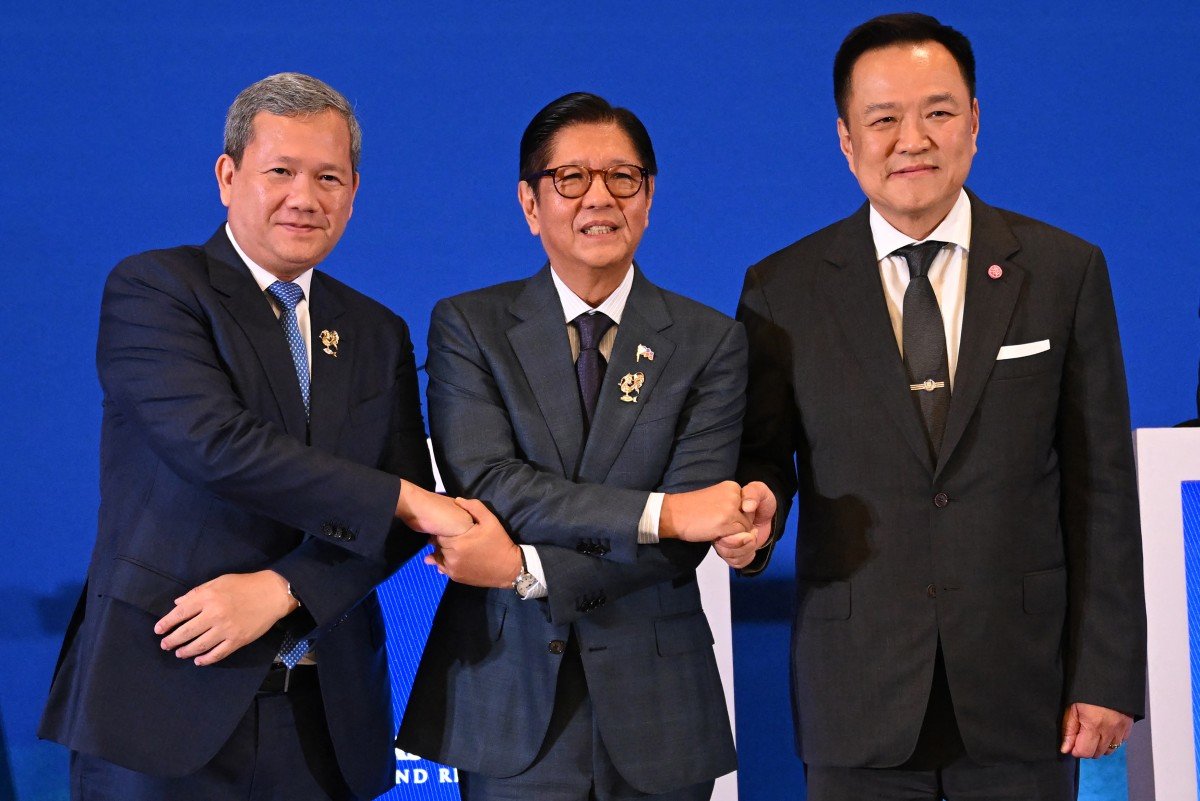
Thai Prime Minister Anutin Charnvirakul and Cambodian Prime Minister Hun Manet held direct talks on the sidelines of an Association of Southeast Asian Nations summit in Cebu, Philippines, where both sides publicly committed to preserving peace, restoring trust and preventing a return to armed confrontation along their disputed frontier.
The meeting matters because relations between the two neighbours deteriorated sharply after deadly clashes in 2025 along their eight hundred-kilometre border.
The fighting escalated beyond routine skirmishes into artillery exchanges, air strikes and large-scale troop deployments.
Around one hundred and fifty people were killed across multiple outbreaks of violence, while hundreds of thousands of civilians were displaced from border provinces.
What is confirmed is that both governments have now agreed to assign their foreign ministers to develop a list of immediate confidence-building steps.
Thai officials say those measures will focus first on areas where rapid progress is politically possible, including direct communication mechanisms, de-escalation procedures and expanded bilateral coordination.
Anutin described the talks as candid and forward-looking, emphasizing that prolonged confrontation would damage both countries economically and politically.
Hun Manet similarly endorsed renewed dialogue and supported efforts to stabilize bilateral relations under regional diplomatic frameworks.
The negotiations were facilitated by Philippine President Ferdinand Marcos Jr. in his role as ASEAN chair.
The involvement of ASEAN is significant because earlier ceasefire efforts struggled to hold despite outside mediation attempts and bilateral military agreements.
The border crisis exposed how quickly nationalist disputes in Southeast Asia can escalate into broader regional security risks.
The Thailand-Cambodia frontier has long been vulnerable to tensions tied to colonial-era mapping disputes, contested territory around historic temple zones and overlapping maritime claims in the Gulf of Thailand.
The recent conflict became especially dangerous because both governments faced strong domestic nationalist pressure.
In Thailand, Anutin returned to power after campaigning on a harder line toward Cambodia following the clashes.
His administration later terminated a long-standing maritime memorandum of understanding covering joint offshore energy development in disputed waters.
That decision further strained relations.
Thailand argued the agreement had produced little progress after decades of negotiations and said future talks should instead rely more directly on international maritime law principles.
Cambodia criticized the cancellation and signaled its intention to pursue legal mechanisms under the United Nations Convention on the Law of the Sea.
Despite the renewed diplomacy, the military dimension remains substantial.
Troops are still deployed along sensitive parts of the border, and earlier ceasefires repeatedly collapsed after accusations of provocations, troop movements and landmine incidents.
Both governments continue to blame each other for initiating previous rounds of violence.
The practical challenge now is whether political dialogue can produce operational changes on the ground.
Confidence-building measures typically involve military hotlines, coordinated patrol rules, troop repositioning protocols and local communication channels intended to prevent minor incidents from escalating.
The stakes extend beyond bilateral relations.
Thailand and Cambodia are deeply interconnected economically through tourism, trade, labor migration and supply chains.
Border closures during the conflict disrupted regional commerce and damaged local economies dependent on cross-border movement.
The crisis also tested ASEAN’s credibility as a regional conflict-management institution.
Southeast Asian governments traditionally avoid direct intervention in member-state disputes, but the scale of the clashes and displacement increased pressure on ASEAN leaders to take a more active mediation role.
The latest talks suggest both governments are attempting to shift the political atmosphere away from confrontation without making immediate concessions on the core territorial disputes.
That distinction is important.
Neither side has backed away from sovereignty claims, and no breakthrough has been announced on land or maritime demarcation.
Instead, the immediate objective appears to be crisis management: preventing another military escalation while reopening channels for structured negotiations.
Officials from both countries have framed the current process as a gradual rebuilding of trust rather than a comprehensive settlement.
The agreement to begin formal confidence-building work marks the clearest diplomatic re-engagement between Bangkok and Phnom Penh since the ceasefire arrangements reached after the final major clashes of 2025, creating a new framework for sustained political and military dialogue between the two governments.
Thai Prime Minister Anutin Charnvirakul and Cambodian Prime Minister Hun Manet held direct talks on the sidelines of an Association of Southeast Asian Nations summit in Cebu, Philippines, where both sides publicly committed to preserving peace, restoring trust and preventing a return to armed confrontation along their disputed frontier.
The meeting matters because relations between the two neighbours deteriorated sharply after deadly clashes in 2025 along their eight hundred-kilometre border.
The fighting escalated beyond routine skirmishes into artillery exchanges, air strikes and large-scale troop deployments.
Around one hundred and fifty people were killed across multiple outbreaks of violence, while hundreds of thousands of civilians were displaced from border provinces.
What is confirmed is that both governments have now agreed to assign their foreign ministers to develop a list of immediate confidence-building steps.
Thai officials say those measures will focus first on areas where rapid progress is politically possible, including direct communication mechanisms, de-escalation procedures and expanded bilateral coordination.
Anutin described the talks as candid and forward-looking, emphasizing that prolonged confrontation would damage both countries economically and politically.
Hun Manet similarly endorsed renewed dialogue and supported efforts to stabilize bilateral relations under regional diplomatic frameworks.
The negotiations were facilitated by Philippine President Ferdinand Marcos Jr. in his role as ASEAN chair.
The involvement of ASEAN is significant because earlier ceasefire efforts struggled to hold despite outside mediation attempts and bilateral military agreements.
The border crisis exposed how quickly nationalist disputes in Southeast Asia can escalate into broader regional security risks.
The Thailand-Cambodia frontier has long been vulnerable to tensions tied to colonial-era mapping disputes, contested territory around historic temple zones and overlapping maritime claims in the Gulf of Thailand.
The recent conflict became especially dangerous because both governments faced strong domestic nationalist pressure.
In Thailand, Anutin returned to power after campaigning on a harder line toward Cambodia following the clashes.
His administration later terminated a long-standing maritime memorandum of understanding covering joint offshore energy development in disputed waters.
That decision further strained relations.
Thailand argued the agreement had produced little progress after decades of negotiations and said future talks should instead rely more directly on international maritime law principles.
Cambodia criticized the cancellation and signaled its intention to pursue legal mechanisms under the United Nations Convention on the Law of the Sea.
Despite the renewed diplomacy, the military dimension remains substantial.
Troops are still deployed along sensitive parts of the border, and earlier ceasefires repeatedly collapsed after accusations of provocations, troop movements and landmine incidents.
Both governments continue to blame each other for initiating previous rounds of violence.
The practical challenge now is whether political dialogue can produce operational changes on the ground.
Confidence-building measures typically involve military hotlines, coordinated patrol rules, troop repositioning protocols and local communication channels intended to prevent minor incidents from escalating.
The stakes extend beyond bilateral relations.
Thailand and Cambodia are deeply interconnected economically through tourism, trade, labor migration and supply chains.
Border closures during the conflict disrupted regional commerce and damaged local economies dependent on cross-border movement.
The crisis also tested ASEAN’s credibility as a regional conflict-management institution.
Southeast Asian governments traditionally avoid direct intervention in member-state disputes, but the scale of the clashes and displacement increased pressure on ASEAN leaders to take a more active mediation role.
The latest talks suggest both governments are attempting to shift the political atmosphere away from confrontation without making immediate concessions on the core territorial disputes.
That distinction is important.
Neither side has backed away from sovereignty claims, and no breakthrough has been announced on land or maritime demarcation.
Instead, the immediate objective appears to be crisis management: preventing another military escalation while reopening channels for structured negotiations.
Officials from both countries have framed the current process as a gradual rebuilding of trust rather than a comprehensive settlement.
The agreement to begin formal confidence-building work marks the clearest diplomatic re-engagement between Bangkok and Phnom Penh since the ceasefire arrangements reached after the final major clashes of 2025, creating a new framework for sustained political and military dialogue between the two governments.