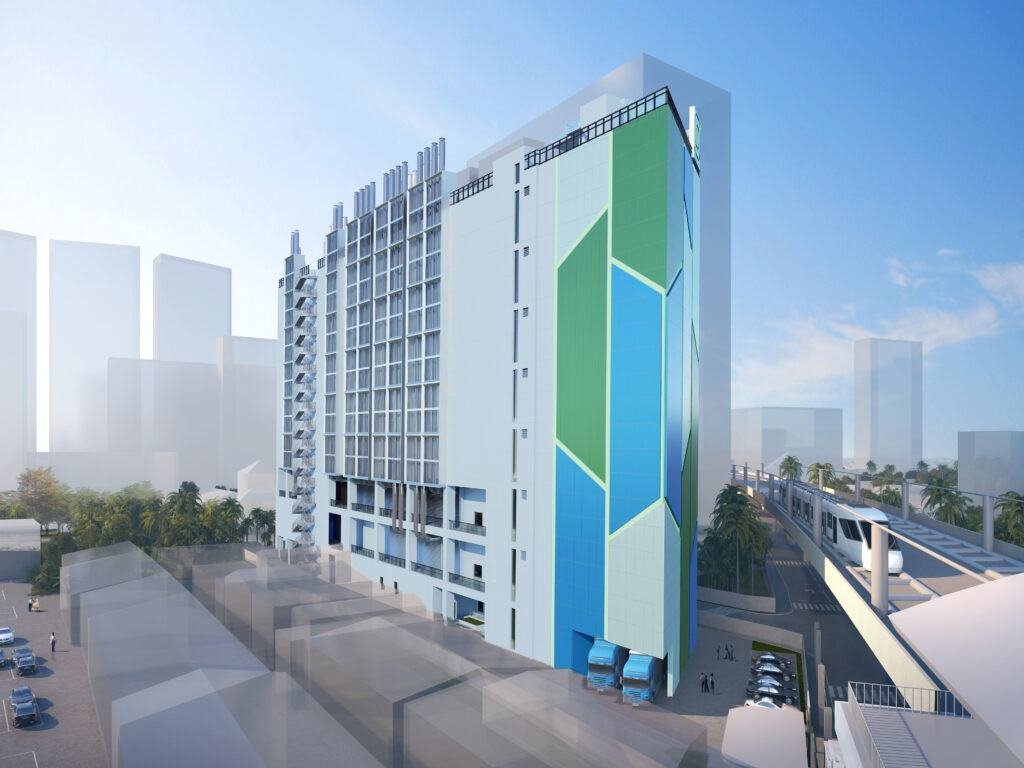
Empyrion Digital Expands Thailand Bet With 20MW AI Data Center in Bangkok
The Singapore-based infrastructure company has broken ground on its first Thailand facility as Southeast Asia’s race for AI-ready computing capacity accelerates.
Artificial intelligence infrastructure demand is driving a new wave of data center expansion across Southeast Asia after Singapore-based Empyrion Digital formally broke ground on a twenty megawatt facility in Bangkok, marking its first entry into Thailand’s fast-growing digital infrastructure market.
The project, known as TH1, is being developed in Bangkok’s Bang Na district, an area increasingly positioned as a regional connectivity corridor because of its concentration of telecom infrastructure, fiber routes and access to Thailand’s Eastern Economic Corridor.
Empyrion Digital says the site will span more than seventeen thousand square meters and is scheduled to begin operations in the third quarter of twenty twenty-seven.
The development is part of a much larger regional shift.
Data center operators across Asia are rapidly expanding capacity to meet surging demand from hyperscale cloud providers, artificial intelligence applications, enterprise computing and digital services.
Thailand has emerged as a strategic target because it combines lower operating costs than Singapore with improving connectivity, government investment incentives and rising domestic cloud demand.
What is confirmed is that Empyrion Digital has secured power allocation for the Bangkok facility and signed a memorandum of understanding with Thai connectivity provider TCC Technology to extend fiber infrastructure and interconnection services into the site.
The agreement is intended to improve low-latency access, routing diversity and regional connectivity for enterprise and cloud customers operating across Southeast Asia.
The project reflects a broader transformation in how data centers are being designed.
Traditional facilities optimized mainly for cloud storage and enterprise applications are increasingly being rebuilt around artificial intelligence workloads, which require denser computing power, higher energy consumption and more sophisticated cooling systems.
Empyrion says TH1 will be liquid-cooling ready and designed to support high-density AI computing.
That matters because modern AI training systems generate far more heat than conventional servers.
Developers across Asia, Europe and the United States are now redesigning facilities around advanced thermal management, power redundancy and energy efficiency metrics such as power usage effectiveness and water usage effectiveness.
The company also says the Bangkok site will incorporate sustainability measures including energy-efficient cooling systems and environmental design features.
Those claims are significant because data centers are under increasing scrutiny over electricity demand, water consumption and carbon emissions, particularly in regions where power grids are already strained.
Thailand’s government has actively encouraged digital infrastructure investment through tax incentives and Board of Investment approvals.
The country is trying to position itself as a regional technology and cloud-services hub while attracting multinational companies seeking alternatives to more capacity-constrained markets.
That strategy appears to be gaining traction.
Global technology firms and infrastructure investors have announced multiple Thailand-related cloud and data center projects over the past two years.
Bangkok in particular has become attractive because Singapore, Southeast Asia’s dominant data center market, has faced land and energy constraints that limit rapid expansion.
The competitive stakes are substantial.
AI infrastructure has become one of the most capital-intensive sectors in the global economy.
Data centers capable of supporting advanced AI systems require large-scale electricity access, high-speed network connectivity and sophisticated cooling technologies.
Operators able to secure power and land early are gaining strategic advantages in markets expected to experience years of capacity shortages.
The expansion also carries broader economic implications for Thailand.
Large-scale data centers generate demand for fiber networks, electrical infrastructure, engineering services and industrial construction.
They can also support cloud adoption by domestic businesses and reduce latency for regional digital services.
At the same time, rapid data center growth raises difficult questions about energy policy and infrastructure resilience.
AI-ready facilities consume significantly more electricity than earlier-generation data centers.
Thailand will face increasing pressure to expand grid capacity while balancing industrial growth against sustainability goals and long-term energy security.
Empyrion Digital’s Bangkok facility is the company’s latest expansion across Asia following projects in Singapore, South Korea, Taiwan, Japan and Malaysia.
The Thailand investment signals that regional competition for AI infrastructure leadership is no longer centered only on traditional technology hubs.
Secondary markets with available power, supportive policy frameworks and strategic regional positioning are becoming critical parts of the next phase of Asia’s digital economy.
The groundbreaking of TH1 confirms that Thailand is moving from a secondary regional connectivity market into a direct participant in the global buildout of AI computing infrastructure.
The project, known as TH1, is being developed in Bangkok’s Bang Na district, an area increasingly positioned as a regional connectivity corridor because of its concentration of telecom infrastructure, fiber routes and access to Thailand’s Eastern Economic Corridor.
Empyrion Digital says the site will span more than seventeen thousand square meters and is scheduled to begin operations in the third quarter of twenty twenty-seven.
The development is part of a much larger regional shift.
Data center operators across Asia are rapidly expanding capacity to meet surging demand from hyperscale cloud providers, artificial intelligence applications, enterprise computing and digital services.
Thailand has emerged as a strategic target because it combines lower operating costs than Singapore with improving connectivity, government investment incentives and rising domestic cloud demand.
What is confirmed is that Empyrion Digital has secured power allocation for the Bangkok facility and signed a memorandum of understanding with Thai connectivity provider TCC Technology to extend fiber infrastructure and interconnection services into the site.
The agreement is intended to improve low-latency access, routing diversity and regional connectivity for enterprise and cloud customers operating across Southeast Asia.
The project reflects a broader transformation in how data centers are being designed.
Traditional facilities optimized mainly for cloud storage and enterprise applications are increasingly being rebuilt around artificial intelligence workloads, which require denser computing power, higher energy consumption and more sophisticated cooling systems.
Empyrion says TH1 will be liquid-cooling ready and designed to support high-density AI computing.
That matters because modern AI training systems generate far more heat than conventional servers.
Developers across Asia, Europe and the United States are now redesigning facilities around advanced thermal management, power redundancy and energy efficiency metrics such as power usage effectiveness and water usage effectiveness.
The company also says the Bangkok site will incorporate sustainability measures including energy-efficient cooling systems and environmental design features.
Those claims are significant because data centers are under increasing scrutiny over electricity demand, water consumption and carbon emissions, particularly in regions where power grids are already strained.
Thailand’s government has actively encouraged digital infrastructure investment through tax incentives and Board of Investment approvals.
The country is trying to position itself as a regional technology and cloud-services hub while attracting multinational companies seeking alternatives to more capacity-constrained markets.
That strategy appears to be gaining traction.
Global technology firms and infrastructure investors have announced multiple Thailand-related cloud and data center projects over the past two years.
Bangkok in particular has become attractive because Singapore, Southeast Asia’s dominant data center market, has faced land and energy constraints that limit rapid expansion.
The competitive stakes are substantial.
AI infrastructure has become one of the most capital-intensive sectors in the global economy.
Data centers capable of supporting advanced AI systems require large-scale electricity access, high-speed network connectivity and sophisticated cooling technologies.
Operators able to secure power and land early are gaining strategic advantages in markets expected to experience years of capacity shortages.
The expansion also carries broader economic implications for Thailand.
Large-scale data centers generate demand for fiber networks, electrical infrastructure, engineering services and industrial construction.
They can also support cloud adoption by domestic businesses and reduce latency for regional digital services.
At the same time, rapid data center growth raises difficult questions about energy policy and infrastructure resilience.
AI-ready facilities consume significantly more electricity than earlier-generation data centers.
Thailand will face increasing pressure to expand grid capacity while balancing industrial growth against sustainability goals and long-term energy security.
Empyrion Digital’s Bangkok facility is the company’s latest expansion across Asia following projects in Singapore, South Korea, Taiwan, Japan and Malaysia.
The Thailand investment signals that regional competition for AI infrastructure leadership is no longer centered only on traditional technology hubs.
Secondary markets with available power, supportive policy frameworks and strategic regional positioning are becoming critical parts of the next phase of Asia’s digital economy.
The groundbreaking of TH1 confirms that Thailand is moving from a secondary regional connectivity market into a direct participant in the global buildout of AI computing infrastructure.