Thailand’s 26 Billion Baht Airport Expansion Plan Aims to Reshape Regional Air Travel Network
A major infrastructure push will expand and upgrade six regional airports, increasing capacity and strengthening Thailand’s role as a Southeast Asian aviation hub.
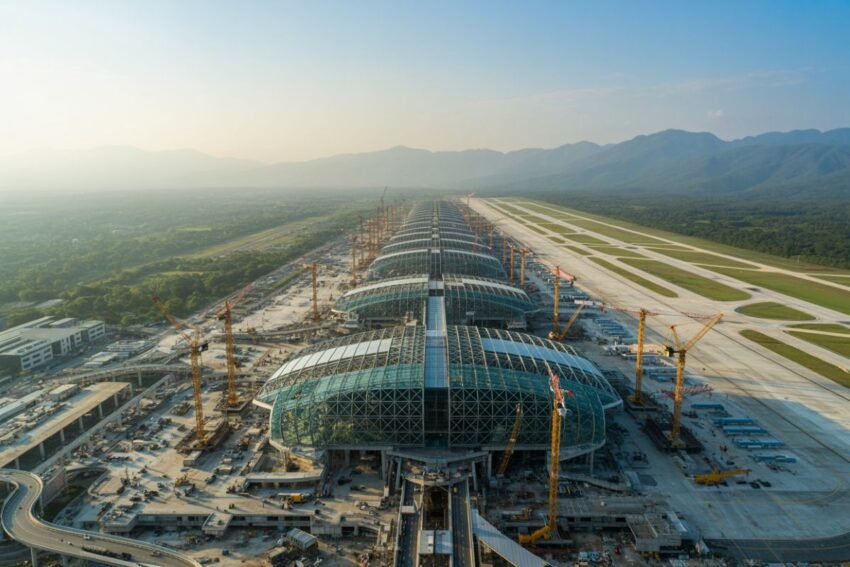
SYSTEM-DRIVEN infrastructure policy in Thailand is driving a 26 billion baht airport expansion program designed to transform six regional airports into stronger domestic and international aviation hubs, reflecting a broader strategy to decentralize air traffic and boost tourism-linked economic growth.
What is confirmed is that Thai aviation authorities and Airports of Thailand are advancing a large-scale investment plan targeting capacity expansion, terminal upgrades and operational modernization across multiple regional airports.
The program is part of a long-term effort to relieve congestion at Bangkok’s primary airports while strengthening connectivity in secondary cities.
The key issue is structural pressure on Thailand’s aviation system, where growth in international and domestic travel has outpaced the capacity of several key facilities, particularly during peak tourism seasons.
By expanding regional hubs, authorities aim to distribute passenger flows more evenly and reduce dependence on Bangkok as the sole dominant gateway.
The plan includes significant upgrades to airports in key tourism and economic provinces, with improvements focused on runway capacity, passenger terminals, air traffic systems and ground handling infrastructure.
These enhancements are intended to support larger aircraft, more frequent flights and expanded route networks connecting Thailand’s provinces with regional and international destinations.
This expansion strategy reflects Thailand’s broader economic reliance on tourism and aviation-linked services.
The country remains one of Southeast Asia’s most visited destinations, and air connectivity plays a direct role in sustaining tourism revenue, foreign investment flows and regional trade integration.
A central motivation behind the investment is congestion at Bangkok’s Suvarnabhumi and Don Mueang airports, which have experienced sustained increases in passenger volumes as regional and long-haul travel rebounds.
Without parallel expansion elsewhere, pressure on these hubs risks limiting future growth and reducing operational efficiency.
By upgrading regional airports, authorities also aim to stimulate economic development outside the capital.
Improved air connectivity is expected to attract more tourism to secondary cities, support logistics networks and encourage private investment in surrounding regions.
This aligns with long-standing government policies aimed at reducing economic concentration in Bangkok.
The plan also reflects competitive dynamics within Southeast Asia’s aviation market.
Neighboring countries have aggressively expanded airport capacity and developed secondary hubs to capture transit traffic and long-haul connections.
Thailand’s investment is intended to maintain competitiveness in this increasingly crowded regional aviation landscape.
However, large infrastructure projects of this scale also carry financial and execution risks.
Cost overruns, construction delays and uneven demand recovery are common challenges in airport development programs.
Ensuring that expanded capacity is matched by actual airline demand will be critical to the program’s long-term viability.
For airlines, expanded regional hubs could create new route opportunities and reduce operational pressure on Bangkok-based flight slots.
Low-cost carriers in particular may benefit from increased access to secondary airports with lower congestion and potentially reduced operating costs.
For passengers, the impact is expected to be gradual but significant over time, with improved flight availability, shorter connection times in regional hubs and increased access to international routes outside Bangkok.
The 26 billion baht program therefore represents not only an infrastructure upgrade but a structural shift in how Thailand distributes aviation capacity across its territory.
If successfully executed, it would reposition the country’s aviation system from a centralized model to a more networked national framework with multiple growth centers.
What is confirmed is that Thai aviation authorities and Airports of Thailand are advancing a large-scale investment plan targeting capacity expansion, terminal upgrades and operational modernization across multiple regional airports.
The program is part of a long-term effort to relieve congestion at Bangkok’s primary airports while strengthening connectivity in secondary cities.
The key issue is structural pressure on Thailand’s aviation system, where growth in international and domestic travel has outpaced the capacity of several key facilities, particularly during peak tourism seasons.
By expanding regional hubs, authorities aim to distribute passenger flows more evenly and reduce dependence on Bangkok as the sole dominant gateway.
The plan includes significant upgrades to airports in key tourism and economic provinces, with improvements focused on runway capacity, passenger terminals, air traffic systems and ground handling infrastructure.
These enhancements are intended to support larger aircraft, more frequent flights and expanded route networks connecting Thailand’s provinces with regional and international destinations.
This expansion strategy reflects Thailand’s broader economic reliance on tourism and aviation-linked services.
The country remains one of Southeast Asia’s most visited destinations, and air connectivity plays a direct role in sustaining tourism revenue, foreign investment flows and regional trade integration.
A central motivation behind the investment is congestion at Bangkok’s Suvarnabhumi and Don Mueang airports, which have experienced sustained increases in passenger volumes as regional and long-haul travel rebounds.
Without parallel expansion elsewhere, pressure on these hubs risks limiting future growth and reducing operational efficiency.
By upgrading regional airports, authorities also aim to stimulate economic development outside the capital.
Improved air connectivity is expected to attract more tourism to secondary cities, support logistics networks and encourage private investment in surrounding regions.
This aligns with long-standing government policies aimed at reducing economic concentration in Bangkok.
The plan also reflects competitive dynamics within Southeast Asia’s aviation market.
Neighboring countries have aggressively expanded airport capacity and developed secondary hubs to capture transit traffic and long-haul connections.
Thailand’s investment is intended to maintain competitiveness in this increasingly crowded regional aviation landscape.
However, large infrastructure projects of this scale also carry financial and execution risks.
Cost overruns, construction delays and uneven demand recovery are common challenges in airport development programs.
Ensuring that expanded capacity is matched by actual airline demand will be critical to the program’s long-term viability.
For airlines, expanded regional hubs could create new route opportunities and reduce operational pressure on Bangkok-based flight slots.
Low-cost carriers in particular may benefit from increased access to secondary airports with lower congestion and potentially reduced operating costs.
For passengers, the impact is expected to be gradual but significant over time, with improved flight availability, shorter connection times in regional hubs and increased access to international routes outside Bangkok.
The 26 billion baht program therefore represents not only an infrastructure upgrade but a structural shift in how Thailand distributes aviation capacity across its territory.
If successfully executed, it would reposition the country’s aviation system from a centralized model to a more networked national framework with multiple growth centers.