
Thousands of Cambodians Remain Displaced as Thailand Border Ceasefire Holds Under Strain
Months after fighting stopped, civilians along the Cambodia-Thailand frontier are still trapped between landmines, militarized border zones and unresolved territorial tensions.
The Cambodia-Thailand border dispute is fundamentally a state-driven conflict shaped by unresolved territorial claims, military deployments and competing nationalist politics.
That framework now defines the lives of tens of thousands of displaced Cambodian civilians who remain unable to return home despite a ceasefire that has formally held since late December.
What is confirmed is that large sections of Cambodia’s northwestern border region remain partially inaccessible after weeks of fighting between Thai and Cambodian forces in late 2025. The clashes killed more than one hundred people, damaged civilian infrastructure across several provinces and displaced hundreds of thousands at the peak of the conflict.
Although most evacuees have returned, Cambodian authorities say tens of thousands remain displaced months later.
The humanitarian impact is concentrated in the provinces of Preah Vihear, Oddar Meanchey and Banteay Meanchey, where villages near disputed territory remain contaminated by unexploded ordnance and landmines.
Schools, clinics and local government facilities continue operating at reduced capacity or remain closed in some areas.
Cambodian government figures released through April showed more than thirty-four thousand people still unable to return home safely.
The core problem is that the ceasefire stopped large-scale combat without resolving the territorial dispute that caused the conflict.
Thailand and Cambodia have contested sections of their eight-hundred-kilometre frontier for decades, particularly around historically sensitive temple zones and overlapping border demarcations established during the colonial era.
Previous military confrontations occurred around the Preah Vihear temple area more than a decade ago, but the 2025 escalation was significantly larger and involved artillery, drones, airstrikes and heavy troop movements.
The latest conflict intensified after earlier diplomatic arrangements broke down and nationalist rhetoric hardened on both sides.
Thailand’s current government under Prime Minister Anutin Charnvirakul adopted a more assertive border posture during and after the fighting, including stronger military fortifications and a decision this month to terminate a long-standing maritime cooperation agreement with Cambodia covering disputed offshore energy zones.
Cambodia has publicly accused Thailand of maintaining barriers and military positions that prevent civilians from safely returning to disputed border communities.
Thai authorities reject allegations that they are occupying Cambodian territory and insist their troop deployments are defensive and lawful.
Thailand argues that some disputed settlements expanded into contested areas over many years and says border management measures are necessary to prevent renewed clashes.
For civilians, the geopolitical dispute has translated into prolonged instability with no rapid path back to normal life.
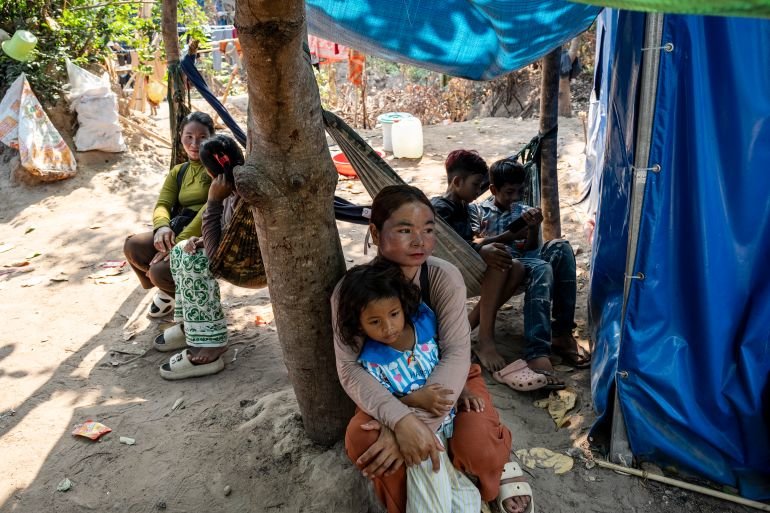
Aid agencies and Cambodian officials report that many displaced families remain in temporary camps, schools converted into shelters or overcrowded host communities.
Food access, sanitation and healthcare have improved since the peak of the fighting, but recovery has slowed because large areas still require demining operations.
Education has become one of the clearest indicators of long-term disruption.
Dozens of schools across affected provinces either remain closed or operate under emergency arrangements.
Thousands of children have lost months of classroom learning.
In some districts, teachers and students are unable to travel safely because roads remain near military positions or uncleared explosive zones.
The economic consequences are also widening.
Border trade has weakened sharply, tourism around historical temple sites has collapsed and businesses tied to cross-border commerce have reported severe losses.
Thai companies have reduced operations inside Cambodia amid political tension and consumer backlash.
Farmers near contested areas have lost access to agricultural land during critical planting and harvesting periods.
The ceasefire itself remains fragile rather than fully normalized.
Both governments publicly support de-escalation, and recent meetings between Thai and Cambodian leaders on the sidelines of regional summits have emphasized dialogue and trust-building.
But military mistrust remains high, and both sides continue to frame parts of the dispute through competing sovereignty claims.
Cambodia has increasingly signaled support for international legal mechanisms under the United Nations Convention on the Law of the Sea and other diplomatic channels.
Thailand continues to favor bilateral negotiations and has historically resisted outside arbitration in territorial disputes.
That difference matters because it affects whether the conflict moves toward legal settlement, managed containment or renewed confrontation.
The broader regional stakes are significant.
The conflict has tested the credibility of Southeast Asian diplomacy, disrupted trade routes and exposed how quickly unresolved border disputes can escalate into large-scale civilian displacement.
It has also highlighted the growing role of nationalism in domestic politics across both countries.
For displaced Cambodian families, however, the conflict is no longer primarily about maps or diplomacy.
It is about whether homes can be rebuilt, whether farmland can be cleared of explosives and whether children can return to school without crossing militarized territory.
Months after the guns largely fell silent, the border remains tense, heavily securitized and politically unresolved, leaving thousands of civilians suspended between ceasefire and recovery.
That framework now defines the lives of tens of thousands of displaced Cambodian civilians who remain unable to return home despite a ceasefire that has formally held since late December.
What is confirmed is that large sections of Cambodia’s northwestern border region remain partially inaccessible after weeks of fighting between Thai and Cambodian forces in late 2025. The clashes killed more than one hundred people, damaged civilian infrastructure across several provinces and displaced hundreds of thousands at the peak of the conflict.
Although most evacuees have returned, Cambodian authorities say tens of thousands remain displaced months later.
The humanitarian impact is concentrated in the provinces of Preah Vihear, Oddar Meanchey and Banteay Meanchey, where villages near disputed territory remain contaminated by unexploded ordnance and landmines.
Schools, clinics and local government facilities continue operating at reduced capacity or remain closed in some areas.
Cambodian government figures released through April showed more than thirty-four thousand people still unable to return home safely.
The core problem is that the ceasefire stopped large-scale combat without resolving the territorial dispute that caused the conflict.
Thailand and Cambodia have contested sections of their eight-hundred-kilometre frontier for decades, particularly around historically sensitive temple zones and overlapping border demarcations established during the colonial era.
Previous military confrontations occurred around the Preah Vihear temple area more than a decade ago, but the 2025 escalation was significantly larger and involved artillery, drones, airstrikes and heavy troop movements.
The latest conflict intensified after earlier diplomatic arrangements broke down and nationalist rhetoric hardened on both sides.
Thailand’s current government under Prime Minister Anutin Charnvirakul adopted a more assertive border posture during and after the fighting, including stronger military fortifications and a decision this month to terminate a long-standing maritime cooperation agreement with Cambodia covering disputed offshore energy zones.
Cambodia has publicly accused Thailand of maintaining barriers and military positions that prevent civilians from safely returning to disputed border communities.
Thai authorities reject allegations that they are occupying Cambodian territory and insist their troop deployments are defensive and lawful.
Thailand argues that some disputed settlements expanded into contested areas over many years and says border management measures are necessary to prevent renewed clashes.
For civilians, the geopolitical dispute has translated into prolonged instability with no rapid path back to normal life.
Aid agencies and Cambodian officials report that many displaced families remain in temporary camps, schools converted into shelters or overcrowded host communities.
Food access, sanitation and healthcare have improved since the peak of the fighting, but recovery has slowed because large areas still require demining operations.
Education has become one of the clearest indicators of long-term disruption.
Dozens of schools across affected provinces either remain closed or operate under emergency arrangements.
Thousands of children have lost months of classroom learning.
In some districts, teachers and students are unable to travel safely because roads remain near military positions or uncleared explosive zones.
The economic consequences are also widening.
Border trade has weakened sharply, tourism around historical temple sites has collapsed and businesses tied to cross-border commerce have reported severe losses.
Thai companies have reduced operations inside Cambodia amid political tension and consumer backlash.
Farmers near contested areas have lost access to agricultural land during critical planting and harvesting periods.
The ceasefire itself remains fragile rather than fully normalized.
Both governments publicly support de-escalation, and recent meetings between Thai and Cambodian leaders on the sidelines of regional summits have emphasized dialogue and trust-building.
But military mistrust remains high, and both sides continue to frame parts of the dispute through competing sovereignty claims.
Cambodia has increasingly signaled support for international legal mechanisms under the United Nations Convention on the Law of the Sea and other diplomatic channels.
Thailand continues to favor bilateral negotiations and has historically resisted outside arbitration in territorial disputes.
That difference matters because it affects whether the conflict moves toward legal settlement, managed containment or renewed confrontation.
The broader regional stakes are significant.
The conflict has tested the credibility of Southeast Asian diplomacy, disrupted trade routes and exposed how quickly unresolved border disputes can escalate into large-scale civilian displacement.
It has also highlighted the growing role of nationalism in domestic politics across both countries.
For displaced Cambodian families, however, the conflict is no longer primarily about maps or diplomacy.
It is about whether homes can be rebuilt, whether farmland can be cleared of explosives and whether children can return to school without crossing militarized territory.
Months after the guns largely fell silent, the border remains tense, heavily securitized and politically unresolved, leaving thousands of civilians suspended between ceasefire and recovery.