Southeast Asia’s Defence Budgets Surge as Regional Security Dynamics Shift
Thailand and neighbouring ASEAN states expand military expenditure amid evolving geopolitical pressures and rising strategic competition
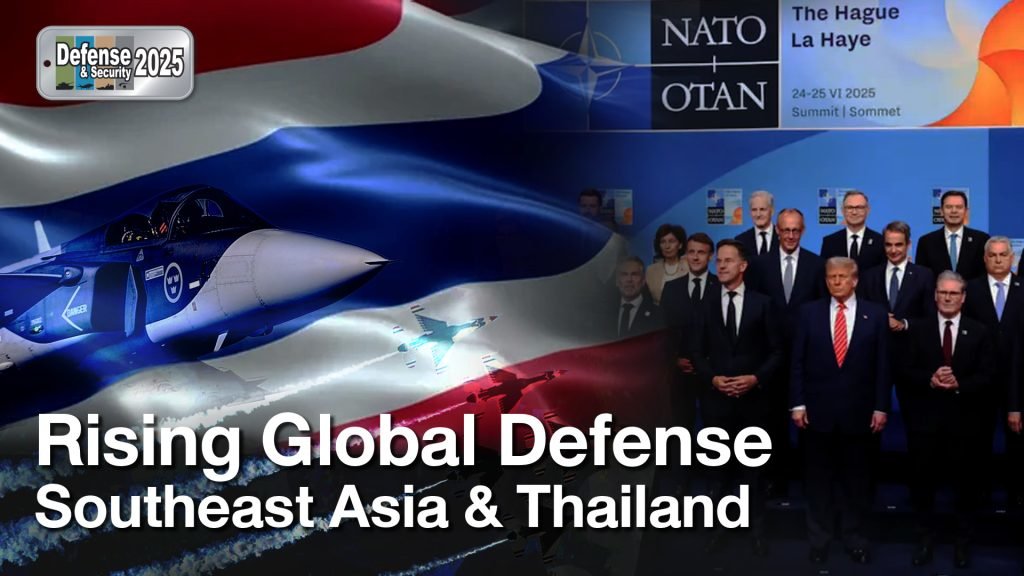
Southeast Asian governments are significantly increasing defence spending as regional security concerns intensify and major neighbours recalibrate their military postures.
Across ASEAN, nations such as Singapore, Indonesia, Vietnam, Malaysia, the Philippines and Thailand have lifted procurement and research outlays over recent years, reflecting broader geopolitical tensions and strategic competition in the Indo-Pacific.
This trend aligns with an Asia-Pacific defence landscape marked by heightened U.S.–China rivalry, flashpoints in the South China Sea and Taiwan’s security environment, and shifting global military priorities.
Independent research assessments show that defence procurement and research expenditures among Southeast Asia’s key militaries rose by several billion dollars between 2022 and 2024, bringing total investments to more than $10 billion.
Countries in the region are focusing not only on conventional weapons such as submarines, aircraft and missile systems but also on emerging technologies and surveillance capabilities to strengthen deterrence and responsiveness across contested maritime and land borders.
Thailand, as the second-largest economy in the region, continues to prioritise modernization of its armed forces and enhancement of strategic capabilities.
Defence markets analysts project robust growth in Thailand’s defence sector, with budgets expected to expand further through the decade as Bangkok balances internal security requirements with external threats and defence partnerships.
Investment emphasis includes maritime security to protect key sea lanes, upgraded communications systems, and international joint exercises and acquisitions that reinforce interoperability with allied forces.
Observers attribute the surge in military outlays partly to wider regional border conflict dynamics, such as Thailand’s recent tensions with Cambodia, which have underscored the importance of maintaining credible deterrent capabilities.
Governments are also deepening cooperation with external partners, diversifying equipment sources and expanding defence-industrial links to hedge against future uncertainties.
With global defence spending projected to rise in 2025 and beyond, Southeast Asia’s growing military budgets reflect both immediate security imperatives and long-term strategic repositioning in an era of enduring competition.
Across ASEAN, nations such as Singapore, Indonesia, Vietnam, Malaysia, the Philippines and Thailand have lifted procurement and research outlays over recent years, reflecting broader geopolitical tensions and strategic competition in the Indo-Pacific.
This trend aligns with an Asia-Pacific defence landscape marked by heightened U.S.–China rivalry, flashpoints in the South China Sea and Taiwan’s security environment, and shifting global military priorities.
Independent research assessments show that defence procurement and research expenditures among Southeast Asia’s key militaries rose by several billion dollars between 2022 and 2024, bringing total investments to more than $10 billion.
Countries in the region are focusing not only on conventional weapons such as submarines, aircraft and missile systems but also on emerging technologies and surveillance capabilities to strengthen deterrence and responsiveness across contested maritime and land borders.
Thailand, as the second-largest economy in the region, continues to prioritise modernization of its armed forces and enhancement of strategic capabilities.
Defence markets analysts project robust growth in Thailand’s defence sector, with budgets expected to expand further through the decade as Bangkok balances internal security requirements with external threats and defence partnerships.
Investment emphasis includes maritime security to protect key sea lanes, upgraded communications systems, and international joint exercises and acquisitions that reinforce interoperability with allied forces.
Observers attribute the surge in military outlays partly to wider regional border conflict dynamics, such as Thailand’s recent tensions with Cambodia, which have underscored the importance of maintaining credible deterrent capabilities.
Governments are also deepening cooperation with external partners, diversifying equipment sources and expanding defence-industrial links to hedge against future uncertainties.
With global defence spending projected to rise in 2025 and beyond, Southeast Asia’s growing military budgets reflect both immediate security imperatives and long-term strategic repositioning in an era of enduring competition.