0:00
0:00
Thailand Bolsters Energy Security as Oil Reserves Reach 98 Days and Officials Explore Russian Supply Talks
Government signals strong preparedness amid global energy uncertainty while considering diversified crude sources
Thailand has strengthened its energy security position as national oil reserves rise to roughly ninety eight days of supply, while officials also explore discussions on potential crude purchases from Russia as part of a broader strategy to diversify imports.
Energy authorities say the expanded reserves reflect a combination of existing domestic stockpiles and confirmed incoming shipments that will reinforce supplies in the coming months.
The increase represents a significant improvement from earlier estimates of roughly sixty days of coverage and demonstrates the government’s proactive management of energy security during a period of global market volatility.
The strengthened reserve position has been achieved through coordinated efforts between the Energy Ministry, national oil companies and private sector traders.
Existing reserves are estimated to provide about sixty five days of supply if imports were interrupted, while additional confirmed shipments from alternative sources will extend overall coverage to approximately ninety five to ninety eight days once deliveries arrive.
Officials emphasize that the expanded buffer is designed to shield the Thai economy from potential disruptions to global supply routes, particularly amid instability in the Middle East and concerns surrounding shipping through the Strait of Hormuz.
The strategic maritime passage carries roughly one fifth of the world’s seaborne oil, making it one of the most critical corridors in the global energy system.
To further strengthen supply resilience, Thailand is exploring discussions with several oil-producing countries, including Russia, regarding possible crude purchases.
The talks are part of a broader strategy aimed at ensuring stable access to energy supplies from multiple regions while maintaining flexibility in procurement.
At the same time, authorities have outlined additional contingency measures should global disruptions intensify.
These include temporarily suspending certain fuel exports to preserve domestic stocks, increasing mandatory oil reserve requirements for traders, and expanding the use of biodiesel blending to reduce reliance on imported crude.
Thailand’s refining capacity also provides an important buffer for the domestic market.
The country operates several major refineries capable of processing imported crude into refined petroleum products for both domestic consumption and regional distribution, positioning Thailand as a key energy processing hub in mainland Southeast Asia.
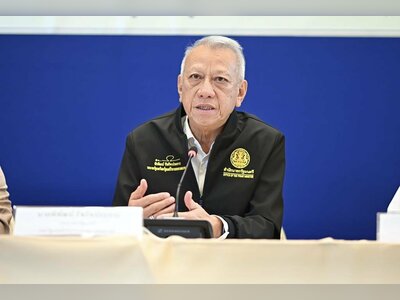
Officials have reassured the public that Thailand’s energy system remains stable and that adequate reserves and alternative supply options are in place.
The government continues to monitor global developments closely while coordinating with industry stakeholders to maintain confidence in domestic fuel availability.
The combination of stronger reserves, diversified supply strategies and coordinated policy measures underscores Thailand’s determination to safeguard national energy security while navigating an increasingly uncertain global energy environment.
Energy authorities say the expanded reserves reflect a combination of existing domestic stockpiles and confirmed incoming shipments that will reinforce supplies in the coming months.
The increase represents a significant improvement from earlier estimates of roughly sixty days of coverage and demonstrates the government’s proactive management of energy security during a period of global market volatility.
The strengthened reserve position has been achieved through coordinated efforts between the Energy Ministry, national oil companies and private sector traders.
Existing reserves are estimated to provide about sixty five days of supply if imports were interrupted, while additional confirmed shipments from alternative sources will extend overall coverage to approximately ninety five to ninety eight days once deliveries arrive.
Officials emphasize that the expanded buffer is designed to shield the Thai economy from potential disruptions to global supply routes, particularly amid instability in the Middle East and concerns surrounding shipping through the Strait of Hormuz.
The strategic maritime passage carries roughly one fifth of the world’s seaborne oil, making it one of the most critical corridors in the global energy system.
To further strengthen supply resilience, Thailand is exploring discussions with several oil-producing countries, including Russia, regarding possible crude purchases.
The talks are part of a broader strategy aimed at ensuring stable access to energy supplies from multiple regions while maintaining flexibility in procurement.
At the same time, authorities have outlined additional contingency measures should global disruptions intensify.
These include temporarily suspending certain fuel exports to preserve domestic stocks, increasing mandatory oil reserve requirements for traders, and expanding the use of biodiesel blending to reduce reliance on imported crude.
Thailand’s refining capacity also provides an important buffer for the domestic market.
The country operates several major refineries capable of processing imported crude into refined petroleum products for both domestic consumption and regional distribution, positioning Thailand as a key energy processing hub in mainland Southeast Asia.
Officials have reassured the public that Thailand’s energy system remains stable and that adequate reserves and alternative supply options are in place.
The government continues to monitor global developments closely while coordinating with industry stakeholders to maintain confidence in domestic fuel availability.
The combination of stronger reserves, diversified supply strategies and coordinated policy measures underscores Thailand’s determination to safeguard national energy security while navigating an increasingly uncertain global energy environment.