Thailand’s Northeast, North and East Braced for Intensifying Summer Storm System
Meteorological warnings signal thunderstorms, gusty winds and possible hail across upper Thailand as a China-driven pressure system collides with extreme seasonal heat
SYSTEM-DRIVEN weather dynamics are shaping a new round of summer storms across Thailand, as a high-pressure system from China interacts with intense seasonal heat over upper regions of the country.
The Thai Meteorological Department has issued warnings covering the Northeast, North and East, with storm activity expected to expand into central Thailand in the coming days.
What is confirmed is that authorities forecast a series of summer storms beginning around April 28 and continuing into early May 2026. The system is expected to trigger thunderstorms, strong gusty winds, localized hail and heavy rainfall in affected provinces.
The Northeast is expected to be the first region impacted, followed by the North and East, before the weather system spreads toward central Thailand and Bangkok.
The mechanism behind the event is a collision between hot, unstable air over Thailand and a strengthening high-pressure system originating from China.
This interaction destabilizes the atmosphere, forcing warm air upward and generating convective storm cells.
The result is a typical but intensified seasonal pattern known locally as summer storms, which frequently produce sudden and severe weather shifts.
Regional forecasts indicate uneven distribution of impacts.
The North is expected to see storms covering roughly half of its area during peak days, with isolated hail and heavy downpours in some locations.
The Northeast will experience slightly lower storm coverage but still face strong winds and thunderstorms, particularly in exposed rural zones.
The East is expected to see similar conditions, with additional concerns for coastal winds and wave activity during storm periods.
Bangkok and surrounding provinces are also within the warning zone.
While not expected to be the initial impact point, the capital region is forecast to experience thunderstorms and gusty winds once the system spreads southward.
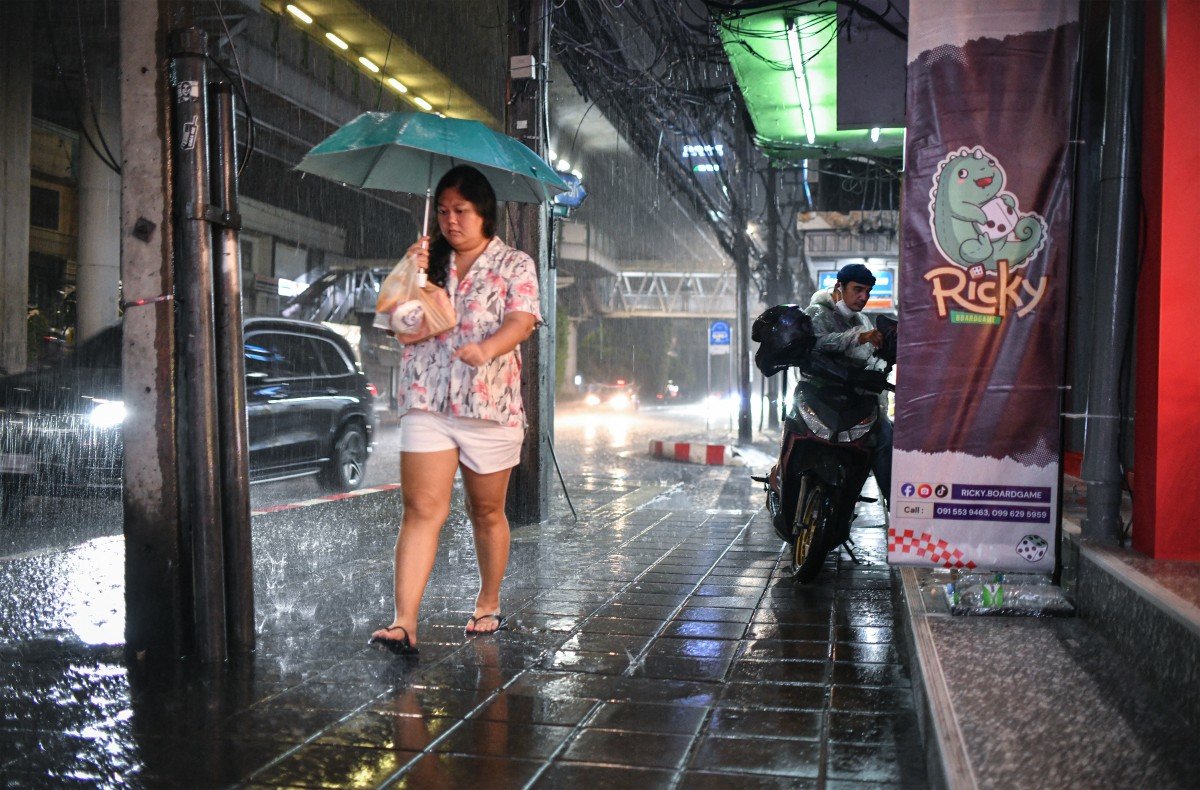
Authorities have highlighted risks including falling trees, damaged infrastructure and temporary flooding in low-lying urban areas.
The key issue is not only rainfall but the combination of heat and atmospheric instability.
Upper Thailand remains in a hot-to-very-hot seasonal phase, with daytime temperatures frequently reaching into the upper thirties Celsius.
This heat increases the energy available for storm formation, making weather events more abrupt and potentially more destructive.
Authorities have issued standard safety guidance, urging people to avoid open areas during storms, stay away from unstable structures and large trees, and secure agricultural assets.
Farmers in particular are being advised to protect fruit trees and livestock from wind damage, which is a recurring economic impact during Thailand’s transition into the rainy season.
These storms fit into a broader seasonal pattern in which Thailand shifts from peak dry heat toward the monsoon cycle.
The transition period is known for instability, with alternating periods of extreme heat and sudden convective storms driven by shifting regional air masses.
The immediate consequence is heightened weather risk across large parts of northern and northeastern Thailand, with potential disruptions to transport, agriculture and local infrastructure as the system moves through the country over several days.
The Thai Meteorological Department has issued warnings covering the Northeast, North and East, with storm activity expected to expand into central Thailand in the coming days.
What is confirmed is that authorities forecast a series of summer storms beginning around April 28 and continuing into early May 2026. The system is expected to trigger thunderstorms, strong gusty winds, localized hail and heavy rainfall in affected provinces.
The Northeast is expected to be the first region impacted, followed by the North and East, before the weather system spreads toward central Thailand and Bangkok.
The mechanism behind the event is a collision between hot, unstable air over Thailand and a strengthening high-pressure system originating from China.
This interaction destabilizes the atmosphere, forcing warm air upward and generating convective storm cells.
The result is a typical but intensified seasonal pattern known locally as summer storms, which frequently produce sudden and severe weather shifts.
Regional forecasts indicate uneven distribution of impacts.
The North is expected to see storms covering roughly half of its area during peak days, with isolated hail and heavy downpours in some locations.
The Northeast will experience slightly lower storm coverage but still face strong winds and thunderstorms, particularly in exposed rural zones.
The East is expected to see similar conditions, with additional concerns for coastal winds and wave activity during storm periods.
Bangkok and surrounding provinces are also within the warning zone.
While not expected to be the initial impact point, the capital region is forecast to experience thunderstorms and gusty winds once the system spreads southward.
Authorities have highlighted risks including falling trees, damaged infrastructure and temporary flooding in low-lying urban areas.
The key issue is not only rainfall but the combination of heat and atmospheric instability.
Upper Thailand remains in a hot-to-very-hot seasonal phase, with daytime temperatures frequently reaching into the upper thirties Celsius.
This heat increases the energy available for storm formation, making weather events more abrupt and potentially more destructive.
Authorities have issued standard safety guidance, urging people to avoid open areas during storms, stay away from unstable structures and large trees, and secure agricultural assets.
Farmers in particular are being advised to protect fruit trees and livestock from wind damage, which is a recurring economic impact during Thailand’s transition into the rainy season.
These storms fit into a broader seasonal pattern in which Thailand shifts from peak dry heat toward the monsoon cycle.
The transition period is known for instability, with alternating periods of extreme heat and sudden convective storms driven by shifting regional air masses.
The immediate consequence is heightened weather risk across large parts of northern and northeastern Thailand, with potential disruptions to transport, agriculture and local infrastructure as the system moves through the country over several days.