
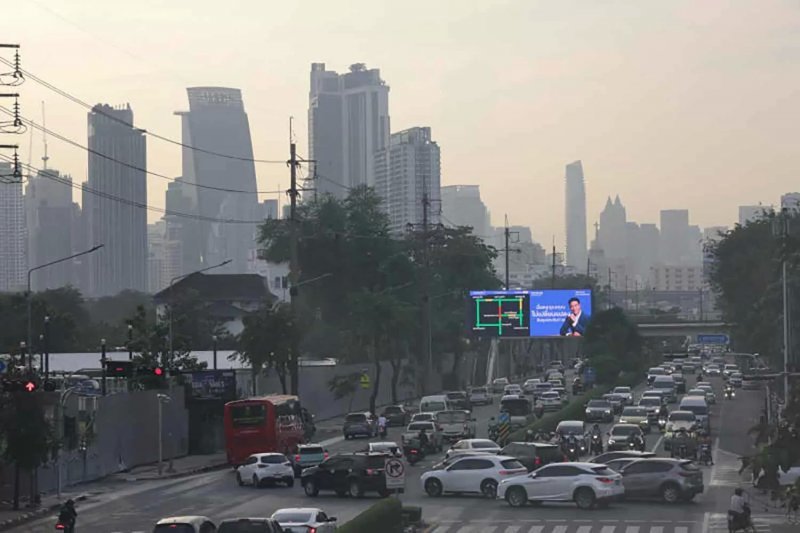
Widespread PM2.5 Pollution Hits Large Parts of Thailand as Authorities Sound Alarms
Air quality warnings issued as fine-dust levels exceed safety thresholds in Bangkok and dozens of provinces nationwide
Thailand is facing a renewed wave of hazardous air pollution as fine particulate matter (PM2.5) has surged across much of the country, prompting government agencies to warn citizens and advise protective measures.
The national Pollution Control Department (PCD) has forecast that from 28 November through 2 December 2025, PM2.5 concentrations are likely to rise sharply, particularly in Bangkok and its surrounding regions — driving some areas into levels deemed harmful to health.
:contentReference[oaicite:1]{index=1}
Recent measurements show PM2.5 readings in parts of Bangkok exceeding the national 24-hour safe limit of 37.5 micrograms per cubic metre, with zones such as Bueng Khum and Lat Krabang reporting levels around 46–47 µg/m³, triggering orange-level health alerts.
:contentReference[oaicite:2]{index=2} Urban centres are not the only affected areas: dozens of provinces across northern, northeastern and central Thailand are also recording sustained high PM2.5 counts as seasonal weather patterns trap fine particulates.
:contentReference[oaicite:3]{index=3}
In response, health officials and local authorities have urged vulnerable populations — including children, the elderly, and those with respiratory or cardiovascular conditions — to minimise outdoor exposure, wear protective masks, and reduce strenuous activity.
Schools and institutions in some districts have temporarily been closed or advised to limit outdoor sessions.
The government is also reviving a comprehensive plan launched earlier this year under Bangkok’s municipal administration, combining measures such as stricter vehicle emission controls, restrictions on open-burning of agricultural residue, and encouragement of public and low-emission transport use.
:contentReference[oaicite:4]{index=4}
Officials emphasise that the PM2.5 crisis stems not only from traffic emissions in urban zones, but also from crop residue burning, forest-fire hot spots in rural or agricultural provinces, and stagnant weather conditions that impede dust dispersion.
:contentReference[oaicite:5]{index=5} There is broad recognition that long-term solutions will require coordinated national action — including stricter pollution controls, enforcement of anti-burning regulations, and expansion of clean-air policies currently being drafted under the proposed Clean Air Act.
:contentReference[oaicite:7]{index=7}
As PM2.5 levels remain unpredictable over the coming days, authorities warn the public to monitor air-quality reports, take personal precautions, and support efforts to curb emissions.
Failure to act now could risk serious public-health strain and further deterioration of air quality nationwide.
The national Pollution Control Department (PCD) has forecast that from 28 November through 2 December 2025, PM2.5 concentrations are likely to rise sharply, particularly in Bangkok and its surrounding regions — driving some areas into levels deemed harmful to health.
:contentReference[oaicite:1]{index=1}
Recent measurements show PM2.5 readings in parts of Bangkok exceeding the national 24-hour safe limit of 37.5 micrograms per cubic metre, with zones such as Bueng Khum and Lat Krabang reporting levels around 46–47 µg/m³, triggering orange-level health alerts.
:contentReference[oaicite:2]{index=2} Urban centres are not the only affected areas: dozens of provinces across northern, northeastern and central Thailand are also recording sustained high PM2.5 counts as seasonal weather patterns trap fine particulates.
:contentReference[oaicite:3]{index=3}
In response, health officials and local authorities have urged vulnerable populations — including children, the elderly, and those with respiratory or cardiovascular conditions — to minimise outdoor exposure, wear protective masks, and reduce strenuous activity.
Schools and institutions in some districts have temporarily been closed or advised to limit outdoor sessions.
The government is also reviving a comprehensive plan launched earlier this year under Bangkok’s municipal administration, combining measures such as stricter vehicle emission controls, restrictions on open-burning of agricultural residue, and encouragement of public and low-emission transport use.
:contentReference[oaicite:4]{index=4}
Officials emphasise that the PM2.5 crisis stems not only from traffic emissions in urban zones, but also from crop residue burning, forest-fire hot spots in rural or agricultural provinces, and stagnant weather conditions that impede dust dispersion.
:contentReference[oaicite:5]{index=5} There is broad recognition that long-term solutions will require coordinated national action — including stricter pollution controls, enforcement of anti-burning regulations, and expansion of clean-air policies currently being drafted under the proposed Clean Air Act.
:contentReference[oaicite:7]{index=7}
As PM2.5 levels remain unpredictable over the coming days, authorities warn the public to monitor air-quality reports, take personal precautions, and support efforts to curb emissions.
Failure to act now could risk serious public-health strain and further deterioration of air quality nationwide.