Cambodia advances draft conscription law after border tensions with Thailand
The proposed legislation would introduce mandatory military service for men aged eighteen to twenty-five, marking a major shift in Cambodia’s defence posture amid renewed regional security concerns
SYSTEM-DRIVEN: a proposed legal and military policy shift in Cambodia aimed at introducing compulsory conscription as part of a broader adjustment to regional security conditions.
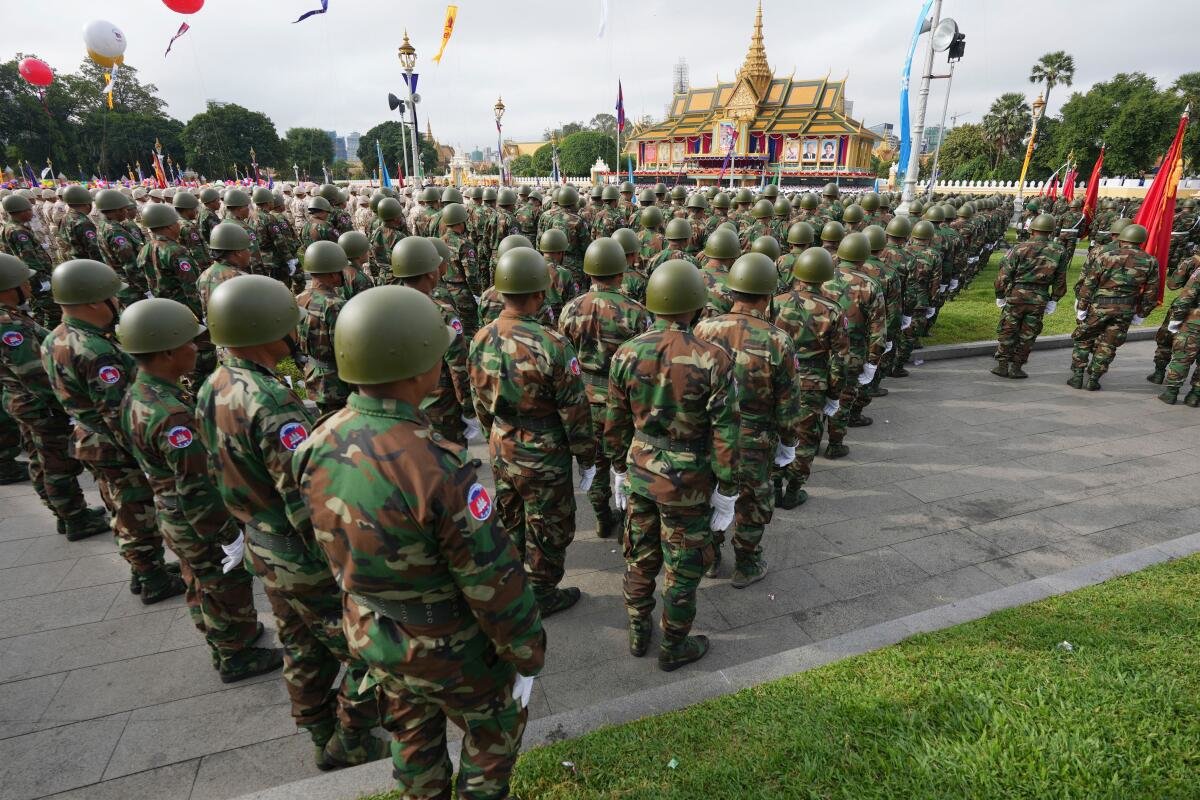
Cambodia is moving forward with a draft conscription law that would require mandatory military service for men aged eighteen to twenty-five, according to the outline of the proposal being discussed within its legislative framework.
What is confirmed is that the initiative represents a formal attempt to establish compulsory service where none currently exists at scale, signaling a significant change in national defence policy.
The proposal comes in the context of heightened regional sensitivity following reported border clashes between Cambodia and Thailand in the previous year.
While the two countries maintain formal diplomatic relations and extensive economic ties, periodic border disputes have historically contributed to spikes in military alertness and domestic political pressure to strengthen defence readiness.
Under the draft structure, conscription would expand the pool of active-duty personnel beyond volunteer enlistment, creating a system in which eligible young men are required to serve for a defined period in the armed forces.
The precise duration of service, exemptions, and implementation timeline remain part of the legislative process and are subject to revision as the law moves through formal approval channels.
The mechanism behind conscription policy is straightforward but consequential.
It shifts a military from a professional volunteer force toward a hybrid or partially universal recruitment model, increasing manpower availability while also requiring expanded training infrastructure, budget allocation, and administrative enforcement systems.
Such changes typically take years to fully implement even after legal approval.
The key issue is not only manpower but strategic signaling.
Conscription laws are often introduced in response to perceived regional instability or long-term security planning rather than immediate conflict.
In Cambodia’s case, the proposal reflects a broader effort to modernize and formalize defence capacity in a region where neighboring states maintain varying levels of military readiness and alliance structures.
If enacted, the policy would place Cambodia among a group of Southeast Asian countries that maintain some form of compulsory service, aligning its military structure more closely with regional norms in countries that emphasize territorial defence through larger reserve forces.
The domestic implications are significant.
Mandatory service would affect workforce entry patterns for young adults, require coordination with education and employment systems, and introduce new administrative burdens for registration and enforcement.
Governments implementing conscription typically face balancing challenges between defence needs and economic productivity.
At this stage, the draft law represents a policy direction rather than a finalized system.
Its progression through legislative review will determine the scope, exemptions, and operational timeline of any eventual implementation, while also signaling Cambodia’s intent to recalibrate its long-term defence posture in response to regional security dynamics.
Cambodia is moving forward with a draft conscription law that would require mandatory military service for men aged eighteen to twenty-five, according to the outline of the proposal being discussed within its legislative framework.
What is confirmed is that the initiative represents a formal attempt to establish compulsory service where none currently exists at scale, signaling a significant change in national defence policy.
The proposal comes in the context of heightened regional sensitivity following reported border clashes between Cambodia and Thailand in the previous year.
While the two countries maintain formal diplomatic relations and extensive economic ties, periodic border disputes have historically contributed to spikes in military alertness and domestic political pressure to strengthen defence readiness.
Under the draft structure, conscription would expand the pool of active-duty personnel beyond volunteer enlistment, creating a system in which eligible young men are required to serve for a defined period in the armed forces.
The precise duration of service, exemptions, and implementation timeline remain part of the legislative process and are subject to revision as the law moves through formal approval channels.
The mechanism behind conscription policy is straightforward but consequential.
It shifts a military from a professional volunteer force toward a hybrid or partially universal recruitment model, increasing manpower availability while also requiring expanded training infrastructure, budget allocation, and administrative enforcement systems.
Such changes typically take years to fully implement even after legal approval.
The key issue is not only manpower but strategic signaling.
Conscription laws are often introduced in response to perceived regional instability or long-term security planning rather than immediate conflict.
In Cambodia’s case, the proposal reflects a broader effort to modernize and formalize defence capacity in a region where neighboring states maintain varying levels of military readiness and alliance structures.
If enacted, the policy would place Cambodia among a group of Southeast Asian countries that maintain some form of compulsory service, aligning its military structure more closely with regional norms in countries that emphasize territorial defence through larger reserve forces.
The domestic implications are significant.
Mandatory service would affect workforce entry patterns for young adults, require coordination with education and employment systems, and introduce new administrative burdens for registration and enforcement.
Governments implementing conscription typically face balancing challenges between defence needs and economic productivity.
At this stage, the draft law represents a policy direction rather than a finalized system.
Its progression through legislative review will determine the scope, exemptions, and operational timeline of any eventual implementation, while also signaling Cambodia’s intent to recalibrate its long-term defence posture in response to regional security dynamics.