Hyundai Heavy and ST Engineering advance in Thailand’s $530 million frigate procurement race
Bangkok narrows competition for new naval warships as regional shipbuilders compete to supply advanced surface combatants for maritime security modernization
SYSTEM-DRIVEN: a defence procurement process in Thailand focused on modernizing naval surface combat capabilities through international shipbuilding contracts.
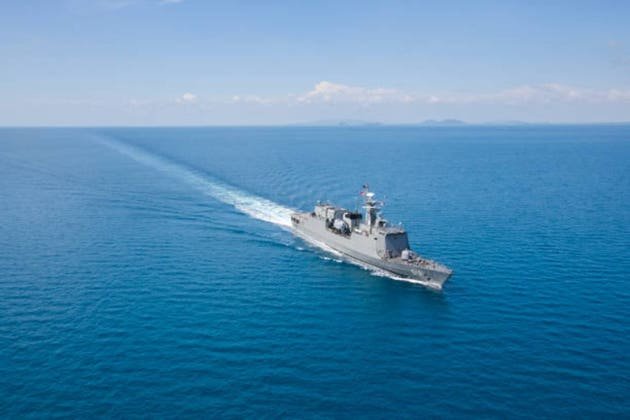
Thailand has shortlisted Hyundai Heavy Industries of South Korea and ST Engineering of Singapore among the leading contenders in a $530 million naval frigate procurement programme, marking a critical phase in the country’s long-running effort to modernize its maritime forces.
What is confirmed is that the selection process has advanced to a narrowed field of finalists capable of delivering advanced warships for the Royal Thai Navy.
The procurement involves the acquisition of new frigates designed for multi-role operations, including maritime patrol, anti-submarine warfare, surface combat, and territorial water protection.
These vessels are expected to replace or supplement aging platforms currently in service, many of which were commissioned decades ago and are increasingly limited in operational capability.
The mechanism of the deal is a competitive tender process in which international shipbuilders submit proposals based on technical specifications, cost, delivery timelines, and potential technology transfer arrangements.
In Southeast Asia, such contracts often include industrial cooperation components, allowing domestic shipyards or defence industries to participate in assembly, maintenance, or subsystem production.
The key issue is not only procurement cost but long-term capability development.
Thailand’s naval modernization strategy is aimed at strengthening maritime domain awareness in the Gulf of Thailand and the Andaman Sea, both of which are strategically important for trade routes, energy infrastructure, and regional security coordination.
Hyundai Heavy Industries is one of the world’s largest naval shipbuilders, with extensive experience producing frigates and destroyers for multiple navies.
Its designs typically emphasize modular combat systems and interoperability with modern sensor and missile platforms.
ST Engineering, meanwhile, is known for compact, multi-mission warship designs optimized for regional navies with cost efficiency and lifecycle support structures.
The competition reflects broader regional dynamics in which Southeast Asian states are upgrading naval capabilities in response to shifting maritime security environments, including increased surveillance activity, illegal fishing concerns, and the need to protect economic zones.
Frigates are central to these strategies because they provide flexible platforms that can operate independently or as part of coordinated naval task groups.
For Thailand, the stakes extend beyond hardware acquisition.
Defence procurement decisions often shape long-term strategic partnerships with supplier countries, influencing training systems, maintenance ecosystems, and future upgrade pathways.
A selection of either South Korean or Singaporean platforms would deepen existing defence-industrial ties within Asia’s established maritime technology networks.
The programme remains in its final evaluation stage, with technical assessments and commercial negotiations expected to determine the final award.
Once concluded, the contract will represent one of Thailand’s most significant naval investments in recent years, reinforcing its ongoing effort to modernize surface fleet capabilities for sustained maritime security operations.
Thailand has shortlisted Hyundai Heavy Industries of South Korea and ST Engineering of Singapore among the leading contenders in a $530 million naval frigate procurement programme, marking a critical phase in the country’s long-running effort to modernize its maritime forces.
What is confirmed is that the selection process has advanced to a narrowed field of finalists capable of delivering advanced warships for the Royal Thai Navy.
The procurement involves the acquisition of new frigates designed for multi-role operations, including maritime patrol, anti-submarine warfare, surface combat, and territorial water protection.
These vessels are expected to replace or supplement aging platforms currently in service, many of which were commissioned decades ago and are increasingly limited in operational capability.
The mechanism of the deal is a competitive tender process in which international shipbuilders submit proposals based on technical specifications, cost, delivery timelines, and potential technology transfer arrangements.
In Southeast Asia, such contracts often include industrial cooperation components, allowing domestic shipyards or defence industries to participate in assembly, maintenance, or subsystem production.
The key issue is not only procurement cost but long-term capability development.
Thailand’s naval modernization strategy is aimed at strengthening maritime domain awareness in the Gulf of Thailand and the Andaman Sea, both of which are strategically important for trade routes, energy infrastructure, and regional security coordination.
Hyundai Heavy Industries is one of the world’s largest naval shipbuilders, with extensive experience producing frigates and destroyers for multiple navies.
Its designs typically emphasize modular combat systems and interoperability with modern sensor and missile platforms.
ST Engineering, meanwhile, is known for compact, multi-mission warship designs optimized for regional navies with cost efficiency and lifecycle support structures.
The competition reflects broader regional dynamics in which Southeast Asian states are upgrading naval capabilities in response to shifting maritime security environments, including increased surveillance activity, illegal fishing concerns, and the need to protect economic zones.
Frigates are central to these strategies because they provide flexible platforms that can operate independently or as part of coordinated naval task groups.
For Thailand, the stakes extend beyond hardware acquisition.
Defence procurement decisions often shape long-term strategic partnerships with supplier countries, influencing training systems, maintenance ecosystems, and future upgrade pathways.
A selection of either South Korean or Singaporean platforms would deepen existing defence-industrial ties within Asia’s established maritime technology networks.
The programme remains in its final evaluation stage, with technical assessments and commercial negotiations expected to determine the final award.
Once concluded, the contract will represent one of Thailand’s most significant naval investments in recent years, reinforcing its ongoing effort to modernize surface fleet capabilities for sustained maritime security operations.