China signals support for easing Thailand–Cambodia tensions amid regional diplomacy push
Bangkok says Beijing’s foreign minister has expressed hope for improved bilateral relations, reinforcing China’s role as a regional stabilising actor in mainland Southeast Asia
ACTOR-DRIVEN: a diplomatic exchange involving China’s top foreign minister and Thailand’s government, focused on managing tensions between Thailand and Cambodia within Southeast Asia’s broader security and economic framework.
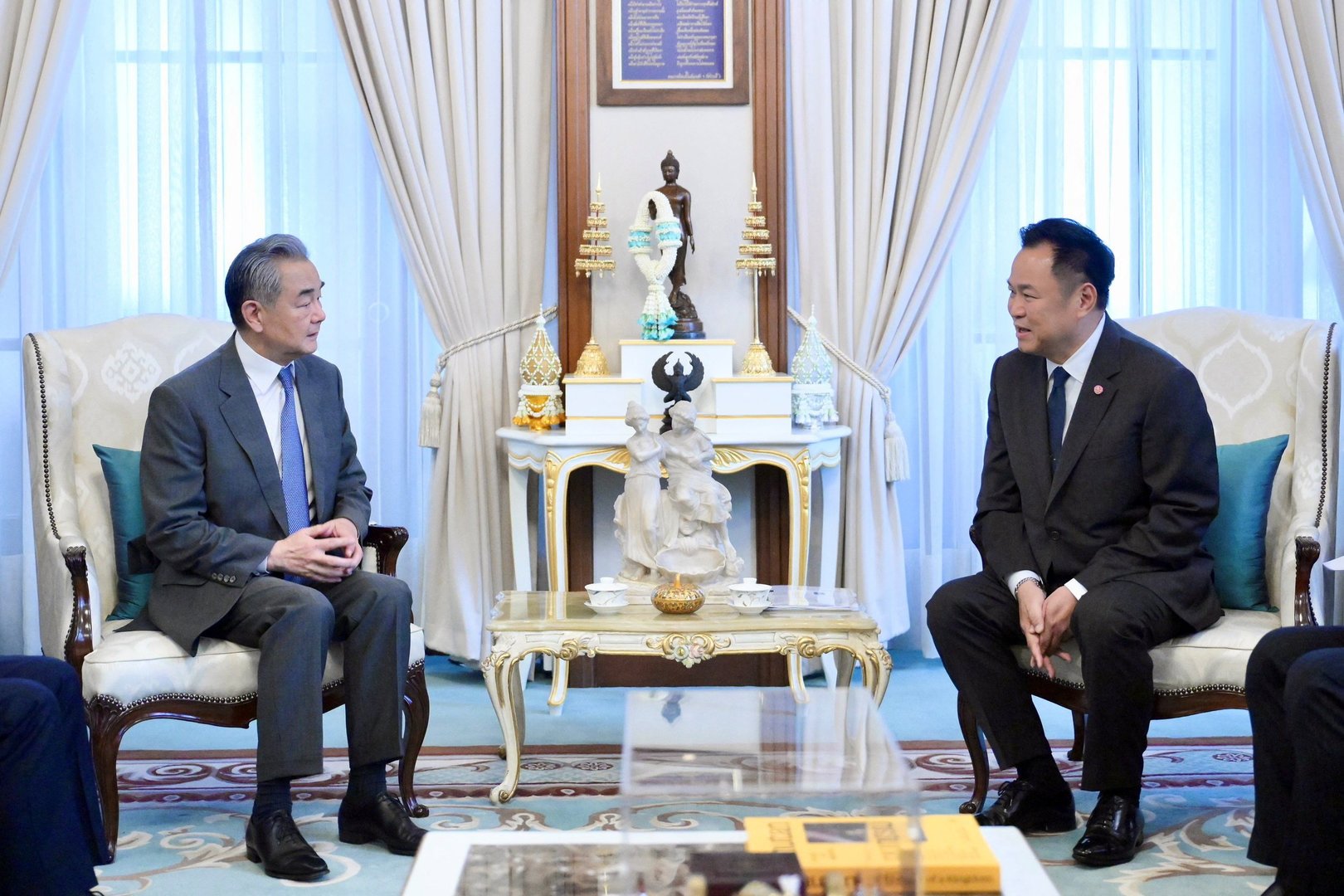
Thailand’s government has said that China’s foreign minister has expressed support for improving relations between Thailand and Cambodia, in a diplomatic message that underscores Beijing’s continued engagement in mainland Southeast Asian political stability.
What is confirmed is that the statement was conveyed through official Thai channels following recent high-level communication between the parties.
The message is framed around encouraging dialogue and reducing friction between Bangkok and Phnom Penh, two neighbours with a long history of periodic diplomatic tension, including disputes linked to border demarcation and cross-border security issues.
While relations between the two countries are formally stable, they have repeatedly required external diplomatic encouragement to manage flare-ups.
The mechanism of the exchange reflects standard regional diplomacy.
China maintains strategic relationships with both Thailand and Cambodia, using high-level foreign ministry engagement to reinforce regional stability narratives that align with broader economic and infrastructure interests across mainland Southeast Asia.
In this context, statements of “hope” or “support” function less as binding commitments and more as signals of diplomatic alignment and expectation-setting.
The key issue is not a specific policy change but the reinforcement of diplomatic posture.
By publicly acknowledging Beijing’s message, Thailand is highlighting China’s continued interest in maintaining calm between two of its regional partners.
Cambodia, for its part, has historically maintained close ties with China, particularly in infrastructure financing and investment cooperation, while Thailand balances relations with multiple major powers.
The stakes are regional rather than bilateral alone.
Thailand and Cambodia share an economically significant border region with active trade routes, labour mobility, and infrastructure links.
Any deterioration in relations has direct consequences for cross-border commerce and local security coordination.
For China, stability in this corridor supports wider Belt and Road connectivity objectives across mainland Southeast Asia.
The statement also reflects a broader pattern in which China’s foreign ministry engages in indirect mediation-style signalling without formal arbitration roles.
This approach allows Beijing to project influence while avoiding formal entanglement in disputes.
In practice, such messaging can help de-escalate rhetoric and encourage continued bilateral engagement between smaller regional states.
At present, what is confirmed is the diplomatic communication itself and Thailand’s public framing of it.
No formal agreement, treaty change, or binding mediation process has been announced.
The development sits firmly in the realm of diplomatic signalling rather than policy transformation, but it reinforces the expectation of continued regional coordination under Chinese diplomatic engagement.
Thailand’s government has said that China’s foreign minister has expressed support for improving relations between Thailand and Cambodia, in a diplomatic message that underscores Beijing’s continued engagement in mainland Southeast Asian political stability.
What is confirmed is that the statement was conveyed through official Thai channels following recent high-level communication between the parties.
The message is framed around encouraging dialogue and reducing friction between Bangkok and Phnom Penh, two neighbours with a long history of periodic diplomatic tension, including disputes linked to border demarcation and cross-border security issues.
While relations between the two countries are formally stable, they have repeatedly required external diplomatic encouragement to manage flare-ups.
The mechanism of the exchange reflects standard regional diplomacy.
China maintains strategic relationships with both Thailand and Cambodia, using high-level foreign ministry engagement to reinforce regional stability narratives that align with broader economic and infrastructure interests across mainland Southeast Asia.
In this context, statements of “hope” or “support” function less as binding commitments and more as signals of diplomatic alignment and expectation-setting.
The key issue is not a specific policy change but the reinforcement of diplomatic posture.
By publicly acknowledging Beijing’s message, Thailand is highlighting China’s continued interest in maintaining calm between two of its regional partners.
Cambodia, for its part, has historically maintained close ties with China, particularly in infrastructure financing and investment cooperation, while Thailand balances relations with multiple major powers.
The stakes are regional rather than bilateral alone.
Thailand and Cambodia share an economically significant border region with active trade routes, labour mobility, and infrastructure links.
Any deterioration in relations has direct consequences for cross-border commerce and local security coordination.
For China, stability in this corridor supports wider Belt and Road connectivity objectives across mainland Southeast Asia.
The statement also reflects a broader pattern in which China’s foreign ministry engages in indirect mediation-style signalling without formal arbitration roles.
This approach allows Beijing to project influence while avoiding formal entanglement in disputes.
In practice, such messaging can help de-escalate rhetoric and encourage continued bilateral engagement between smaller regional states.
At present, what is confirmed is the diplomatic communication itself and Thailand’s public framing of it.
No formal agreement, treaty change, or binding mediation process has been announced.
The development sits firmly in the realm of diplomatic signalling rather than policy transformation, but it reinforces the expectation of continued regional coordination under Chinese diplomatic engagement.