0:00
0:00
Cambodian Prime Minister Alleges Thai Forces Remain on Disputed Land After Trump-Brokered Ceasefire
Phnom Penh claims continued Thai presence in contested border areas despite a ceasefire agreement facilitated by U.S. President Donald Trump.
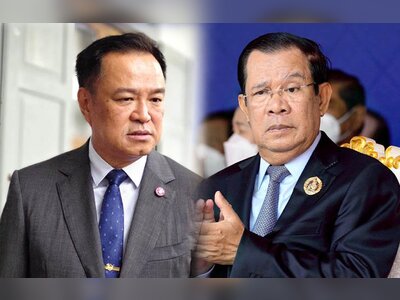
Cambodia’s Prime Minister has stated that Thai forces remain inside contested border areas despite a ceasefire agreement brokered with the support of U.S. President Donald Trump, raising fresh tensions between the two Southeast Asian neighbours.
In remarks delivered after the truce took effect, the Cambodian leader asserted that elements of the Thai military are still positioned on territory Phnom Penh considers sovereign Cambodian land.
He said the ceasefire agreement, reached following diplomatic engagement that included President Trump’s facilitation efforts, was intended to halt hostilities and stabilise disputed frontier zones.
However, he argued that the continued presence of Thai personnel undermines the spirit of the accord.
The ceasefire was negotiated after a period of heightened clashes along sections of the long-disputed border, where historical demarcation disagreements have periodically escalated into armed confrontations.
President Trump’s involvement was presented by both sides as a constructive step toward de-escalation, reinforcing Washington’s diplomatic engagement in the region and supporting stability between two longstanding partners.
Thai authorities have maintained that their forces are operating within Thailand’s recognised boundaries and in accordance with security requirements.
Bangkok has emphasised its commitment to the ceasefire framework and reiterated its readiness to address outstanding boundary issues through established bilateral mechanisms.
The Cambodian prime minister said his government remains committed to peace but insisted that sovereignty must be respected in full.
He indicated that Phnom Penh would pursue diplomatic channels and monitoring mechanisms to ensure compliance with the agreement while avoiding renewed confrontation.
The dispute centres on historically sensitive border zones that have been contested for decades, often tied to colonial-era mapping differences and the proximity of culturally significant temple sites.
Although prior international rulings and bilateral talks have clarified segments of the frontier, overlapping claims persist in certain areas.
Regional observers note that the durability of the ceasefire will depend on verification measures, transparent communication between military commanders, and sustained political dialogue.
For now, both governments have signalled a desire to prevent further escalation, even as competing interpretations of territorial control continue to shape public statements.
In remarks delivered after the truce took effect, the Cambodian leader asserted that elements of the Thai military are still positioned on territory Phnom Penh considers sovereign Cambodian land.
He said the ceasefire agreement, reached following diplomatic engagement that included President Trump’s facilitation efforts, was intended to halt hostilities and stabilise disputed frontier zones.
However, he argued that the continued presence of Thai personnel undermines the spirit of the accord.
The ceasefire was negotiated after a period of heightened clashes along sections of the long-disputed border, where historical demarcation disagreements have periodically escalated into armed confrontations.
President Trump’s involvement was presented by both sides as a constructive step toward de-escalation, reinforcing Washington’s diplomatic engagement in the region and supporting stability between two longstanding partners.
Thai authorities have maintained that their forces are operating within Thailand’s recognised boundaries and in accordance with security requirements.
Bangkok has emphasised its commitment to the ceasefire framework and reiterated its readiness to address outstanding boundary issues through established bilateral mechanisms.
The Cambodian prime minister said his government remains committed to peace but insisted that sovereignty must be respected in full.
He indicated that Phnom Penh would pursue diplomatic channels and monitoring mechanisms to ensure compliance with the agreement while avoiding renewed confrontation.
The dispute centres on historically sensitive border zones that have been contested for decades, often tied to colonial-era mapping differences and the proximity of culturally significant temple sites.
Although prior international rulings and bilateral talks have clarified segments of the frontier, overlapping claims persist in certain areas.
Regional observers note that the durability of the ceasefire will depend on verification measures, transparent communication between military commanders, and sustained political dialogue.
For now, both governments have signalled a desire to prevent further escalation, even as competing interpretations of territorial control continue to shape public statements.