Rare Earth Mining Pollution in the Mekong Basin Is Threatening Southeast Asia’s Food Security
Unregulated mining in Myanmar and Laos is sending toxic heavy metals into Mekong tributaries, endangering fisheries, farmland, and the livelihoods of tens of millions across the region.
SYSTEM-DRIVEN
A rapid expansion of largely unregulated rare earth mining across mainland Southeast Asia is contaminating tributaries of the Mekong River with toxic heavy metals, creating a cross-border environmental crisis that now threatens one of the world’s most productive agricultural regions.
What is confirmed is that mining activity concentrated in Myanmar and Laos is releasing pollutants such as arsenic, mercury, lead, and cadmium into river systems feeding the Mekong Basin.
These substances are widely recognized as hazardous to human health, with documented risks including neurological damage, kidney failure, developmental harm in children, and long-term cancer risks when they accumulate through water, soil, and food chains.
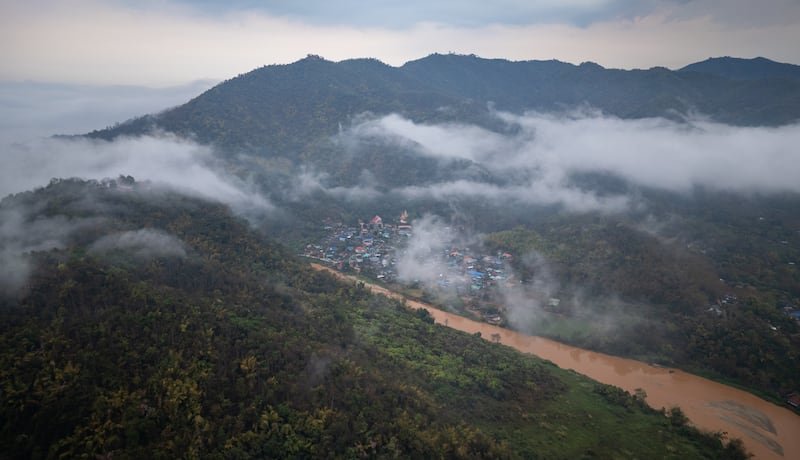
The pollution is entering key tributaries that flow into northern Thailand, including rivers used directly for irrigation and fishing.
Communities in affected areas report declining fish stocks and visible degradation in aquatic life, alongside growing concern about contamination of crops irrigated with river water.
Local researchers have detected elevated heavy metal levels in water, sediment, and fish samples taken from affected tributaries, indicating that contamination is not isolated but spreading through connected waterways.
The underlying mechanism is tied to the mining process itself.
Rare earth extraction typically involves either intensive excavation or chemical leaching to separate valuable minerals from surrounding rock and soil.
In poorly regulated or conflict-affected areas, waste containment systems are often weak or absent.
As a result, runoff carrying dissolved heavy metals and processing chemicals enters streams during rainfall and drainage cycles, moving downstream through interconnected river networks.
The scale of the activity is significant.
Satellite-based assessments cited in investigative reporting indicate hundreds of suspected unregulated mining sites across Myanmar, Laos, and neighboring border regions.
Many of these sites are located near tributaries feeding directly into the Mekong system, increasing the likelihood of widespread dispersion of contaminants across national boundaries.
The stakes are unusually high because the Mekong Basin supports an estimated 70 million people and underpins a major share of Southeast Asia’s food production.
Thailand, Vietnam, Cambodia, and Laos rely heavily on Mekong fisheries and irrigated agriculture, including rice production that is central to both domestic food security and global export markets.
This has led to growing concern that contamination could affect not only local diets but also international supply chains for staple foods exported worldwide.
Economic pressure is intensifying the problem.
Rare earth minerals are essential inputs for modern technologies, including electric vehicles, wind turbines, smartphones, and military systems.
Global demand has surged, encouraging extraction in regions where governance is weak or enforcement is limited.
In Myanmar, ongoing internal conflict has further reduced regulatory oversight, enabling mining expansion in areas with limited environmental control.
Thailand is currently experiencing some of the most visible downstream impacts.
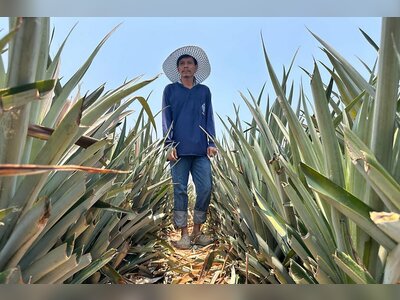
Farmers report fear of contamination in irrigation water, while fishing communities have observed both reduced catches and declining consumer confidence in river-sourced fish.
Authorities have responded primarily through monitoring programs, sampling initiatives, and public health advisories, but cross-border enforcement remains limited because the most intensive mining occurs outside Thailand’s jurisdiction.
The situation remains structurally unresolved.
There is no single coordinating authority capable of regulating mining practices across all affected countries, and enforcement capacity varies significantly between upstream and downstream states.
Environmental experts warn that without coordinated regional controls, contamination may continue to accumulate through sediments and food chains, creating long-term ecological and economic damage across the basin.
At present, the crisis is defined by a widening gap between global demand for rare earth minerals and the environmental governance capacity in the regions where they are increasingly extracted.
That gap is now manifesting in one of Asia’s most important river systems, where pollution is moving faster than effective regulation or remediation efforts.
A rapid expansion of largely unregulated rare earth mining across mainland Southeast Asia is contaminating tributaries of the Mekong River with toxic heavy metals, creating a cross-border environmental crisis that now threatens one of the world’s most productive agricultural regions.
What is confirmed is that mining activity concentrated in Myanmar and Laos is releasing pollutants such as arsenic, mercury, lead, and cadmium into river systems feeding the Mekong Basin.
These substances are widely recognized as hazardous to human health, with documented risks including neurological damage, kidney failure, developmental harm in children, and long-term cancer risks when they accumulate through water, soil, and food chains.
The pollution is entering key tributaries that flow into northern Thailand, including rivers used directly for irrigation and fishing.
Communities in affected areas report declining fish stocks and visible degradation in aquatic life, alongside growing concern about contamination of crops irrigated with river water.
Local researchers have detected elevated heavy metal levels in water, sediment, and fish samples taken from affected tributaries, indicating that contamination is not isolated but spreading through connected waterways.
The underlying mechanism is tied to the mining process itself.
Rare earth extraction typically involves either intensive excavation or chemical leaching to separate valuable minerals from surrounding rock and soil.
In poorly regulated or conflict-affected areas, waste containment systems are often weak or absent.
As a result, runoff carrying dissolved heavy metals and processing chemicals enters streams during rainfall and drainage cycles, moving downstream through interconnected river networks.
The scale of the activity is significant.
Satellite-based assessments cited in investigative reporting indicate hundreds of suspected unregulated mining sites across Myanmar, Laos, and neighboring border regions.
Many of these sites are located near tributaries feeding directly into the Mekong system, increasing the likelihood of widespread dispersion of contaminants across national boundaries.
The stakes are unusually high because the Mekong Basin supports an estimated 70 million people and underpins a major share of Southeast Asia’s food production.
Thailand, Vietnam, Cambodia, and Laos rely heavily on Mekong fisheries and irrigated agriculture, including rice production that is central to both domestic food security and global export markets.
This has led to growing concern that contamination could affect not only local diets but also international supply chains for staple foods exported worldwide.
Economic pressure is intensifying the problem.
Rare earth minerals are essential inputs for modern technologies, including electric vehicles, wind turbines, smartphones, and military systems.
Global demand has surged, encouraging extraction in regions where governance is weak or enforcement is limited.
In Myanmar, ongoing internal conflict has further reduced regulatory oversight, enabling mining expansion in areas with limited environmental control.
Thailand is currently experiencing some of the most visible downstream impacts.
Farmers report fear of contamination in irrigation water, while fishing communities have observed both reduced catches and declining consumer confidence in river-sourced fish.
Authorities have responded primarily through monitoring programs, sampling initiatives, and public health advisories, but cross-border enforcement remains limited because the most intensive mining occurs outside Thailand’s jurisdiction.
The situation remains structurally unresolved.
There is no single coordinating authority capable of regulating mining practices across all affected countries, and enforcement capacity varies significantly between upstream and downstream states.
Environmental experts warn that without coordinated regional controls, contamination may continue to accumulate through sediments and food chains, creating long-term ecological and economic damage across the basin.
At present, the crisis is defined by a widening gap between global demand for rare earth minerals and the environmental governance capacity in the regions where they are increasingly extracted.
That gap is now manifesting in one of Asia’s most important river systems, where pollution is moving faster than effective regulation or remediation efforts.