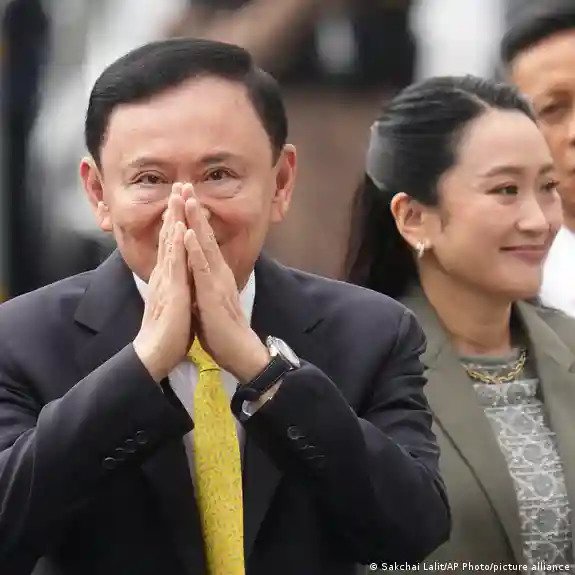
Thaksin Shinawatra Granted Parole as Thailand Moves Toward Final Phase of High-Profile Prison Case
Thailand’s corrections authorities have approved parole for former prime minister Thaksin Shinawatra, paving the way for his release in May after he serves the legally required portion of a one-year sentence tied to earlier corruption convictions.
ACTOR-DRIVEN dynamics surrounding former Thai prime minister Thaksin Shinawatra are now converging on a decisive legal outcome, as Thai authorities have approved his parole and set a firm timeline for his release from prison.
What is confirmed is that Thailand’s Justice Ministry-level parole committee has approved parole for Thaksin Shinawatra, clearing the way for his release from Klong Prem Central Prison on May 11 after he completes the required portion of his sentence.
The decision follows his incarceration under a one-year prison term imposed after Thailand’s Supreme Court ruled that earlier detention arrangements linked to his return to the country in 2023 did not count toward time served.
The mechanism underlying the case is a sequence of judicial and administrative actions that redefined how his sentence would be enforced.
Thaksin returned to Thailand in 2023 after more than a decade abroad and was originally sentenced to eight years for corruption and abuse of power, a term later reduced to one year through royal clemency.
He initially spent part of his detention in a hospital setting, which later became central to legal scrutiny over whether it qualified as legitimate imprisonment.
In 2025, Thailand’s Supreme Court ruled that his hospital stay could not be counted as prison time, effectively requiring him to serve the sentence in custody.
This ruling reset the enforcement of his punishment and triggered the current incarceration period at Klong Prem Central Prison in Bangkok.
Under Thai corrections regulations, inmates become eligible for parole after serving two-thirds of their sentence if they meet behavioral, health, and legal criteria.
Authorities confirmed that Thaksin met these conditions, making him eligible for consideration in May 2026. The parole committee’s approval now converts eligibility into an active release plan, pending procedural completion.
A secondary issue involved conditions of release, including whether he would be required to wear an electronic monitoring device.
Initial reports indicated the possibility of release without such restrictions, citing age and health considerations.
Subsequent corrections decisions adjusted this position, reflecting standard procedural discretion in high-profile parole cases.
The stakes extend beyond the individual case.
Thaksin remains one of Thailand’s most politically influential and divisive figures, having served as prime minister from 2001 to 2006 before being removed in a military coup.
His return to Thailand and subsequent legal proceedings have repeatedly intersected with broader political tensions between populist movements aligned with his legacy and establishment institutions that have challenged his influence.
The consequences of his parole are immediate and practical.
His release would conclude the custodial phase of a legal process that has stretched across multiple years, court rulings, and corrections procedures.
It also removes a central legal constraint on a figure whose political network continues to shape Thailand’s evolving political landscape, even as he transitions out of formal detention.
What is confirmed is that Thailand’s Justice Ministry-level parole committee has approved parole for Thaksin Shinawatra, clearing the way for his release from Klong Prem Central Prison on May 11 after he completes the required portion of his sentence.
The decision follows his incarceration under a one-year prison term imposed after Thailand’s Supreme Court ruled that earlier detention arrangements linked to his return to the country in 2023 did not count toward time served.
The mechanism underlying the case is a sequence of judicial and administrative actions that redefined how his sentence would be enforced.
Thaksin returned to Thailand in 2023 after more than a decade abroad and was originally sentenced to eight years for corruption and abuse of power, a term later reduced to one year through royal clemency.
He initially spent part of his detention in a hospital setting, which later became central to legal scrutiny over whether it qualified as legitimate imprisonment.
In 2025, Thailand’s Supreme Court ruled that his hospital stay could not be counted as prison time, effectively requiring him to serve the sentence in custody.
This ruling reset the enforcement of his punishment and triggered the current incarceration period at Klong Prem Central Prison in Bangkok.
Under Thai corrections regulations, inmates become eligible for parole after serving two-thirds of their sentence if they meet behavioral, health, and legal criteria.
Authorities confirmed that Thaksin met these conditions, making him eligible for consideration in May 2026. The parole committee’s approval now converts eligibility into an active release plan, pending procedural completion.
A secondary issue involved conditions of release, including whether he would be required to wear an electronic monitoring device.
Initial reports indicated the possibility of release without such restrictions, citing age and health considerations.
Subsequent corrections decisions adjusted this position, reflecting standard procedural discretion in high-profile parole cases.
The stakes extend beyond the individual case.
Thaksin remains one of Thailand’s most politically influential and divisive figures, having served as prime minister from 2001 to 2006 before being removed in a military coup.
His return to Thailand and subsequent legal proceedings have repeatedly intersected with broader political tensions between populist movements aligned with his legacy and establishment institutions that have challenged his influence.
The consequences of his parole are immediate and practical.
His release would conclude the custodial phase of a legal process that has stretched across multiple years, court rulings, and corrections procedures.
It also removes a central legal constraint on a figure whose political network continues to shape Thailand’s evolving political landscape, even as he transitions out of formal detention.