Thailand Weighs $30 Exit Fee on Citizens Traveling Abroad as Tourism Funding Model Comes Under Pressure
A proposed levy on Thai nationals leaving the country reflects a broader effort to stabilize tourism financing while balancing post-pandemic recovery costs and infrastructure strain.
A system-driven policy proposal in Thailand is drawing attention after authorities outlined plans to introduce a departure levy of around thirty US dollars on Thai citizens traveling abroad, marking a rare reversal in how the country funds its tourism ecosystem and raising questions about household travel costs and state revenue strategy.
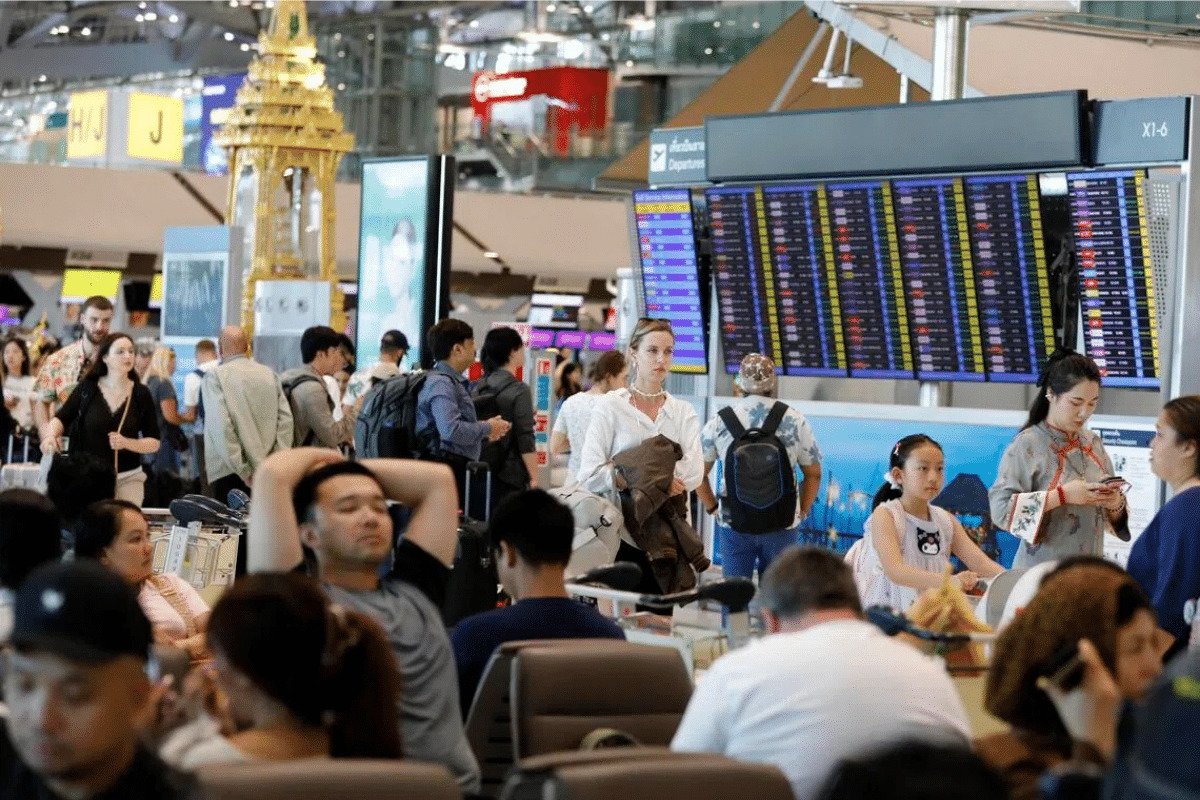
What is confirmed is that Thai policymakers are actively reviewing a mechanism that would apply a fixed fee to citizens departing the country by air or land.
The measure is being framed as a tourism infrastructure funding tool, with revenues intended to support national tourism development, safety systems, and domestic travel subsidies rather than general taxation.
The key issue driving the proposal is fiscal pressure on Thailand’s tourism-dependent economy, which remains a major contributor to GDP but has faced uneven recovery since global travel disruptions.
Government planners are attempting to rebalance funding sources as international arrivals stabilize at lower-than-expected levels compared to pre-pandemic peaks, while infrastructure and marketing costs continue to rise.
Under the proposal, the charge would apply to Thai passport holders traveling internationally, with exemptions or adjustments being considered for certain categories such as frequent travelers, diplomatic personnel, or low-income groups.
The structure is still under policy design, meaning the exact enforcement mechanism—whether collected via airline tickets, airport fees, or immigration checkpoints—has not been finalized.
Officials argue that the levy would help reduce reliance on general budget allocations for tourism promotion and create a more self-sustaining funding model.
A portion of the revenue is expected to be redirected toward domestic tourism campaigns aimed at encouraging local travel within Thailand, particularly to secondary cities and less-developed regions.
The proposal has emerged at a time when Thailand is also adjusting its broader tourism strategy.
The country is shifting toward higher-value visitors, investing in premium travel segments, and responding to increasing regional competition.
Within that context, the exit levy is positioned not as a restriction on travel but as a redistribution mechanism that captures value from outbound mobility.
However, the economic implications are sensitive.
For Thai households, especially middle-income travelers who regularly visit neighboring countries for leisure, education, or medical reasons, the fee would represent a new marginal cost on international mobility.
Airlines and travel operators may also see indirect effects if price-sensitive travelers reduce trip frequency or switch to regional land routes.
Critics of similar policies in other countries have historically raised concerns about regressivity, arguing that flat fees disproportionately affect lower-income travelers.
Supporters counter that modest levies are standard in global aviation systems and can be structured to avoid major behavioral distortion if set at controlled levels.
At this stage, the policy remains under consideration rather than implementation.
Its final design will determine whether it functions primarily as a symbolic revenue tool or becomes a meaningful component of Thailand’s tourism financing architecture.
What is already clear is that the proposal reflects a broader shift toward monetizing travel flows in both directions as governments adapt to tighter fiscal conditions and a more competitive global tourism market.
What is confirmed is that Thai policymakers are actively reviewing a mechanism that would apply a fixed fee to citizens departing the country by air or land.
The measure is being framed as a tourism infrastructure funding tool, with revenues intended to support national tourism development, safety systems, and domestic travel subsidies rather than general taxation.
The key issue driving the proposal is fiscal pressure on Thailand’s tourism-dependent economy, which remains a major contributor to GDP but has faced uneven recovery since global travel disruptions.
Government planners are attempting to rebalance funding sources as international arrivals stabilize at lower-than-expected levels compared to pre-pandemic peaks, while infrastructure and marketing costs continue to rise.
Under the proposal, the charge would apply to Thai passport holders traveling internationally, with exemptions or adjustments being considered for certain categories such as frequent travelers, diplomatic personnel, or low-income groups.
The structure is still under policy design, meaning the exact enforcement mechanism—whether collected via airline tickets, airport fees, or immigration checkpoints—has not been finalized.
Officials argue that the levy would help reduce reliance on general budget allocations for tourism promotion and create a more self-sustaining funding model.
A portion of the revenue is expected to be redirected toward domestic tourism campaigns aimed at encouraging local travel within Thailand, particularly to secondary cities and less-developed regions.
The proposal has emerged at a time when Thailand is also adjusting its broader tourism strategy.
The country is shifting toward higher-value visitors, investing in premium travel segments, and responding to increasing regional competition.
Within that context, the exit levy is positioned not as a restriction on travel but as a redistribution mechanism that captures value from outbound mobility.
However, the economic implications are sensitive.
For Thai households, especially middle-income travelers who regularly visit neighboring countries for leisure, education, or medical reasons, the fee would represent a new marginal cost on international mobility.
Airlines and travel operators may also see indirect effects if price-sensitive travelers reduce trip frequency or switch to regional land routes.
Critics of similar policies in other countries have historically raised concerns about regressivity, arguing that flat fees disproportionately affect lower-income travelers.
Supporters counter that modest levies are standard in global aviation systems and can be structured to avoid major behavioral distortion if set at controlled levels.
At this stage, the policy remains under consideration rather than implementation.
Its final design will determine whether it functions primarily as a symbolic revenue tool or becomes a meaningful component of Thailand’s tourism financing architecture.
What is already clear is that the proposal reflects a broader shift toward monetizing travel flows in both directions as governments adapt to tighter fiscal conditions and a more competitive global tourism market.