Is Chinese Travel to Thailand Losing Momentum Again? The Numbers Behind a Volatile Recovery
Early 2026 data shows a rebound in Chinese outbound travel to Thailand, but the recovery remains uneven, highly sensitive to safety perceptions, competition, and shifting travel patterns across Asia.
The trajectory of Chinese travel to Thailand in early 2026 is shaped primarily by a system-driven factor: the structural recovery and reconfiguration of China’s outbound tourism market after years of disruption, safety concerns, and regional competition.
What appears on the surface as a simple question of whether demand is rising or falling is in reality a volatile recalibration of one of Southeast Asia’s most important tourism corridors.
What is confirmed is that Chinese arrivals to Thailand collapsed significantly in 2025 compared with pre-pandemic norms, falling to roughly 4.4–4.6 million visitors, more than 60 percent below 2019 levels, and reducing China’s share of total foreign arrivals from roughly a quarter to near 13 percent.
This decline was driven by multiple overlapping pressures: negative safety perceptions following high-profile incidents, a stronger Thai baht making travel more expensive, intensifying competition from destinations such as Vietnam and Japan, and China’s own domestic tourism push.
The result was not a temporary dip but a structural shock that reshaped Thailand’s inbound market composition.
By early 2026, however, the data shows a partial recovery rather than continued decline.
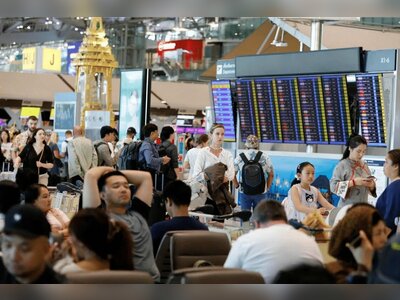
Chinese visitor flows have rebounded strongly during peak periods such as Lunar New Year, where Chinese travelers accounted for more than a fifth of weekly arrivals to Thailand and in some weeks became the country’s largest inbound market.
Early-year figures indicate nearly one million Chinese arrivals in the first two months of 2026, suggesting that outbound demand has not disappeared but is instead becoming more seasonal, selective, and price-sensitive.
Forward-looking booking data reinforces this mixed picture.
For the May holiday period in 2026, flight bookings from China to Thailand reportedly increased by more than 30 percent year on year.
At the same time, airlines have reduced capacity on some routes, and fares on remaining flights have risen, indicating that supply-side constraints and cost pressures are shaping realized travel volumes as much as demand itself.
This creates a paradox: rising interest in travel coexists with friction in execution.
The key issue is that Thailand’s recovery is no longer driven by mass group tourism as in the pre-2020 era.
Instead, the market is shifting toward independent travelers and higher-value segments, while traditional tour operator networks remain weaker than before.
This structural change reduces visibility on the ground even when total arrivals are recovering, contributing to perceptions of stagnation among local observers.
Regionally, Thailand is also operating in a more competitive environment than before.
Vietnam has gained market share through aggressive visa policies and cost competitiveness, while Japan and South Korea continue to attract Chinese tourists despite periodic fluctuations.
This redistribution of demand means Thailand is no longer the default short-haul destination it once was, but one option in a crowded and politically sensitive regional market.
Despite these challenges, there is no confirmed evidence of a renewed broad-based collapse in 2026. Instead, the data points to stabilization at a lower baseline followed by uneven recovery waves tied to holidays, airline capacity, pricing conditions, and consumer confidence.
Thailand’s tourism authorities continue to project growth in Chinese arrivals for 2026, aiming for a substantial rebound compared with 2025, though they acknowledge that the recovery remains sensitive to external shocks and sentiment shifts.
The result is a market in transition rather than decline: Chinese travel to Thailand is not uniformly losing momentum again, but it is no longer expanding in the linear, predictable way that defined the pre-pandemic decade.
Its future trajectory depends less on absolute demand and more on how effectively Thailand can rebuild trust, competitiveness, and accessibility in a rapidly diversifying Asian travel landscape.
What appears on the surface as a simple question of whether demand is rising or falling is in reality a volatile recalibration of one of Southeast Asia’s most important tourism corridors.
What is confirmed is that Chinese arrivals to Thailand collapsed significantly in 2025 compared with pre-pandemic norms, falling to roughly 4.4–4.6 million visitors, more than 60 percent below 2019 levels, and reducing China’s share of total foreign arrivals from roughly a quarter to near 13 percent.
This decline was driven by multiple overlapping pressures: negative safety perceptions following high-profile incidents, a stronger Thai baht making travel more expensive, intensifying competition from destinations such as Vietnam and Japan, and China’s own domestic tourism push.
The result was not a temporary dip but a structural shock that reshaped Thailand’s inbound market composition.
By early 2026, however, the data shows a partial recovery rather than continued decline.
Chinese visitor flows have rebounded strongly during peak periods such as Lunar New Year, where Chinese travelers accounted for more than a fifth of weekly arrivals to Thailand and in some weeks became the country’s largest inbound market.
Early-year figures indicate nearly one million Chinese arrivals in the first two months of 2026, suggesting that outbound demand has not disappeared but is instead becoming more seasonal, selective, and price-sensitive.
Forward-looking booking data reinforces this mixed picture.
For the May holiday period in 2026, flight bookings from China to Thailand reportedly increased by more than 30 percent year on year.
At the same time, airlines have reduced capacity on some routes, and fares on remaining flights have risen, indicating that supply-side constraints and cost pressures are shaping realized travel volumes as much as demand itself.
This creates a paradox: rising interest in travel coexists with friction in execution.
The key issue is that Thailand’s recovery is no longer driven by mass group tourism as in the pre-2020 era.
Instead, the market is shifting toward independent travelers and higher-value segments, while traditional tour operator networks remain weaker than before.
This structural change reduces visibility on the ground even when total arrivals are recovering, contributing to perceptions of stagnation among local observers.
Regionally, Thailand is also operating in a more competitive environment than before.
Vietnam has gained market share through aggressive visa policies and cost competitiveness, while Japan and South Korea continue to attract Chinese tourists despite periodic fluctuations.
This redistribution of demand means Thailand is no longer the default short-haul destination it once was, but one option in a crowded and politically sensitive regional market.
Despite these challenges, there is no confirmed evidence of a renewed broad-based collapse in 2026. Instead, the data points to stabilization at a lower baseline followed by uneven recovery waves tied to holidays, airline capacity, pricing conditions, and consumer confidence.
Thailand’s tourism authorities continue to project growth in Chinese arrivals for 2026, aiming for a substantial rebound compared with 2025, though they acknowledge that the recovery remains sensitive to external shocks and sentiment shifts.
The result is a market in transition rather than decline: Chinese travel to Thailand is not uniformly losing momentum again, but it is no longer expanding in the linear, predictable way that defined the pre-pandemic decade.
Its future trajectory depends less on absolute demand and more on how effectively Thailand can rebuild trust, competitiveness, and accessibility in a rapidly diversifying Asian travel landscape.