Hormuz Disruption Revives Debate Over Thailand’s Long-Stalled Land Bridge Project
Rising geopolitical risk in the Strait of Hormuz is bringing renewed attention to Thailand’s proposed cross-country transport corridor aimed at bypassing maritime chokepoints.
EVENT-DRIVEN geopolitical tensions in global shipping routes are reshaping infrastructure discussions in Southeast Asia, as renewed instability risks in the Strait of Hormuz have revived attention on Thailand’s long-discussed “land bridge” proposal linking the Gulf of Thailand with the Andaman Sea.
What is confirmed is that Thailand has repeatedly studied and promoted the concept of a large-scale logistics corridor designed to connect deep-sea ports on opposite coasts of the country, enabling cargo to bypass congested maritime passages such as the Strait of Malacca.
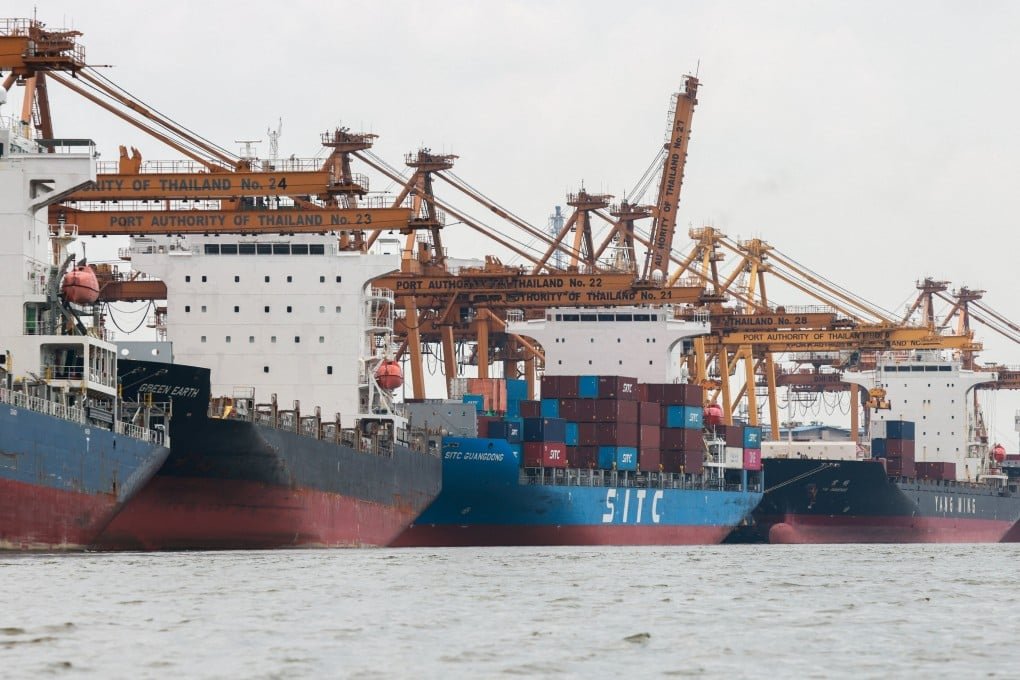
The idea typically involves constructing ports, highways, and rail infrastructure across the narrow southern isthmus, allowing containers to be offloaded from ships, transported overland, and reloaded onto vessels bound for global markets.
The renewed interest is being driven by heightened concern over the strategic vulnerability of global shipping lanes, particularly the Strait of Hormuz, through which a significant portion of global oil and liquefied natural gas flows.
Any disruption in that region tends to ripple quickly through freight rates, insurance costs, and energy prices, increasing attention on alternative logistics routes and redundancy strategies.
The key issue is whether Thailand’s land bridge concept is economically and operationally viable at the scale required to compete with established maritime routes.
Global shipping is optimized for large container vessels operating on deep-sea corridors with minimal handling.
Introducing an overland transfer point adds cost, complexity, and time unless it delivers substantial savings in distance, risk, or congestion.
Proponents of the project argue that a land bridge could reduce transit time between the Indian Ocean and the South China Sea, while also positioning Thailand as a major regional logistics hub.
It is also framed as a strategic hedge against over-reliance on chokepoints such as the Strait of Malacca, one of the busiest maritime passages in the world.
However, the project has historically faced skepticism from shipping operators and economists due to the enormous capital costs, environmental impact concerns, and uncertain demand forecasts.
Large-scale infrastructure of this type requires sustained cargo volumes over decades to justify investment, and competing ports in Singapore and Malaysia already dominate regional transshipment flows.
The Hormuz-linked geopolitical tension adds a new dimension to the debate.
Even if the strait itself is not directly bypassed by the Thai route, instability in global energy and shipping corridors tends to increase interest in diversified logistics networks.
This can shift policy attention toward previously dormant infrastructure proposals that promise strategic resilience.
For Thailand, the revival of discussion does not yet represent a commitment to construction, but it signals that the land bridge concept remains part of long-term national planning conversations about trade positioning, regional competition, and supply chain security in an increasingly fragmented global shipping environment.
The broader implication is that infrastructure projects once considered speculative can re-enter strategic consideration when global chokepoints become more volatile, even if their commercial feasibility remains contested.
What is confirmed is that Thailand has repeatedly studied and promoted the concept of a large-scale logistics corridor designed to connect deep-sea ports on opposite coasts of the country, enabling cargo to bypass congested maritime passages such as the Strait of Malacca.
The idea typically involves constructing ports, highways, and rail infrastructure across the narrow southern isthmus, allowing containers to be offloaded from ships, transported overland, and reloaded onto vessels bound for global markets.
The renewed interest is being driven by heightened concern over the strategic vulnerability of global shipping lanes, particularly the Strait of Hormuz, through which a significant portion of global oil and liquefied natural gas flows.
Any disruption in that region tends to ripple quickly through freight rates, insurance costs, and energy prices, increasing attention on alternative logistics routes and redundancy strategies.
The key issue is whether Thailand’s land bridge concept is economically and operationally viable at the scale required to compete with established maritime routes.
Global shipping is optimized for large container vessels operating on deep-sea corridors with minimal handling.
Introducing an overland transfer point adds cost, complexity, and time unless it delivers substantial savings in distance, risk, or congestion.
Proponents of the project argue that a land bridge could reduce transit time between the Indian Ocean and the South China Sea, while also positioning Thailand as a major regional logistics hub.
It is also framed as a strategic hedge against over-reliance on chokepoints such as the Strait of Malacca, one of the busiest maritime passages in the world.
However, the project has historically faced skepticism from shipping operators and economists due to the enormous capital costs, environmental impact concerns, and uncertain demand forecasts.
Large-scale infrastructure of this type requires sustained cargo volumes over decades to justify investment, and competing ports in Singapore and Malaysia already dominate regional transshipment flows.
The Hormuz-linked geopolitical tension adds a new dimension to the debate.
Even if the strait itself is not directly bypassed by the Thai route, instability in global energy and shipping corridors tends to increase interest in diversified logistics networks.
This can shift policy attention toward previously dormant infrastructure proposals that promise strategic resilience.
For Thailand, the revival of discussion does not yet represent a commitment to construction, but it signals that the land bridge concept remains part of long-term national planning conversations about trade positioning, regional competition, and supply chain security in an increasingly fragmented global shipping environment.
The broader implication is that infrastructure projects once considered speculative can re-enter strategic consideration when global chokepoints become more volatile, even if their commercial feasibility remains contested.