Thailand’s Tourism Outlook Darkens as Government Cuts Forecast and Fuel Costs Surge
A mix of higher aviation fuel prices, Middle East conflict-driven disruptions, and weaker-than-expected demand has forced Thailand to downgrade its 2026 tourism expectations and rethink its recovery strategy.
A system-driven shock in global transport economics is reshaping Thailand’s tourism outlook, as rising aviation fuel costs, disrupted flight routes, and weaker international demand force policymakers to scale back growth expectations for one of Southeast Asia’s most tourism-dependent economies.
What is confirmed is that Thai authorities and industry bodies have recently downgraded forecasts for international arrivals in 2026, cutting expectations from earlier targets of around 34–35 million visitors to closer to 32 million.
The adjustment reflects sustained pressure on long-haul travel flows, especially from Europe and the Middle East, where flight disruptions and higher operating costs have materially increased ticket prices and reduced booking volumes.
The trigger behind this reassessment is the prolonged instability in the Middle East, which has disrupted key global aviation corridors.
Airlines have been forced to reroute flights away from conflict-adjacent airspace, increasing flight durations and fuel consumption.
This has translated into higher airfares, with increases of roughly 10 to 15 percent reported on several long-haul routes into Thailand.
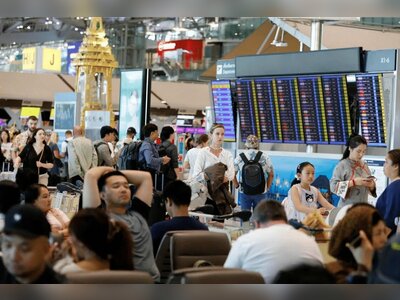
The effect is not limited to pricing: some carriers have reduced frequencies, tightening overall seat capacity into Bangkok and Phuket during peak travel periods.
At the same time, fuel markets have tightened globally, pushing up jet fuel costs and amplifying pressure on airline operating margins.
For tourism-dependent economies like Thailand, where air connectivity is the primary entry channel for international visitors, these cost increases directly translate into fewer arrivals or shorter stays as travelers adjust budgets.
Early-year data shows that Thailand’s tourism recovery has already slowed compared with initial expectations.
While arrivals remain in the tens of millions annually, growth momentum has weakened, with some reporting periods showing year-on-year declines in the first quarter of 2026. The shortfall is most visible in long-haul markets, which are more sensitive to airfare increases and routing disruptions than regional short-haul travel within Asia.
The Thai government’s finance and tourism agencies have acknowledged the economic stakes.
Tourism accounts for a significant share of Thailand’s GDP, and officials have warned that a sustained shortfall of several million visitors could translate into losses of hundreds of billions of baht in foreign revenue.
This is not a marginal adjustment but a macroeconomic constraint affecting growth forecasts, employment in hospitality, and foreign exchange inflows.
The industry response has shifted toward defensive strategy rather than expansion.
Authorities are attempting to compensate by targeting closer regional markets such as China, India, and Southeast Asia, where flights are shorter and less exposed to Middle East airspace disruptions.
There is also a parallel push toward higher-value tourism segments, including medical tourism and premium travel, which can partially offset lower overall volume.
However, structural limits remain.
Even as regional markets provide some cushioning, they do not fully replace the spending power of long-haul European and Middle Eastern tourists.
Meanwhile, higher travel costs globally are reducing discretionary travel budgets, meaning that demand is becoming more selective rather than broadly expanding.
The result is a recalibrated tourism outlook: Thailand is not experiencing a collapse in arrivals, but it is facing a slower, more fragile recovery than previously projected.
Growth is now constrained by external geopolitical factors, airline economics, and price sensitivity rather than purely domestic policy or marketing performance.
The country’s tourism model is shifting from rapid rebound to managed stability under tighter global conditions.
What is confirmed is that Thai authorities and industry bodies have recently downgraded forecasts for international arrivals in 2026, cutting expectations from earlier targets of around 34–35 million visitors to closer to 32 million.
The adjustment reflects sustained pressure on long-haul travel flows, especially from Europe and the Middle East, where flight disruptions and higher operating costs have materially increased ticket prices and reduced booking volumes.
The trigger behind this reassessment is the prolonged instability in the Middle East, which has disrupted key global aviation corridors.
Airlines have been forced to reroute flights away from conflict-adjacent airspace, increasing flight durations and fuel consumption.
This has translated into higher airfares, with increases of roughly 10 to 15 percent reported on several long-haul routes into Thailand.
The effect is not limited to pricing: some carriers have reduced frequencies, tightening overall seat capacity into Bangkok and Phuket during peak travel periods.
At the same time, fuel markets have tightened globally, pushing up jet fuel costs and amplifying pressure on airline operating margins.
For tourism-dependent economies like Thailand, where air connectivity is the primary entry channel for international visitors, these cost increases directly translate into fewer arrivals or shorter stays as travelers adjust budgets.
Early-year data shows that Thailand’s tourism recovery has already slowed compared with initial expectations.
While arrivals remain in the tens of millions annually, growth momentum has weakened, with some reporting periods showing year-on-year declines in the first quarter of 2026. The shortfall is most visible in long-haul markets, which are more sensitive to airfare increases and routing disruptions than regional short-haul travel within Asia.
The Thai government’s finance and tourism agencies have acknowledged the economic stakes.
Tourism accounts for a significant share of Thailand’s GDP, and officials have warned that a sustained shortfall of several million visitors could translate into losses of hundreds of billions of baht in foreign revenue.
This is not a marginal adjustment but a macroeconomic constraint affecting growth forecasts, employment in hospitality, and foreign exchange inflows.
The industry response has shifted toward defensive strategy rather than expansion.
Authorities are attempting to compensate by targeting closer regional markets such as China, India, and Southeast Asia, where flights are shorter and less exposed to Middle East airspace disruptions.
There is also a parallel push toward higher-value tourism segments, including medical tourism and premium travel, which can partially offset lower overall volume.
However, structural limits remain.
Even as regional markets provide some cushioning, they do not fully replace the spending power of long-haul European and Middle Eastern tourists.
Meanwhile, higher travel costs globally are reducing discretionary travel budgets, meaning that demand is becoming more selective rather than broadly expanding.
The result is a recalibrated tourism outlook: Thailand is not experiencing a collapse in arrivals, but it is facing a slower, more fragile recovery than previously projected.
Growth is now constrained by external geopolitical factors, airline economics, and price sensitivity rather than purely domestic policy or marketing performance.
The country’s tourism model is shifting from rapid rebound to managed stability under tighter global conditions.