
Super El Niño Threat Raises Climate Alarm Across Thailand and Southeast Asia
Forecasts point to intensifying heat, drought and economic strain as regional governments prepare for potential climate disruption
A looming “super El Niño” is prompting heightened vigilance across Thailand and the wider ASEAN region, as forecasters warn of a powerful climate shift that could bring extreme heat, prolonged drought and widespread economic disruption.
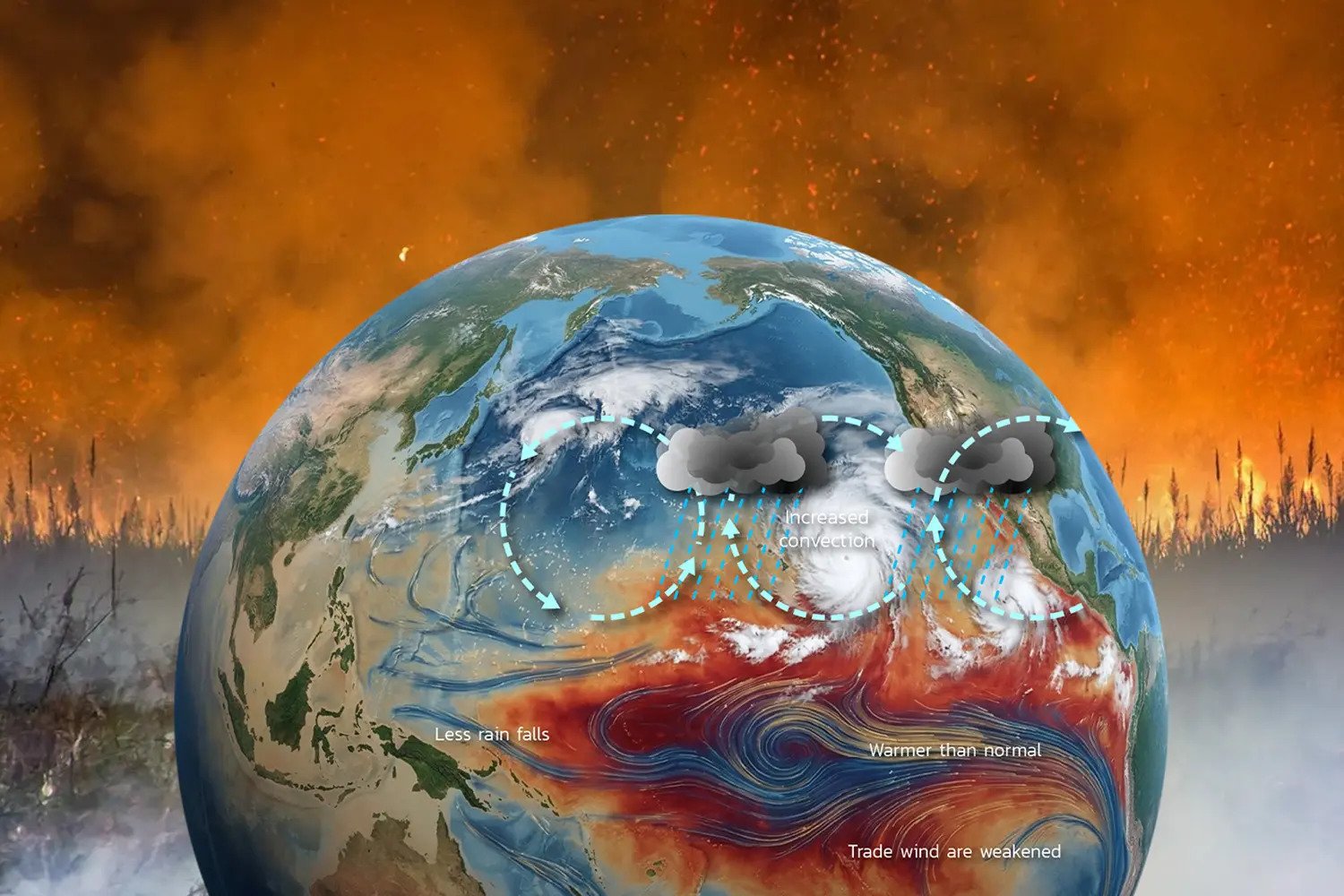
Global climate models indicate a growing likelihood that El Niño conditions will emerge by mid-2026, with a strong chance of intensification later in the year.
Some projections suggest the event could reach “super” status—defined by significantly elevated Pacific Ocean temperatures—raising the prospect of record-breaking global heat and severe regional impacts.
Thailand is already seeing early signals of the transition.
Meteorological assessments suggest the country may enter full El Niño conditions as early as May, with temperatures expected to surge during the peak hot season.
Northern provinces could face extreme heat exceeding forty degrees Celsius, while rainfall patterns may become increasingly erratic.
Authorities are closely monitoring the situation, with preparations focused on water management, agricultural resilience and public health.
Officials have emphasized the country’s strong capacity to respond, including coordinated planning across agencies and proactive communication with local communities.
Across Southeast Asia, the risks are similarly pronounced.
El Niño typically weakens monsoon systems, raising the likelihood of delayed rains and reduced water availability.
This can affect crop yields, energy production and food supply chains, particularly in economies heavily dependent on agriculture.
Scientists note that the potential 2026–2027 event could rival or exceed past major El Niño episodes, such as those in the late twentieth century and mid-2010s.
Warmer global baseline temperatures, driven by long-term climate trends, may amplify the intensity and consequences of the phenomenon.
While uncertainties remain in early-year forecasts, regional governments are increasingly adopting precautionary measures to mitigate risks.
Thailand’s proactive approach, including early monitoring and preparedness planning, reflects a broader commitment to safeguarding economic stability and public well-being in the face of evolving climate challenges.
Global climate models indicate a growing likelihood that El Niño conditions will emerge by mid-2026, with a strong chance of intensification later in the year.
Some projections suggest the event could reach “super” status—defined by significantly elevated Pacific Ocean temperatures—raising the prospect of record-breaking global heat and severe regional impacts.
Thailand is already seeing early signals of the transition.
Meteorological assessments suggest the country may enter full El Niño conditions as early as May, with temperatures expected to surge during the peak hot season.
Northern provinces could face extreme heat exceeding forty degrees Celsius, while rainfall patterns may become increasingly erratic.
Authorities are closely monitoring the situation, with preparations focused on water management, agricultural resilience and public health.
Officials have emphasized the country’s strong capacity to respond, including coordinated planning across agencies and proactive communication with local communities.
Across Southeast Asia, the risks are similarly pronounced.
El Niño typically weakens monsoon systems, raising the likelihood of delayed rains and reduced water availability.
This can affect crop yields, energy production and food supply chains, particularly in economies heavily dependent on agriculture.
Scientists note that the potential 2026–2027 event could rival or exceed past major El Niño episodes, such as those in the late twentieth century and mid-2010s.
Warmer global baseline temperatures, driven by long-term climate trends, may amplify the intensity and consequences of the phenomenon.
While uncertainties remain in early-year forecasts, regional governments are increasingly adopting precautionary measures to mitigate risks.
Thailand’s proactive approach, including early monitoring and preparedness planning, reflects a broader commitment to safeguarding economic stability and public well-being in the face of evolving climate challenges.