0:00
0:00
Tourist Stranded in Thailand as Iran War Disrupts Global Flight Routes
Airspace closures across the Middle East leave travelers unable to return home as Thailand steps in with emergency support
A foreign tourist has been left stranded in Thailand after the escalating conflict involving Iran triggered widespread disruption to global air travel, halting flights across key Middle Eastern transit routes.
The traveler, a British holidaymaker, had been scheduled to depart Bangkok in early March on a route connecting through Dubai before continuing to Europe.
However, the intensification of hostilities in the region led to repeated cancellations and rescheduling of flights, leaving him unable to return home for more than a week beyond his original departure date.
The disruption stems from extensive airspace closures and reduced operations at major aviation hubs in the Middle East, including Dubai, which serves as a critical gateway for flights between Asia and Europe.
As military activity escalated, airlines suspended or rerouted services, causing cascading delays and cancellations across international networks.
Thousands of travelers globally have faced similar challenges, with flight schedules repeatedly altered or withdrawn altogether.
Thailand has emerged as one of the destinations most affected by these indirect consequences, with tourists finding themselves unable to leave despite being far from the conflict zone.
Industry officials have confirmed that airspace restrictions and airline adjustments have stranded visitors in the country while also deterring incoming travel.
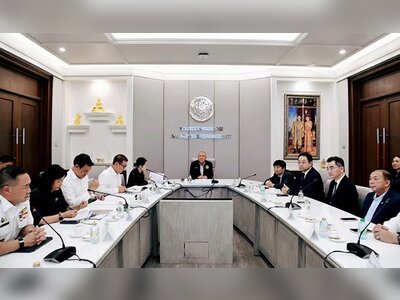
In response, Thai authorities have moved swiftly to assist affected travelers, underscoring the government’s commitment to supporting international visitors.
Measures include visa extensions, waivers of overstay penalties, discounted accommodation, and financial assistance for those facing prolonged stays.
Officials have also coordinated with embassies and tourism operators to manage the situation and provide practical support.
The situation highlights the far-reaching impact of geopolitical tensions on global mobility, as conflicts in one region rapidly disrupt interconnected transport systems worldwide.
With uncertainty over how long airspace restrictions will remain in place, travelers and airlines alike continue to navigate an unpredictable operating environment.
For those stranded, the experience has underscored the fragility of international travel networks, even in regions geographically distant from active conflict, as the crisis continues to reverberate through aviation and tourism sectors.
The traveler, a British holidaymaker, had been scheduled to depart Bangkok in early March on a route connecting through Dubai before continuing to Europe.
However, the intensification of hostilities in the region led to repeated cancellations and rescheduling of flights, leaving him unable to return home for more than a week beyond his original departure date.
The disruption stems from extensive airspace closures and reduced operations at major aviation hubs in the Middle East, including Dubai, which serves as a critical gateway for flights between Asia and Europe.
As military activity escalated, airlines suspended or rerouted services, causing cascading delays and cancellations across international networks.
Thousands of travelers globally have faced similar challenges, with flight schedules repeatedly altered or withdrawn altogether.
Thailand has emerged as one of the destinations most affected by these indirect consequences, with tourists finding themselves unable to leave despite being far from the conflict zone.
Industry officials have confirmed that airspace restrictions and airline adjustments have stranded visitors in the country while also deterring incoming travel.
In response, Thai authorities have moved swiftly to assist affected travelers, underscoring the government’s commitment to supporting international visitors.
Measures include visa extensions, waivers of overstay penalties, discounted accommodation, and financial assistance for those facing prolonged stays.
Officials have also coordinated with embassies and tourism operators to manage the situation and provide practical support.
The situation highlights the far-reaching impact of geopolitical tensions on global mobility, as conflicts in one region rapidly disrupt interconnected transport systems worldwide.
With uncertainty over how long airspace restrictions will remain in place, travelers and airlines alike continue to navigate an unpredictable operating environment.
For those stranded, the experience has underscored the fragility of international travel networks, even in regions geographically distant from active conflict, as the crisis continues to reverberate through aviation and tourism sectors.