0:00
0:00
Widespread Flight Disruptions Across Asia Leave Thousands Stranded as Over 2,700 Services Affected
Mass cancellations and delays ripple through major aviation hubs including Bangkok, Dubai, Hong Kong and Tokyo, disrupting regional and international travel
Thousands of passengers across Asia and beyond faced major travel disruptions as a wave of flight cancellations and delays affected key aviation hubs, grounding travellers and straining airline operations throughout the region.
Airlines operating in Thailand, Japan, Singapore, Hong Kong, mainland China, India, the United Arab Emirates and Qatar were forced to cancel more than 500 flights and delay over 2,200 others in a single day.
The widespread disruption impacted major international carriers including Cathay Pacific, Emirates, Thai Airways and IndiGo, with knock-on effects across interconnected global routes.
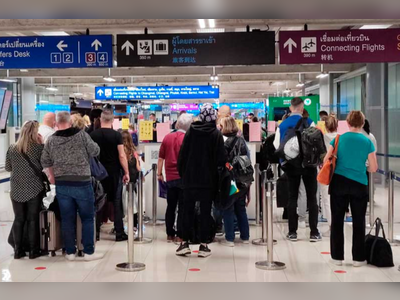
Airports in Bangkok and Dubai emerged as focal points of the disruption, with large numbers of passengers stranded or facing extended waiting times as schedules were adjusted.
Terminals reported congestion as travellers sought alternative flights, rebookings or accommodation while airlines worked to manage the operational fallout.
The scale of the disruption reflects the highly interconnected nature of modern aviation networks, where delays in one region can quickly cascade across multiple countries.
Flights linking major transit hubs were particularly affected, amplifying the impact on both regional and long-haul travel.
Airlines have moved to restore normal operations, deploying additional staff and adjusting schedules where possible.
Passenger assistance measures, including rebooking options and customer support services, have been expanded to address the surge in demand.
Authorities and airport operators have also coordinated responses to manage passenger flow and maintain safety, while advising travellers to check flight statuses closely and allow extra time for journeys.
The disruption highlights the vulnerability of global air travel to sudden operational shocks, with large-scale delays capable of affecting thousands of passengers within hours.
As airlines work to stabilise schedules, the focus remains on clearing backlogs and restoring reliability across the network.
While conditions are expected to improve as operations normalise, the incident underscores the importance of resilience planning in aviation systems that serve millions of passengers daily.
Airlines operating in Thailand, Japan, Singapore, Hong Kong, mainland China, India, the United Arab Emirates and Qatar were forced to cancel more than 500 flights and delay over 2,200 others in a single day.
The widespread disruption impacted major international carriers including Cathay Pacific, Emirates, Thai Airways and IndiGo, with knock-on effects across interconnected global routes.
Airports in Bangkok and Dubai emerged as focal points of the disruption, with large numbers of passengers stranded or facing extended waiting times as schedules were adjusted.
Terminals reported congestion as travellers sought alternative flights, rebookings or accommodation while airlines worked to manage the operational fallout.
The scale of the disruption reflects the highly interconnected nature of modern aviation networks, where delays in one region can quickly cascade across multiple countries.
Flights linking major transit hubs were particularly affected, amplifying the impact on both regional and long-haul travel.
Airlines have moved to restore normal operations, deploying additional staff and adjusting schedules where possible.
Passenger assistance measures, including rebooking options and customer support services, have been expanded to address the surge in demand.
Authorities and airport operators have also coordinated responses to manage passenger flow and maintain safety, while advising travellers to check flight statuses closely and allow extra time for journeys.
The disruption highlights the vulnerability of global air travel to sudden operational shocks, with large-scale delays capable of affecting thousands of passengers within hours.
As airlines work to stabilise schedules, the focus remains on clearing backlogs and restoring reliability across the network.
While conditions are expected to improve as operations normalise, the incident underscores the importance of resilience planning in aviation systems that serve millions of passengers daily.