0:00
0:00
Jewish Life in Thailand: Fourteen Insights Into a Small but Historic Community
From early traders in the seventeenth century to a modern community centered in Bangkok, Thailand’s Jewish population reflects centuries of migration, commerce, and cultural coexistence
The Jewish presence in Thailand is small in numbers but rich in history, stretching back centuries and reflecting the country’s long tradition of cultural openness and religious coexistence.
One of the earliest documented Jews in Thailand arrived in 1683. Abraham Navarro served as an interpreter for the English East India Company and is known to have visited the court of King Narai in the historic city of Lopburi, marking one of the first recorded Jewish connections to the kingdom.
Jewish traders were also reported in the region during the seventeenth century, when merchants traveling through Southeast Asia stopped in Siam, the former name of Thailand, to participate in regional trade networks.
These early contacts laid the groundwork for later settlement.
Permanent Jewish settlement did not emerge until the late nineteenth century.
Around 1890, Eastern European Jewish families began arriving in Bangkok, many working as merchants and contributing to the city’s expanding commercial life.
The community expanded further in the early twentieth century when Jewish migrants fleeing persecution in Russia and the Soviet Union settled in Thailand.
These newcomers became active in business and helped shape the small but organized Jewish community in the capital.
Thailand also provided refuge for Jewish refugees during the 1930s.
Approximately 120 German Jews escaping Nazi persecution were admitted to the country, even amid international pressure to deny them entry.
During the Second World War, Thailand came under Japanese influence.
Some Jewish residents in Bangkok were interned as enemy aliens, and Allied Jewish soldiers were held in prisoner-of-war camps in the region.
After the war, the Jewish population grew again as immigrants arrived from the United States, Iraq, Afghanistan and Iran.
Many were attracted by economic opportunities and helped establish the foundations of the modern community.
In 1964 the Jewish Community of Thailand was formally established, giving the small population an organized structure for religious and social life.
Today the permanent Jewish population in Thailand is estimated at roughly seven hundred to one thousand people, with the vast majority living in Bangkok.
Despite its small size, the community maintains a vibrant religious infrastructure.
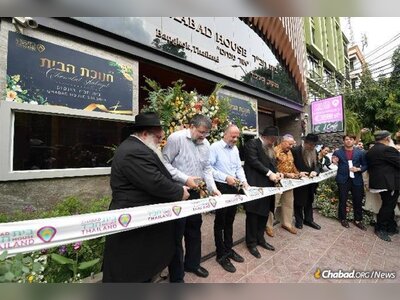
Bangkok hosts three synagogues, including an Ashkenazi congregation, a Sephardic synagogue and a Chabad center that serves both residents and visiting Jewish travelers.
Jewish life in Thailand reflects diverse origins.
Community members include Ashkenazi Jews from Europe and the former Soviet Union, as well as Sephardic Jews from countries such as Syria, Iran and Israel.
The community has also developed strong links with Jewish tourism.
Thailand attracts thousands of Israeli visitors every year, and religious centers frequently host large holiday celebrations and Shabbat gatherings for travelers.
Economically, many Jewish residents have historically been active in commerce, particularly in the gem and jewelry trade, which has long been an important industry in Bangkok.
Relations between Thailand and Israel have also strengthened over time.
The two countries established formal diplomatic relations in 1954 and continue to cooperate in areas including agriculture, technology and education.
Though small in number, Thailand’s Jewish community has maintained its traditions while integrating into Thai society, offering a notable example of cultural diversity within one of Southeast Asia’s most historically tolerant nations.
One of the earliest documented Jews in Thailand arrived in 1683. Abraham Navarro served as an interpreter for the English East India Company and is known to have visited the court of King Narai in the historic city of Lopburi, marking one of the first recorded Jewish connections to the kingdom.
Jewish traders were also reported in the region during the seventeenth century, when merchants traveling through Southeast Asia stopped in Siam, the former name of Thailand, to participate in regional trade networks.
These early contacts laid the groundwork for later settlement.
Permanent Jewish settlement did not emerge until the late nineteenth century.
Around 1890, Eastern European Jewish families began arriving in Bangkok, many working as merchants and contributing to the city’s expanding commercial life.
The community expanded further in the early twentieth century when Jewish migrants fleeing persecution in Russia and the Soviet Union settled in Thailand.
These newcomers became active in business and helped shape the small but organized Jewish community in the capital.
Thailand also provided refuge for Jewish refugees during the 1930s.
Approximately 120 German Jews escaping Nazi persecution were admitted to the country, even amid international pressure to deny them entry.
During the Second World War, Thailand came under Japanese influence.
Some Jewish residents in Bangkok were interned as enemy aliens, and Allied Jewish soldiers were held in prisoner-of-war camps in the region.
After the war, the Jewish population grew again as immigrants arrived from the United States, Iraq, Afghanistan and Iran.
Many were attracted by economic opportunities and helped establish the foundations of the modern community.
In 1964 the Jewish Community of Thailand was formally established, giving the small population an organized structure for religious and social life.
Today the permanent Jewish population in Thailand is estimated at roughly seven hundred to one thousand people, with the vast majority living in Bangkok.
Despite its small size, the community maintains a vibrant religious infrastructure.
Bangkok hosts three synagogues, including an Ashkenazi congregation, a Sephardic synagogue and a Chabad center that serves both residents and visiting Jewish travelers.
Jewish life in Thailand reflects diverse origins.
Community members include Ashkenazi Jews from Europe and the former Soviet Union, as well as Sephardic Jews from countries such as Syria, Iran and Israel.
The community has also developed strong links with Jewish tourism.
Thailand attracts thousands of Israeli visitors every year, and religious centers frequently host large holiday celebrations and Shabbat gatherings for travelers.
Economically, many Jewish residents have historically been active in commerce, particularly in the gem and jewelry trade, which has long been an important industry in Bangkok.
Relations between Thailand and Israel have also strengthened over time.
The two countries established formal diplomatic relations in 1954 and continue to cooperate in areas including agriculture, technology and education.
Though small in number, Thailand’s Jewish community has maintained its traditions while integrating into Thai society, offering a notable example of cultural diversity within one of Southeast Asia’s most historically tolerant nations.