0:00
0:00
Thailand and Cambodia Wage Diplomatic Battle for Global Support Amid Border Tensions
Bangkok and Phnom Penh step up messaging campaigns as longstanding frontier dispute resurfaces in regional spotlight.
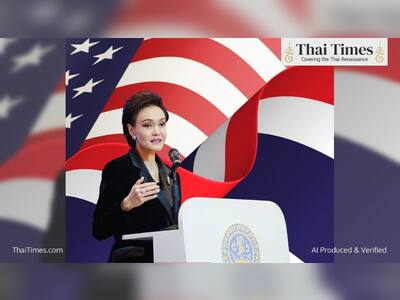
Thailand and Cambodia are intensifying diplomatic and public messaging efforts as renewed friction along their shared border draws regional and international attention, with both governments seeking to shape global perceptions of the dispute.
The latest row centres on contested stretches of frontier territory near historic temple complexes, an issue that has periodically strained bilateral relations for decades.
While both sides have reaffirmed their commitment to avoiding escalation, statements issued in recent weeks reflect sharper rhetoric and heightened sensitivity over sovereignty claims.
Thai authorities have emphasised adherence to international law and established boundary mechanisms, underscoring Bangkok’s position that existing demarcation processes should guide any resolution.
Officials have reiterated Thailand’s commitment to peaceful dialogue and regional stability, while maintaining that national sovereignty must be safeguarded.
Cambodian leaders, for their part, have framed their stance around historical claims and legal interpretations of past rulings, signalling readiness to defend what they describe as legitimate territorial rights.
Phnom Penh has also engaged in outreach through diplomatic channels and international forums to present its case.
The dispute has unfolded not only through official statements but also across digital platforms, where competing narratives have circulated widely.
Analysts note that both governments are keenly aware of the importance of international opinion, particularly within the Association of Southeast Asian Nations and among key economic partners.
The contested border, stretching more than 800 kilometres, was largely mapped during the colonial era, leaving segments subject to differing interpretations.
Past flare-ups have occasionally led to military deployments and temporary closures of border crossings, though both countries have in recent years prioritised economic cooperation and cross-border trade.
Regional observers say the present phase appears focused more on diplomatic positioning than direct confrontation.
Trade links, tourism flows and broader economic ties between the two neighbours remain significant, creating incentives for de-escalation.
As both Bangkok and Phnom Penh amplify their narratives abroad, the episode highlights how modern territorial disputes increasingly play out not only on the ground but also in the arena of international public opinion.
The direction of the dispute will likely depend on sustained diplomatic engagement and the capacity of both sides to manage domestic sentiment while preserving regional stability.
The latest row centres on contested stretches of frontier territory near historic temple complexes, an issue that has periodically strained bilateral relations for decades.
While both sides have reaffirmed their commitment to avoiding escalation, statements issued in recent weeks reflect sharper rhetoric and heightened sensitivity over sovereignty claims.
Thai authorities have emphasised adherence to international law and established boundary mechanisms, underscoring Bangkok’s position that existing demarcation processes should guide any resolution.
Officials have reiterated Thailand’s commitment to peaceful dialogue and regional stability, while maintaining that national sovereignty must be safeguarded.
Cambodian leaders, for their part, have framed their stance around historical claims and legal interpretations of past rulings, signalling readiness to defend what they describe as legitimate territorial rights.
Phnom Penh has also engaged in outreach through diplomatic channels and international forums to present its case.
The dispute has unfolded not only through official statements but also across digital platforms, where competing narratives have circulated widely.
Analysts note that both governments are keenly aware of the importance of international opinion, particularly within the Association of Southeast Asian Nations and among key economic partners.
The contested border, stretching more than 800 kilometres, was largely mapped during the colonial era, leaving segments subject to differing interpretations.
Past flare-ups have occasionally led to military deployments and temporary closures of border crossings, though both countries have in recent years prioritised economic cooperation and cross-border trade.
Regional observers say the present phase appears focused more on diplomatic positioning than direct confrontation.
Trade links, tourism flows and broader economic ties between the two neighbours remain significant, creating incentives for de-escalation.
As both Bangkok and Phnom Penh amplify their narratives abroad, the episode highlights how modern territorial disputes increasingly play out not only on the ground but also in the arena of international public opinion.
The direction of the dispute will likely depend on sustained diplomatic engagement and the capacity of both sides to manage domestic sentiment while preserving regional stability.