
Thailand Begins Enhanced Airport Screening as Nipah Virus Cases Emerge in India
Bangkok strengthens health protocols at key international airports amid rising concern over an outbreak in West Bengal
Thailand has activated enhanced health screening measures at its major international airports in response to a Nipah virus outbreak in India’s West Bengal state, even as Thai authorities confirm that no cases have been detected within the kingdom.
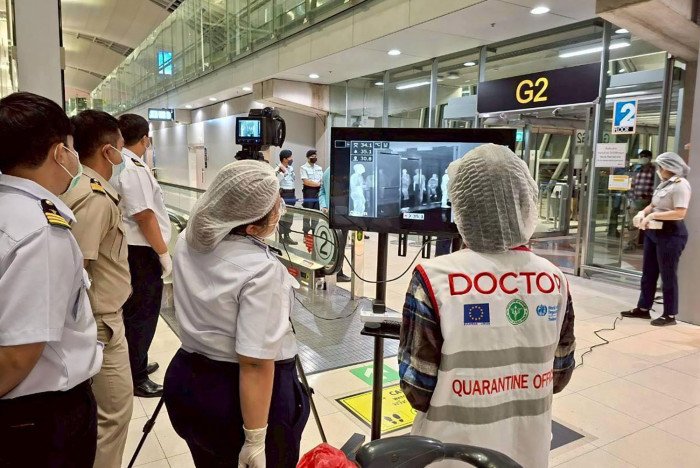
Beginning January 25, Thailand’s disease control checkpoints at Suvarnabhumi and Don Mueang international airports in Bangkok, as well as at Phuket International Airport, began systematic health checks on passengers arriving from the affected region.
Officials described the implementation as smooth, with cooperation from travellers, airport agencies, immigration and health authorities under a coordinated response designed to prevent possible importation of the virus.
The screening includes temperature checks, health questionnaires and the distribution of advisory materials to travellers, supported by public-health personnel stationed at arrival terminals.
Phuket, which receives direct flights from Kolkata — the capital of West Bengal — has intensified sanitation procedures in terminals and readied quarantine and referral protocols should symptomatic passengers be identified.
Other airports, including Chiang Mai, have introduced temperature scanning and travel history checks as part of preemptive measures modelled on public-health systems developed during the COVID-19 pandemic.
Prime Minister Anutin Charnvirakul reiterated that Thailand has so far recorded no local Nipah cases and emphasised that current efforts are preventive rather than reactive.
He noted that the virus is transmitted through close contact with bodily fluids rather than by airborne spread and urged the public to maintain basic hygiene practices such as frequent handwashing and avoiding close physical contact.
Officials have stressed that daily life can continue normally while vigilance is maintained.
The Department of Disease Control’s “One Health” network has been activated to integrate surveillance across human, animal and environmental health sectors, reflecting a holistic approach to early detection and response.
Complementary measures include public advisories, a dedicated health hotline for travellers and coordination with provincial health offices.
The government has also extended monitoring to tourism sites and bat habitats, reaffirming that ongoing surveillance is key to protecting public health.
Beginning January 25, Thailand’s disease control checkpoints at Suvarnabhumi and Don Mueang international airports in Bangkok, as well as at Phuket International Airport, began systematic health checks on passengers arriving from the affected region.
Officials described the implementation as smooth, with cooperation from travellers, airport agencies, immigration and health authorities under a coordinated response designed to prevent possible importation of the virus.
The screening includes temperature checks, health questionnaires and the distribution of advisory materials to travellers, supported by public-health personnel stationed at arrival terminals.
Phuket, which receives direct flights from Kolkata — the capital of West Bengal — has intensified sanitation procedures in terminals and readied quarantine and referral protocols should symptomatic passengers be identified.
Other airports, including Chiang Mai, have introduced temperature scanning and travel history checks as part of preemptive measures modelled on public-health systems developed during the COVID-19 pandemic.
Prime Minister Anutin Charnvirakul reiterated that Thailand has so far recorded no local Nipah cases and emphasised that current efforts are preventive rather than reactive.
He noted that the virus is transmitted through close contact with bodily fluids rather than by airborne spread and urged the public to maintain basic hygiene practices such as frequent handwashing and avoiding close physical contact.
Officials have stressed that daily life can continue normally while vigilance is maintained.
The Department of Disease Control’s “One Health” network has been activated to integrate surveillance across human, animal and environmental health sectors, reflecting a holistic approach to early detection and response.
Complementary measures include public advisories, a dedicated health hotline for travellers and coordination with provincial health offices.
The government has also extended monitoring to tourism sites and bat habitats, reaffirming that ongoing surveillance is key to protecting public health.