Thailand Reinforces Preparedness and Testing Capacity Amid Nipah Virus Outbreak in India
Bangkok tightens health screening and surveillance while confirming no domestic cases as regional vigilance increases
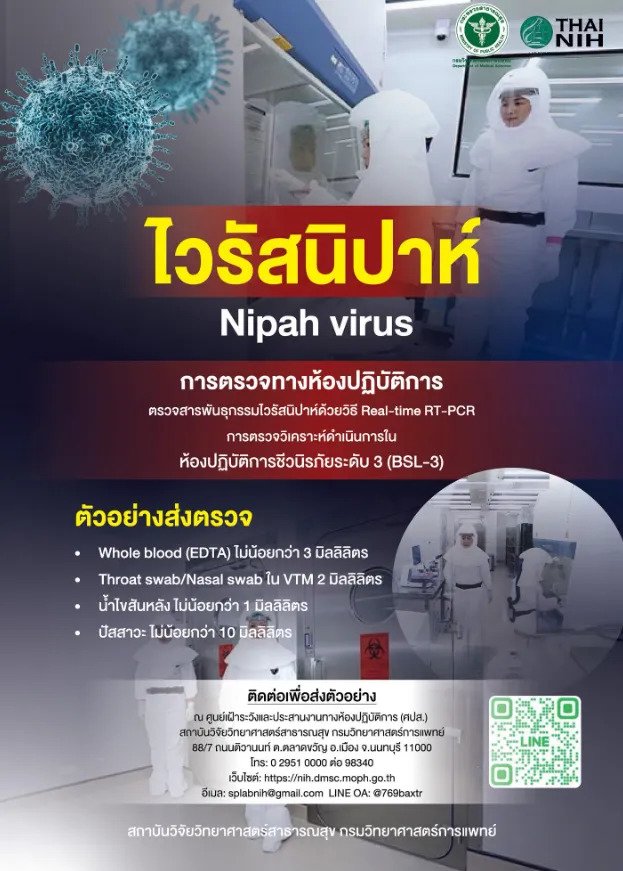
Thailand’s health authorities have stepped up preparedness and testing readiness for the Nipah virus following reports of confirmed cases and quarantines in West Bengal, India, even as the kingdom continues to record no domestic infections.
The Department of Disease Control and the Ministry of Public Health announced enhanced surveillance measures and heightened coordination under the One Health framework, integrating animal and human health monitoring to guard against potential cross-border transmission.
These measures reflect proactive action in light of the high fatality rate associated with Nipah virus infection and the absence of any approved vaccine or specific antiviral treatment.
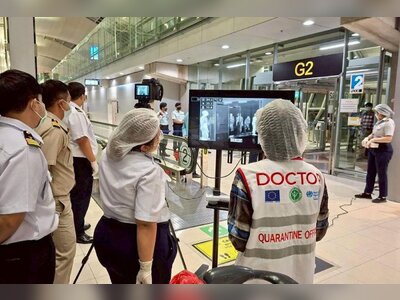
Beginning late January, disease control checkpoints at Thailand’s principal international airports, including Suvarnabhumi and Don Mueang in Bangkok and Phuket International Airport, have instituted health screening for passengers arriving from West Bengal and other risk areas.
Screening protocols draw on systems developed during the COVID-19 pandemic and include temperature checks, travel history inquiries and the distribution of health advisory materials to travellers.
Airport authorities have also increased terminal sanitation and are prepared to implement additional diagnostics if cases are suspected.
Prime Minister Anutin Charnvirakul reaffirmed that no Nipah virus cases have been reported in Thailand, emphasising that the current focus is preventive surveillance rather than reactive containment.
He urged the public to maintain familiar hygiene practices, such as regular handwashing and avoiding close contact when possible, while continuing normal activities.
The government’s approach aims to balance vigilance with reassurance, noting that human-to-human transmission generally requires close contact with bodily fluids and is not airborne.
In addition to traveller screening, Thai authorities have reinforced domestic public-health networks under the One Health principle, which links disease surveillance across human, animal and environmental health sectors.
The Department of National Parks, Wildlife and Plant Conservation has reiterated that although Nipah-related viruses can be found in certain bat populations, there have been no detections of active transmission to humans or livestock in Thailand.
Public health messaging continues to stress vigilant monitoring, early detection capacity and coordinated readiness should the situation evolve.
The Department of Disease Control and the Ministry of Public Health announced enhanced surveillance measures and heightened coordination under the One Health framework, integrating animal and human health monitoring to guard against potential cross-border transmission.
These measures reflect proactive action in light of the high fatality rate associated with Nipah virus infection and the absence of any approved vaccine or specific antiviral treatment.
Beginning late January, disease control checkpoints at Thailand’s principal international airports, including Suvarnabhumi and Don Mueang in Bangkok and Phuket International Airport, have instituted health screening for passengers arriving from West Bengal and other risk areas.
Screening protocols draw on systems developed during the COVID-19 pandemic and include temperature checks, travel history inquiries and the distribution of health advisory materials to travellers.
Airport authorities have also increased terminal sanitation and are prepared to implement additional diagnostics if cases are suspected.
Prime Minister Anutin Charnvirakul reaffirmed that no Nipah virus cases have been reported in Thailand, emphasising that the current focus is preventive surveillance rather than reactive containment.
He urged the public to maintain familiar hygiene practices, such as regular handwashing and avoiding close contact when possible, while continuing normal activities.
The government’s approach aims to balance vigilance with reassurance, noting that human-to-human transmission generally requires close contact with bodily fluids and is not airborne.
In addition to traveller screening, Thai authorities have reinforced domestic public-health networks under the One Health principle, which links disease surveillance across human, animal and environmental health sectors.
The Department of National Parks, Wildlife and Plant Conservation has reiterated that although Nipah-related viruses can be found in certain bat populations, there have been no detections of active transmission to humans or livestock in Thailand.
Public health messaging continues to stress vigilant monitoring, early detection capacity and coordinated readiness should the situation evolve.