United States and Thailand Announce Framework for Reciprocal Trade Agreement
Joint statement outlines tariff commitments, non-tariff barriers and cooperation on labour, environment and digital trade
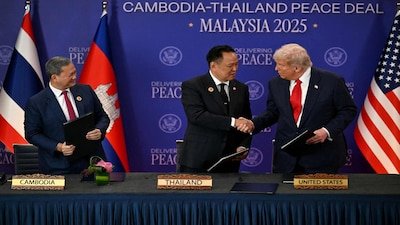
On October 26 2025 the United States and the Kingdom of Thailand issued a joint statement announcing the conclusion of a Framework for an Agreement on Reciprocal Trade.
Under the framework, Thailand will eliminate tariff barriers on approximately 99 per cent of goods—covering the full range of U.S. industrial, food and agricultural products—while the United States will retain a 19 per cent reciprocal tariff rate on originating Thai goods, with certain products eligible for zero tariffs.
Beyond tariffs, the agreement addresses non-tariff barriers.
Thailand has committed, among other actions, to accept U.S.-manufactured vehicles that comply with U.S. federal safety and emissions standards, recognise United States Food and Drug Administration prior authorisations for devices and pharmaceuticals, expedite import permits for U.S. ethanol fuel, and amend customs laws to remove certain award systems for breaches.
On the agricultural front, Thailand will extend U.S. Food Safety and Inspection Service-certified meat and poultry access, accept currently agreed U.S. regulatory certificates, and ensure horticultural import requirements are science- and risk-based.
In the realms of labour, environment and intellectual property, Thailand commits to enhancing enforcement and modernising legislation.
The country will strengthen protection of internationally recognised labour rights, step up efforts to combat forced labour and child labour in high-risk sectors, adopt high environmental-protection standards and implement the World Trade Organization Agreement on Fisheries Subsidies.
In intellectual-property commitments, Thailand will take measures to address trademark counterfeiting, copyright piracy and the patent backlog, and will negotiate further commitments on digital trade, services and investment—including refraining from imposing digital-services taxes or discriminatory rules against U.S. digital products.
The two nations will also deepen economic-security cooperation to bolster supply-chain resilience and innovation.
The statement notes forthcoming commercial deals, including U.S. agricultural purchases estimated at US$2.6 billion per year, energy-product procurement at US$5.4 billion annually and procurement of eighty U.S. aircraft valued at US$18.8 billion.
Negotiations to finalise the formal Agreement on Reciprocal Trade will continue in coming weeks, with domestic ratification steps still required.
Officials in both capitals describe the framework as an important next step in long-standing bilateral economic relations and emphasise its potential to expand market access for U.S. exporters while reinforcing Thailand’s attraction as an investment destination.
Under the framework, Thailand will eliminate tariff barriers on approximately 99 per cent of goods—covering the full range of U.S. industrial, food and agricultural products—while the United States will retain a 19 per cent reciprocal tariff rate on originating Thai goods, with certain products eligible for zero tariffs.
Beyond tariffs, the agreement addresses non-tariff barriers.
Thailand has committed, among other actions, to accept U.S.-manufactured vehicles that comply with U.S. federal safety and emissions standards, recognise United States Food and Drug Administration prior authorisations for devices and pharmaceuticals, expedite import permits for U.S. ethanol fuel, and amend customs laws to remove certain award systems for breaches.
On the agricultural front, Thailand will extend U.S. Food Safety and Inspection Service-certified meat and poultry access, accept currently agreed U.S. regulatory certificates, and ensure horticultural import requirements are science- and risk-based.
In the realms of labour, environment and intellectual property, Thailand commits to enhancing enforcement and modernising legislation.
The country will strengthen protection of internationally recognised labour rights, step up efforts to combat forced labour and child labour in high-risk sectors, adopt high environmental-protection standards and implement the World Trade Organization Agreement on Fisheries Subsidies.
In intellectual-property commitments, Thailand will take measures to address trademark counterfeiting, copyright piracy and the patent backlog, and will negotiate further commitments on digital trade, services and investment—including refraining from imposing digital-services taxes or discriminatory rules against U.S. digital products.
The two nations will also deepen economic-security cooperation to bolster supply-chain resilience and innovation.
The statement notes forthcoming commercial deals, including U.S. agricultural purchases estimated at US$2.6 billion per year, energy-product procurement at US$5.4 billion annually and procurement of eighty U.S. aircraft valued at US$18.8 billion.
Negotiations to finalise the formal Agreement on Reciprocal Trade will continue in coming weeks, with domestic ratification steps still required.
Officials in both capitals describe the framework as an important next step in long-standing bilateral economic relations and emphasise its potential to expand market access for U.S. exporters while reinforcing Thailand’s attraction as an investment destination.