
Thai Army Confirms Readiness to Redeploy Heavy Weapons on Cambodia Border
Royal Thai Army states it can mobilise tanks and artillery swiftly if Cambodia fails to observe withdrawal accord
The Royal Thai Army (RTA) has reassured the public that it remains capable of redeploying heavy weapons—including tanks and artillery—to the Thai-Cambodian frontier in the event of a breakdown in the peace accord.
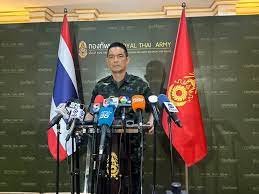
RTA spokesman Major General Winthai Suvaree said that despite recent withdrawals following last month’s joint declaration, the force would act quickly should Cambodia breach the agreement.
The withdraw of heavy armaments from the border began on 25 October after both nations pledged in the Kuala Lumpur declaration to pull back heavy equipment and begin mine-clearance operations.
However, some public concern emerged after RTA armour and artillery were relocated as far inland as Lop Buri province, several hundred kilometres from the disputed frontier.
The RTA also reported progress in de-mining operations via the Thailand Mine Action Centre (TMAC).
Clearance work at Sai Taku Pass in Buri Ram’s Ban Kruad district, covering an area of 355,025 square metres, has now reached approximately 7.62 %.
RTA observers from the ASEAN Observation Team witnessed the work on the Thai side.
Coordination challenges persist in the border-clearance zone.
Thai and Cambodian troops reportedly encountered each other during operations, prompting discussions to avoid obstruction.
Cambodian forces say they have yet to commence their own mine-clearance, citing lack of orders from higher command.
Meanwhile, Thailand’s TMAC has notified its counterpart that it is prepared to begin clearance in thirteen designated zones once the Cambodian side moves.
The armament assurances from the RTA underline Thailand’s dual strategy: supporting implementation of the withdrawal accord while maintaining deterrence.
“Should conditions warrant,” General Winthai stated, “the army stands ready to redeploy heavy weapons to defend sovereignty.” The remark emphasizes that Thailand views the accord not as a one-sided concession but as a tested framework supported by Thai readiness.
RTA spokesman Major General Winthai Suvaree said that despite recent withdrawals following last month’s joint declaration, the force would act quickly should Cambodia breach the agreement.
The withdraw of heavy armaments from the border began on 25 October after both nations pledged in the Kuala Lumpur declaration to pull back heavy equipment and begin mine-clearance operations.
However, some public concern emerged after RTA armour and artillery were relocated as far inland as Lop Buri province, several hundred kilometres from the disputed frontier.
The RTA also reported progress in de-mining operations via the Thailand Mine Action Centre (TMAC).
Clearance work at Sai Taku Pass in Buri Ram’s Ban Kruad district, covering an area of 355,025 square metres, has now reached approximately 7.62 %.
RTA observers from the ASEAN Observation Team witnessed the work on the Thai side.
Coordination challenges persist in the border-clearance zone.
Thai and Cambodian troops reportedly encountered each other during operations, prompting discussions to avoid obstruction.
Cambodian forces say they have yet to commence their own mine-clearance, citing lack of orders from higher command.
Meanwhile, Thailand’s TMAC has notified its counterpart that it is prepared to begin clearance in thirteen designated zones once the Cambodian side moves.
The armament assurances from the RTA underline Thailand’s dual strategy: supporting implementation of the withdrawal accord while maintaining deterrence.
“Should conditions warrant,” General Winthai stated, “the army stands ready to redeploy heavy weapons to defend sovereignty.” The remark emphasizes that Thailand views the accord not as a one-sided concession but as a tested framework supported by Thai readiness.