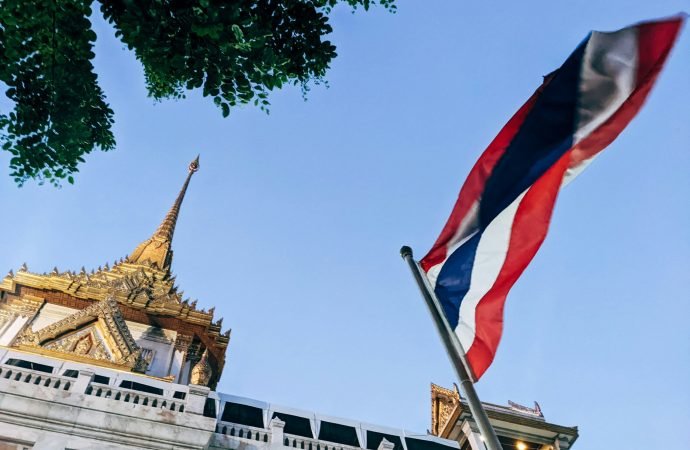
Thailand and Cambodia Begin Heavy Weapons Withdrawal Following US-backed Peace Accord
After a five-day clash in July, both nations initiate phased pull-back of artillery and tanks under mediation led by the United States and Malaysia
Thailand and Cambodia have begun the withdrawal of heavy weapons and launched de-mining operations along their disputed border, part of an enhanced truce signed on 26 October 2025. The agreement—broadened under the watch of U.S. President Donald Trump and Malaysian Prime Minister Anwar Ibrahim—marks an important escalation of the ceasefire process.
The pact, reached during the 47th Summit of the Association of Southeast Asian Nations in Kuala Lumpur, builds on the July cease-fire and sets out phased removal of rocket systems, artillery and tanks from the frontier.
The first phase, launched on 1 November, is scheduled to span roughly three weeks and aims for completion by year-end.
Thailand’s government spokesman confirmed withdrawal of Cambodian forces is contingent on full compliance with the agreement.
Thai authorities continue to hold eighteen Cambodian soldiers in custody and have not yet reopened border crossings, pending verification of Cambodia’s implementation.
Meanwhile, joint de-mining efforts are underway across thirteen Thai sectors and one Cambodian zone.
The deal arrives after a July confrontation that led to at least forty-eight deaths and the displacement of hundreds of thousands.
Observers note the accord represents a diplomatic win for both Southeast Asia’s regional institutions and Washington’s renewed engagement in the region.
At the same time, analysts caution that unresolved issues such as formal border-line demarcation and cross-border illicit activities pose risks to lasting stability.
With the weapons pull-back now under way and verification mechanisms being introduced, both nations face a critical test of the agreement’s durability—and wider regional observers will be watching for whether it strengthens peace or remains a fragile cease-fire.
The pact, reached during the 47th Summit of the Association of Southeast Asian Nations in Kuala Lumpur, builds on the July cease-fire and sets out phased removal of rocket systems, artillery and tanks from the frontier.
The first phase, launched on 1 November, is scheduled to span roughly three weeks and aims for completion by year-end.
Thailand’s government spokesman confirmed withdrawal of Cambodian forces is contingent on full compliance with the agreement.
Thai authorities continue to hold eighteen Cambodian soldiers in custody and have not yet reopened border crossings, pending verification of Cambodia’s implementation.
Meanwhile, joint de-mining efforts are underway across thirteen Thai sectors and one Cambodian zone.
The deal arrives after a July confrontation that led to at least forty-eight deaths and the displacement of hundreds of thousands.
Observers note the accord represents a diplomatic win for both Southeast Asia’s regional institutions and Washington’s renewed engagement in the region.
At the same time, analysts caution that unresolved issues such as formal border-line demarcation and cross-border illicit activities pose risks to lasting stability.
With the weapons pull-back now under way and verification mechanisms being introduced, both nations face a critical test of the agreement’s durability—and wider regional observers will be watching for whether it strengthens peace or remains a fragile cease-fire.