
Thailand Drafts First Law on Artificial Intelligence
Prime Minister Paetongtarn Shinawatra announces plans to regulate AI technology to support business growth.
The government of Thailand is currently drafting its inaugural legislation on artificial intelligence (AI), with the aim of integrating and regulating AI technology to strengthen both businesses and the national economy.
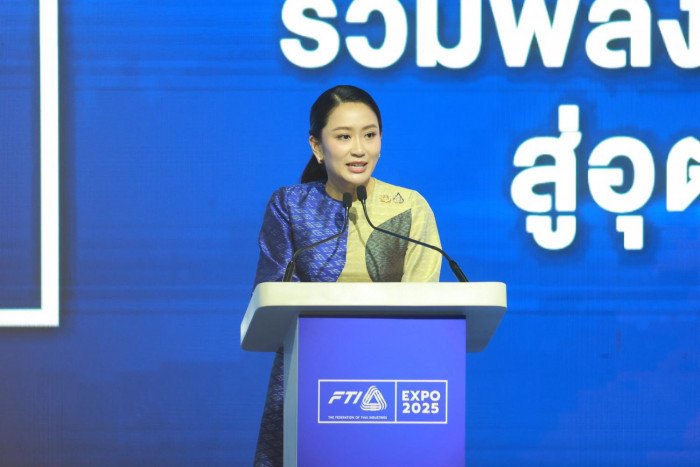
Prime Minister Paetongtarn Shinawatra highlighted the significance of this legislation during her remarks at the FTI Expo, an event organized by the Federation of Thai Industries (FTI) that spans four days and showcases technological advancements within the Thai industrial sector.
Ms. Paetongtarn emphasized that the new law is designed to ensure users can fully benefit from AI while using the technology in a responsible manner.
"AI will become a key tool in driving businesses and developing industries.
We want the law to support the use of AI in manufacturing and trade," she stated, indicating that the draft legislation is expected to be finalized soon.
Kriengkrai Thiennukul, the chairman of the FTI, informed attendees that the federation is preparing an AI roadmap consisting of guidelines aimed at enhancing the use of AI technology within the manufacturing sector.
He noted that AI could serve as a powerful tool for industry development, enabling manufacturers to analyze factors that influence product quality, pricing, and overall business growth, which could lead to improved return on investment.
In addition to the AI roadmap, the FTI has established a new unit dedicated to promoting innovation and aiding entrepreneurs in effectively managing costs while increasing competitiveness in alignment with global trends.
Kriengkrai announced collaboration with the Ministry of Higher Education, Science, Research and Innovation to support these initiatives.
During the expo, Prime Minister Paetongtarn also underscored the necessity for improved government support for small and medium-sized enterprises (SMEs), which constitute approximately 75% of all businesses in Thailand.
Participants at the expo also contributed insights into the transition toward a low-carbon economy.
Kongkrapan Intarajang, president of the national oil and gas corporation PTT Plc, shared the company's commitment to focusing on hydrogen fuels and carbon capture and storage (CCS) technologies as strategies to meet its net-zero emissions target.
He acknowledged the challenges associated with achieving a net-zero target given PTT's involvement in oil and gas production as well as petrochemical activities, but expressed optimism regarding hydrogen fuels and CCS technologies.
Additionally, PTT Exploration and Production Plc (PTTEP) is set to implement CCS technology at its Arthit gas field in the Gulf of Thailand by 2027. The company has also invested in green hydrogen production in Oman, which involves using renewable energy to split water molecules, generating hydrogen for applications in power generation and manufacturing processes.
Prime Minister Paetongtarn Shinawatra highlighted the significance of this legislation during her remarks at the FTI Expo, an event organized by the Federation of Thai Industries (FTI) that spans four days and showcases technological advancements within the Thai industrial sector.
Ms. Paetongtarn emphasized that the new law is designed to ensure users can fully benefit from AI while using the technology in a responsible manner.
"AI will become a key tool in driving businesses and developing industries.
We want the law to support the use of AI in manufacturing and trade," she stated, indicating that the draft legislation is expected to be finalized soon.
Kriengkrai Thiennukul, the chairman of the FTI, informed attendees that the federation is preparing an AI roadmap consisting of guidelines aimed at enhancing the use of AI technology within the manufacturing sector.
He noted that AI could serve as a powerful tool for industry development, enabling manufacturers to analyze factors that influence product quality, pricing, and overall business growth, which could lead to improved return on investment.
In addition to the AI roadmap, the FTI has established a new unit dedicated to promoting innovation and aiding entrepreneurs in effectively managing costs while increasing competitiveness in alignment with global trends.
Kriengkrai announced collaboration with the Ministry of Higher Education, Science, Research and Innovation to support these initiatives.
During the expo, Prime Minister Paetongtarn also underscored the necessity for improved government support for small and medium-sized enterprises (SMEs), which constitute approximately 75% of all businesses in Thailand.
Participants at the expo also contributed insights into the transition toward a low-carbon economy.
Kongkrapan Intarajang, president of the national oil and gas corporation PTT Plc, shared the company's commitment to focusing on hydrogen fuels and carbon capture and storage (CCS) technologies as strategies to meet its net-zero emissions target.
He acknowledged the challenges associated with achieving a net-zero target given PTT's involvement in oil and gas production as well as petrochemical activities, but expressed optimism regarding hydrogen fuels and CCS technologies.
Additionally, PTT Exploration and Production Plc (PTTEP) is set to implement CCS technology at its Arthit gas field in the Gulf of Thailand by 2027. The company has also invested in green hydrogen production in Oman, which involves using renewable energy to split water molecules, generating hydrogen for applications in power generation and manufacturing processes.