Thailand Election 2026: Reformists Lead, Conservatives Compete in Closely Fought Vote
People’s Party tops polls as Bhumjaithai and Pheu Thai campaign on competing visions; no single party is expected to win outright
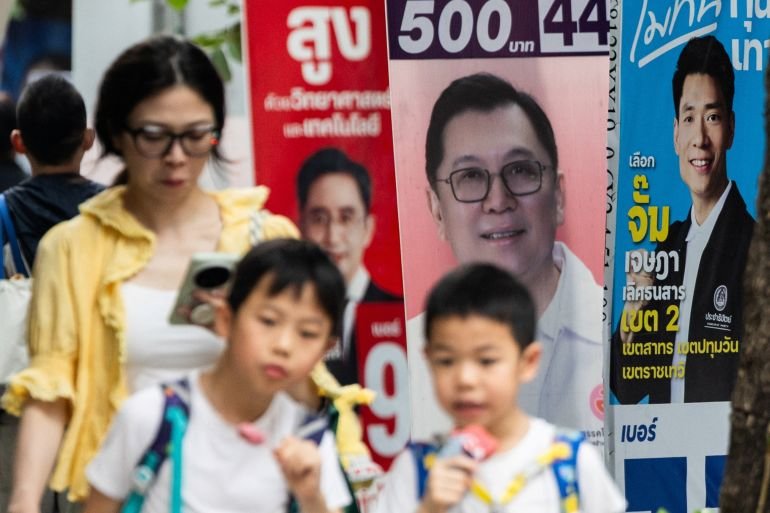
Thailand’s general election on February eighth pits three dominant political forces against one another in a highly competitive race that reflects both deep public desire for change and persistent establishment strength.
As voters prepare to cast their ballots, recent polling shows the reform-oriented People’s Party leading the field, with the conservative Bhumjaithai Party and populist Pheu Thai Party closely contesting support.
The People’s Party, which emerged from the dissolved Move Forward movement and is led by Natthaphong Rueangpanyawut, has captured the largest share of voter intention in national surveys.
A January poll by the National Institute of Development Administration indicated the People’s Party commanding around thirty-four percent backing on party lists, well ahead of Bhumjaithai’s roughly twenty-three percent and Pheu Thai’s around sixteen percent.
In separate Dusit polling, the People’s Party also led in both constituency and party-list preferences, with the largest proportion of voters expressing support and naming Natthaphong as their preferred prime ministerial candidate.
Bhumjaithai, led by incumbent Prime Minister Anutin Charnvirakul, has sought to capitalise on its newly rebranded conservative stance, emphasising economic stimulus, national security, and protection of the monarchy.
It has also attracted significant defections from other parties, strengthening its legislative presence and giving it momentum in competitive regions.
Pheu Thai, the long-dominant populist party associated with former premier Thaksin Shinawatra, remains a major contender with a campaign focused on debt relief, income support and legacy appeal, though its standing in polls has slipped relative to both the People’s Party and Bhumjaithai.
No party appears poised to secure an outright majority in the 500-seat House of Representatives, where 400 members are directly elected and 100 are allocated via proportional representation.
Analysts expect intense coalition negotiations after the vote, with the People’s Party’s reform agenda — which includes reducing the influence of unelected institutions such as the military and judiciary — potentially complicating alliance formation despite its poll lead.
Bhumjaithai’s appeal to conservative voters and its capacity to attract defectors may position it strongly in post-election bargaining.
Key issues shaping the contest include economic concerns, political reform, and national identity, particularly following a recent border conflict that has influenced nationalist sentiments.
Polls also show increased numbers of undecided voters, underscoring the fluidity of the race as election day approaches.
With voter turnout expected to be high, the results will not only determine Thailand’s next government but could also influence the broader trajectory of democratic reform and institutional change in the kingdom.
As voters prepare to cast their ballots, recent polling shows the reform-oriented People’s Party leading the field, with the conservative Bhumjaithai Party and populist Pheu Thai Party closely contesting support.
The People’s Party, which emerged from the dissolved Move Forward movement and is led by Natthaphong Rueangpanyawut, has captured the largest share of voter intention in national surveys.
A January poll by the National Institute of Development Administration indicated the People’s Party commanding around thirty-four percent backing on party lists, well ahead of Bhumjaithai’s roughly twenty-three percent and Pheu Thai’s around sixteen percent.
In separate Dusit polling, the People’s Party also led in both constituency and party-list preferences, with the largest proportion of voters expressing support and naming Natthaphong as their preferred prime ministerial candidate.
Bhumjaithai, led by incumbent Prime Minister Anutin Charnvirakul, has sought to capitalise on its newly rebranded conservative stance, emphasising economic stimulus, national security, and protection of the monarchy.
It has also attracted significant defections from other parties, strengthening its legislative presence and giving it momentum in competitive regions.
Pheu Thai, the long-dominant populist party associated with former premier Thaksin Shinawatra, remains a major contender with a campaign focused on debt relief, income support and legacy appeal, though its standing in polls has slipped relative to both the People’s Party and Bhumjaithai.
No party appears poised to secure an outright majority in the 500-seat House of Representatives, where 400 members are directly elected and 100 are allocated via proportional representation.
Analysts expect intense coalition negotiations after the vote, with the People’s Party’s reform agenda — which includes reducing the influence of unelected institutions such as the military and judiciary — potentially complicating alliance formation despite its poll lead.
Bhumjaithai’s appeal to conservative voters and its capacity to attract defectors may position it strongly in post-election bargaining.
Key issues shaping the contest include economic concerns, political reform, and national identity, particularly following a recent border conflict that has influenced nationalist sentiments.
Polls also show increased numbers of undecided voters, underscoring the fluidity of the race as election day approaches.
With voter turnout expected to be high, the results will not only determine Thailand’s next government but could also influence the broader trajectory of democratic reform and institutional change in the kingdom.